Is Your Spring Valley Garage Door Worth Fixing or Replacing
Spring Valley homes mostly date 1967 to 1988, a mild climate but decades of sun on steel and wood doors. See what's worth repairing and what isn't right now.
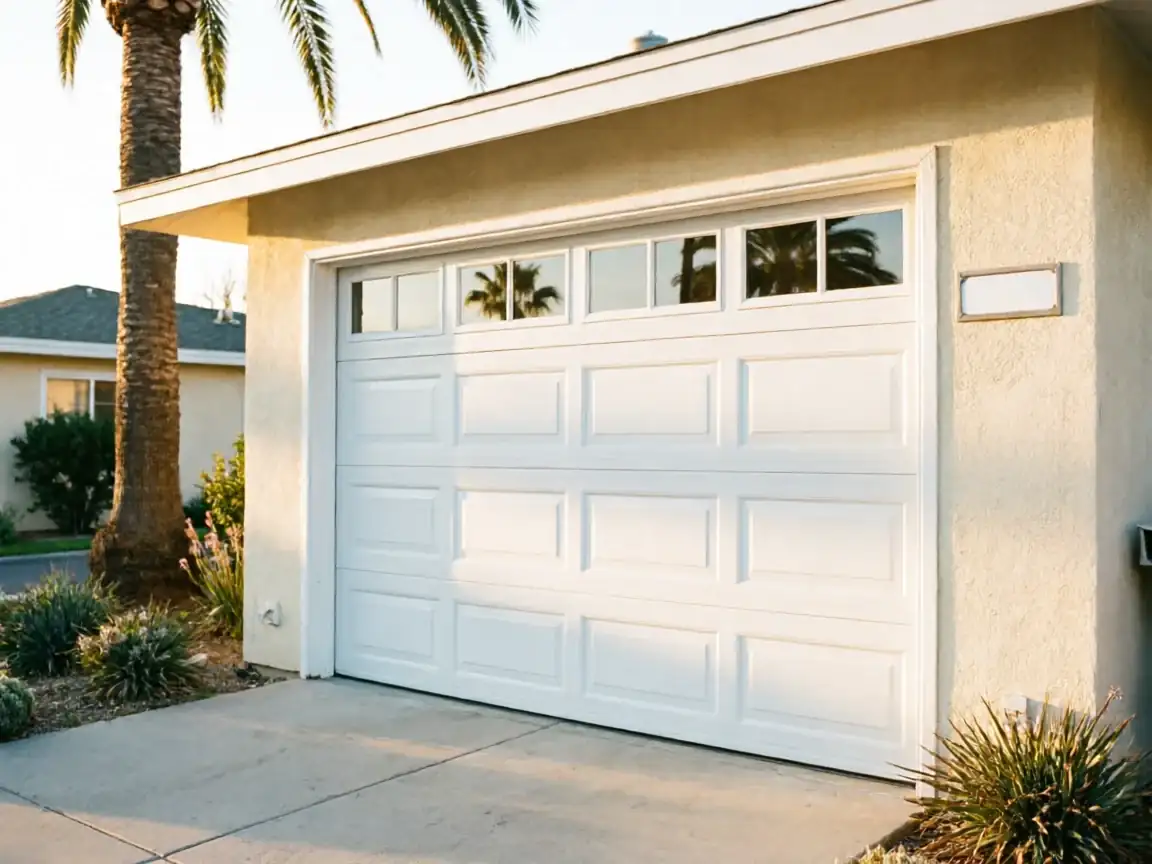
Spring Valley doesn't deal with freeze-thaw cycles or heavy snow load, because the area sits in a mild temperate band. That spares your door from the metal fatigue that cracks torsion springs in colder climates and the ice that jams tracks solid. What it doesn't spare you from is sun. A door facing south or west on a slope near Casa de Oro-Mount Helix or La Presa takes direct heat for a good part of the day, every day, all year. On a steel door from the 1970s that heat cycle, expand in the afternoon, contract overnight, loosens screws at the hinge points and dries out the glue lines on any wood-composite panel still carrying original material. There's no dramatic seasonal event here, just a slow, steady wear pattern. Spring is usually when owners notice it most, because that's when they're opening the door more often for yard work and the stiff spot or the grinding sound becomes impossible to ignore. Summer heat doesn't break a door outright, but it finds every weak point winter would've hidden under a sluggish mechanism.
What to Check
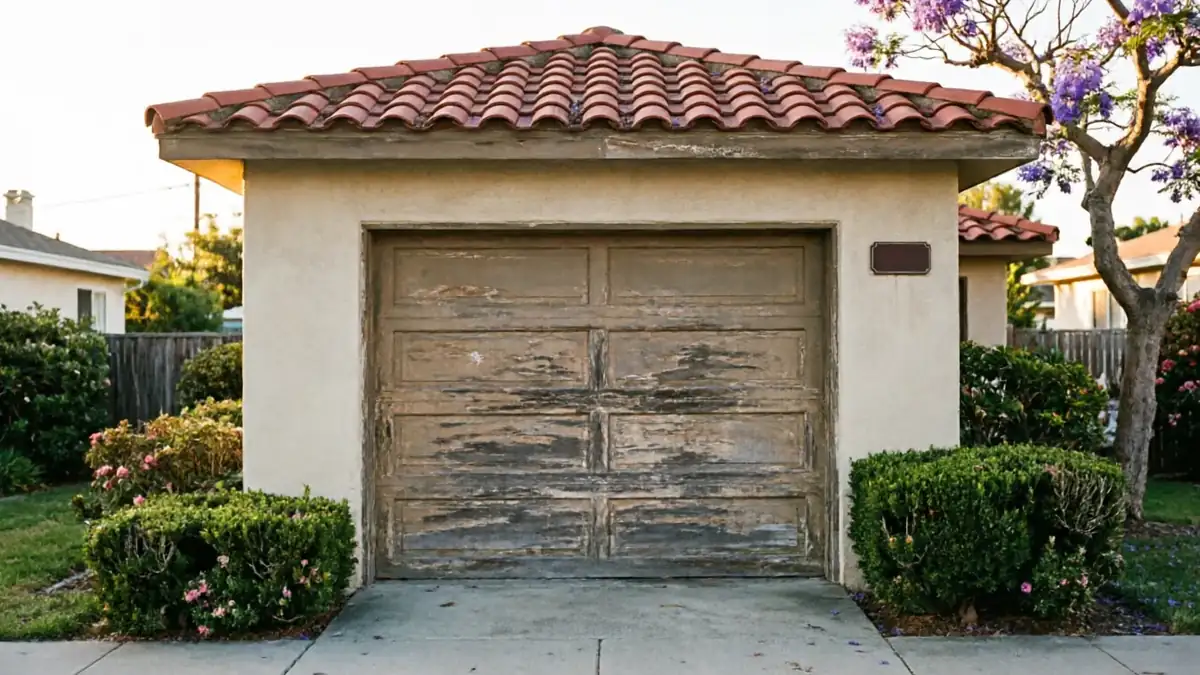
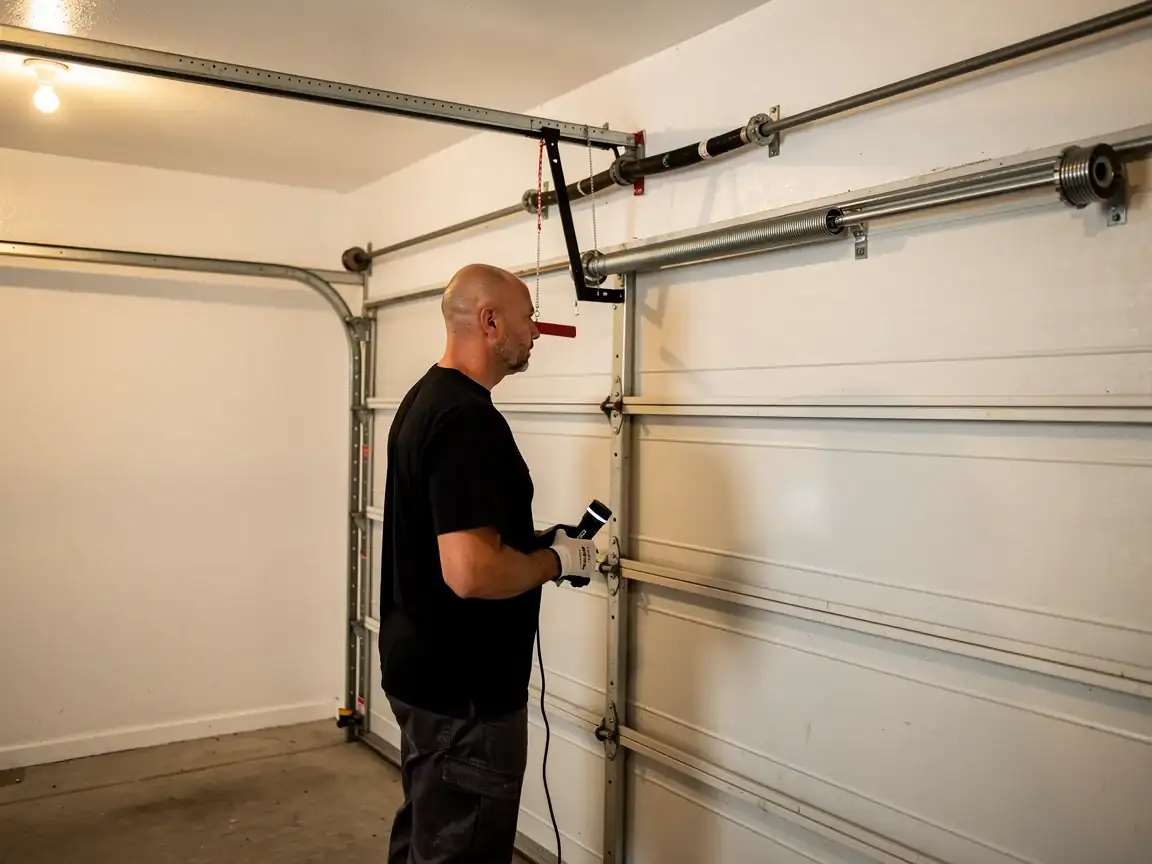
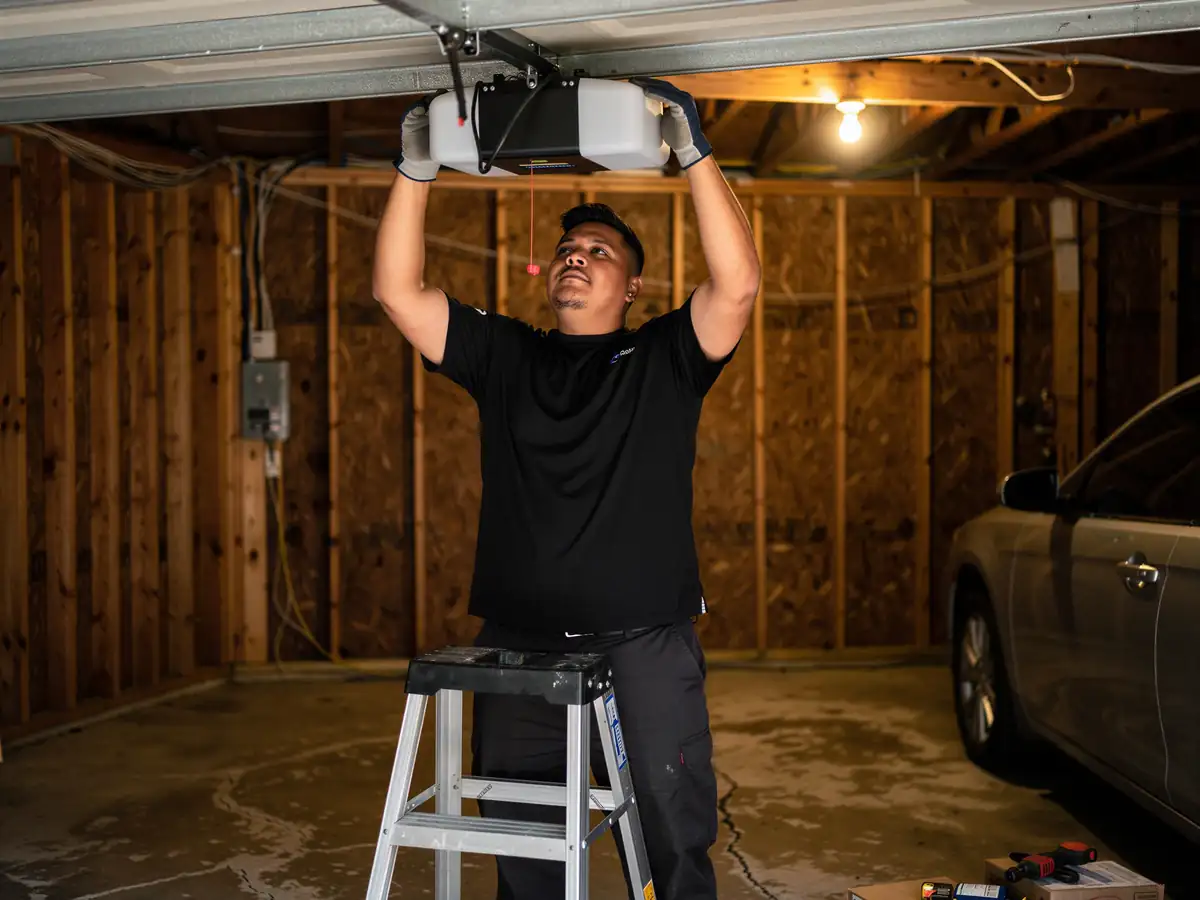
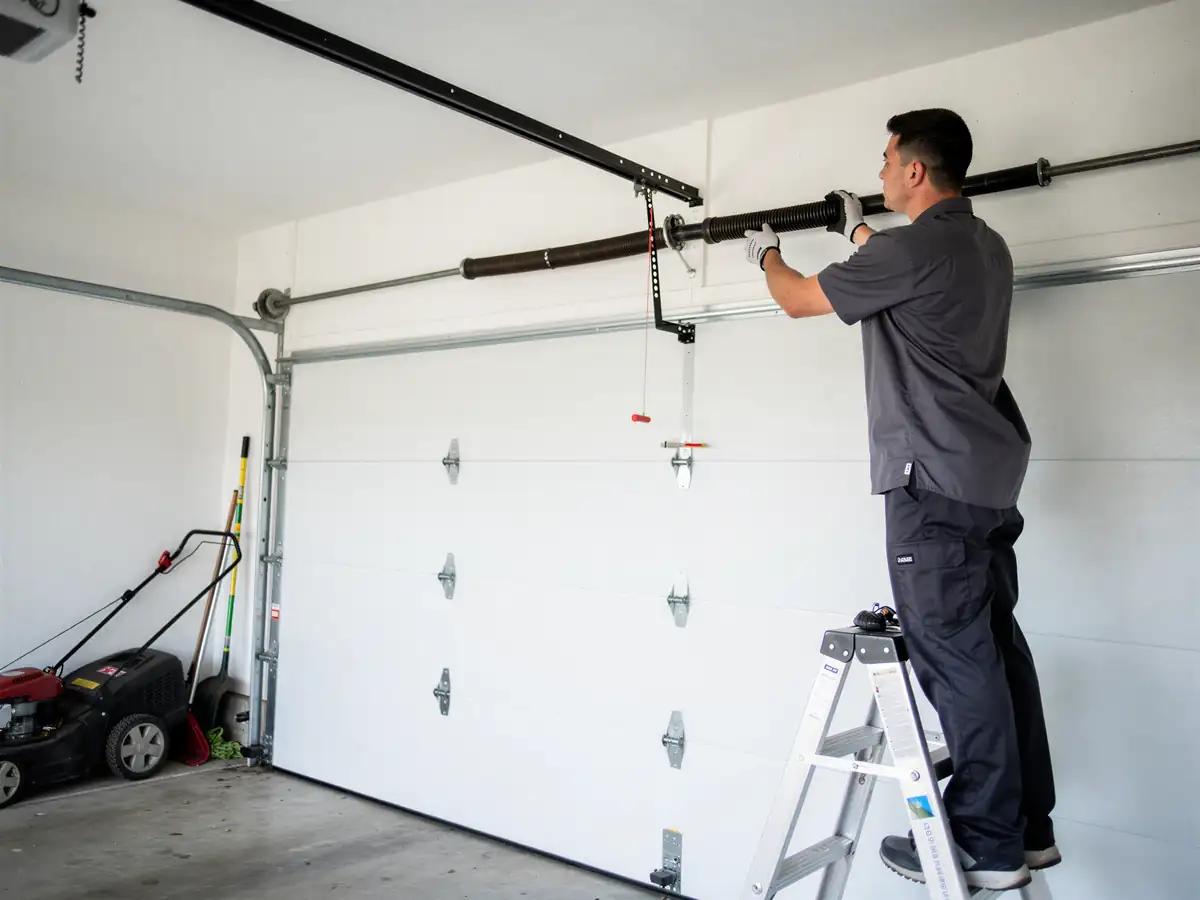
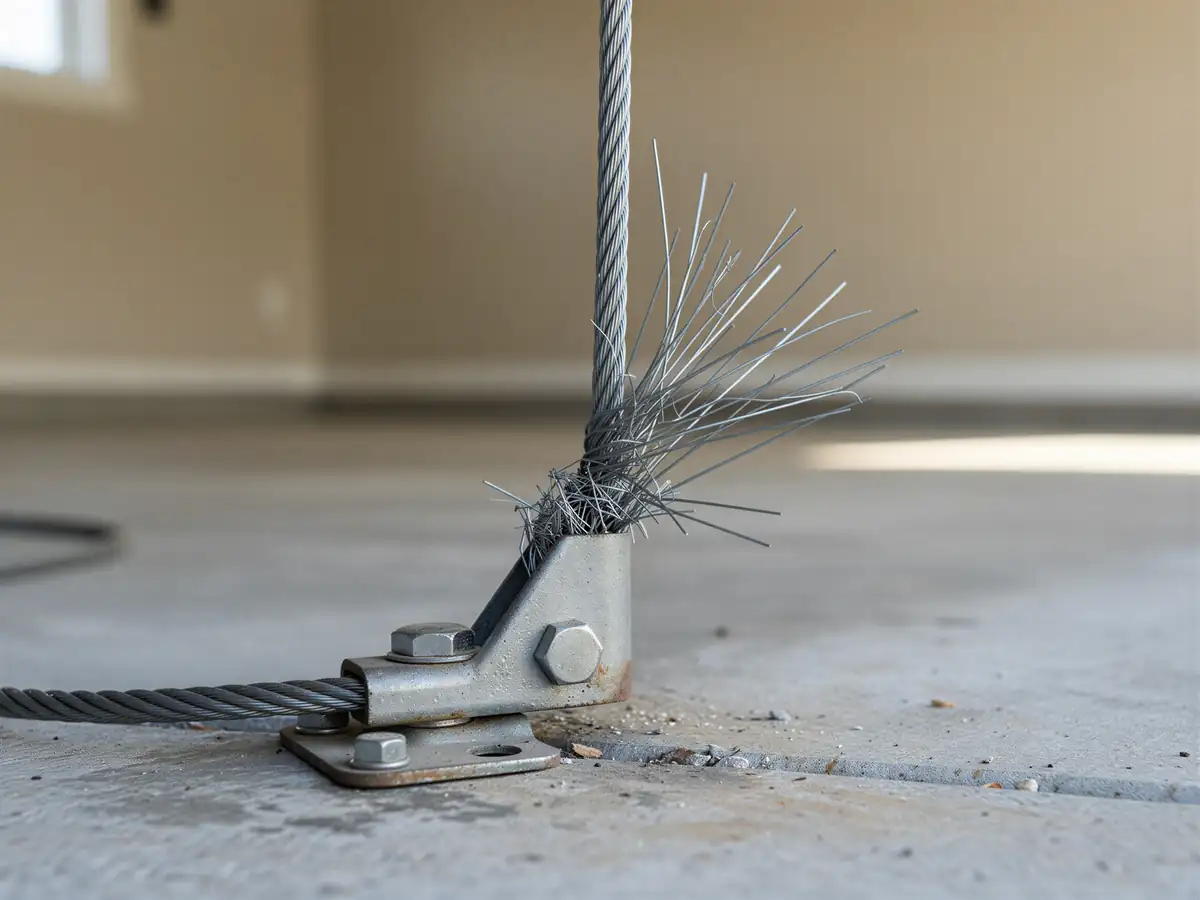
If your house was built between 1967 and 1988, which covers most of this area, start with the spring. Wide doors from that era often ran on a single torsion spring with no safety cable, a setup that's been out of code for new installs for years. If yours still has one spring and no cable running through the center, that's worth a look regardless of anything else. Next, check the panels for warping, especially on steel doors with no insulation, which was standard then and shows up now as a visible bow when the door's down. Wood or wood-composite doors from this period are the ones to inspect closest: press a screwdriver into the bottom panel edge where splash and ground moisture collect. If it sinks in, that panel's done. Last, look at the opener. A chain-drive unit without a modern photo-eye safety sensor is original-era equipment, not a convenience issue but a liability one. None of this means replace the whole door. A spring, a panel, or an opener can often be swapped on its own without touching the rest.
What Local Conditions Do
The mild climate band covering this area means the hardware itself ages slowly in terms of rust and corrosion, since there's no salt air or hard freeze doing the damage you'd see closer to the coast or in a snow state. What ages instead is the finish and the fasteners. UV breaks down weatherstripping and rubber seals steadily, and thirty-plus years of thermal cycling backs out screws at stress points, which is why so many doors from the 1967-1988 build wave develop a specific complaint: they run fine but rattle, or they bind slightly at the top of the travel. That's loosened track brackets, not a dying opener. Because the damage here is gradual rather than event-driven, a lot of these doors get replaced years before they actually need to be, just because nobody re-tightened the hardware. On the other side, a door that's been neglected the whole time, no lubrication, no bracket checks, for three or four decades, can reach a point where the frame itself has racked and no amount of adjustment brings it back square.
The Situation
Across the roughly 46,922 owner-occupied houses in this service area, most built in that same 1967-1988 window, the question isn't usually whether the door still works. It's whether fixing it costs real money for a few more years or whether that money is better spent on a door built to current spring and safety-cable standards. With median household income here around $105,887, most owners can afford either path, so the decision usually comes down to the door itself rather than the budget. A steel door with a warped panel and tired springs is almost always worth fixing. A wood-composite door with rotted bottom panels and a cracked frame usually isn't, because by the time you've replaced the rotted sections and the hardware, you've spent most of what a new door costs anyway. One limitation worth saying plainly: original wood doors from this era sometimes use panel dimensions or hinge spacing that nobody stocks anymore, and sourcing a matching replacement panel can take longer than most owners want to wait, which is often the real reason replacement wins over repair.
How it works
From “it’s stuck” to “it’s fixed”
1
Tell us what’s wrong
Describe the symptom - won’t open, loud bang, opener runs but the door won’t move.
2
On-site diagnosis
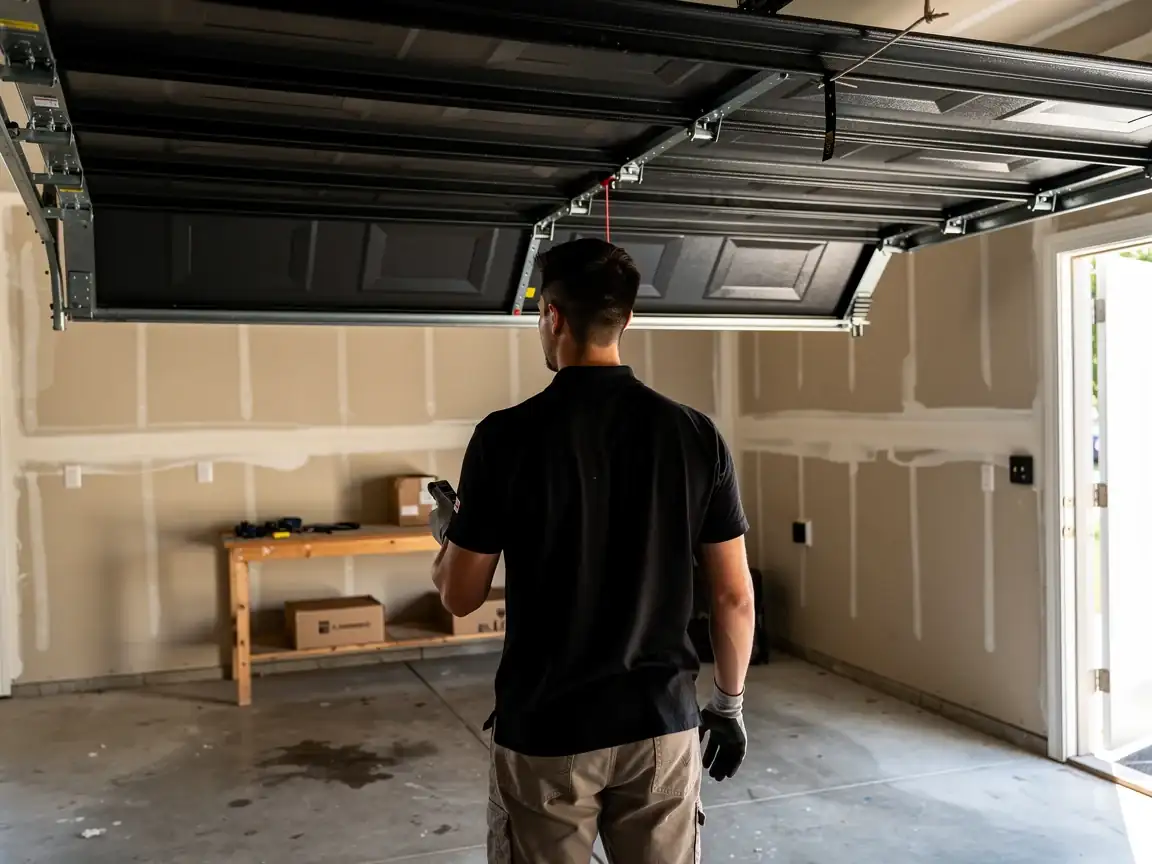
A technician tests the door under power and by hand and finds what actually failed.
3
Clear, up-front plan
You get the fix that’s needed and what drives the cost - before any work starts.
4
Repaired & tested
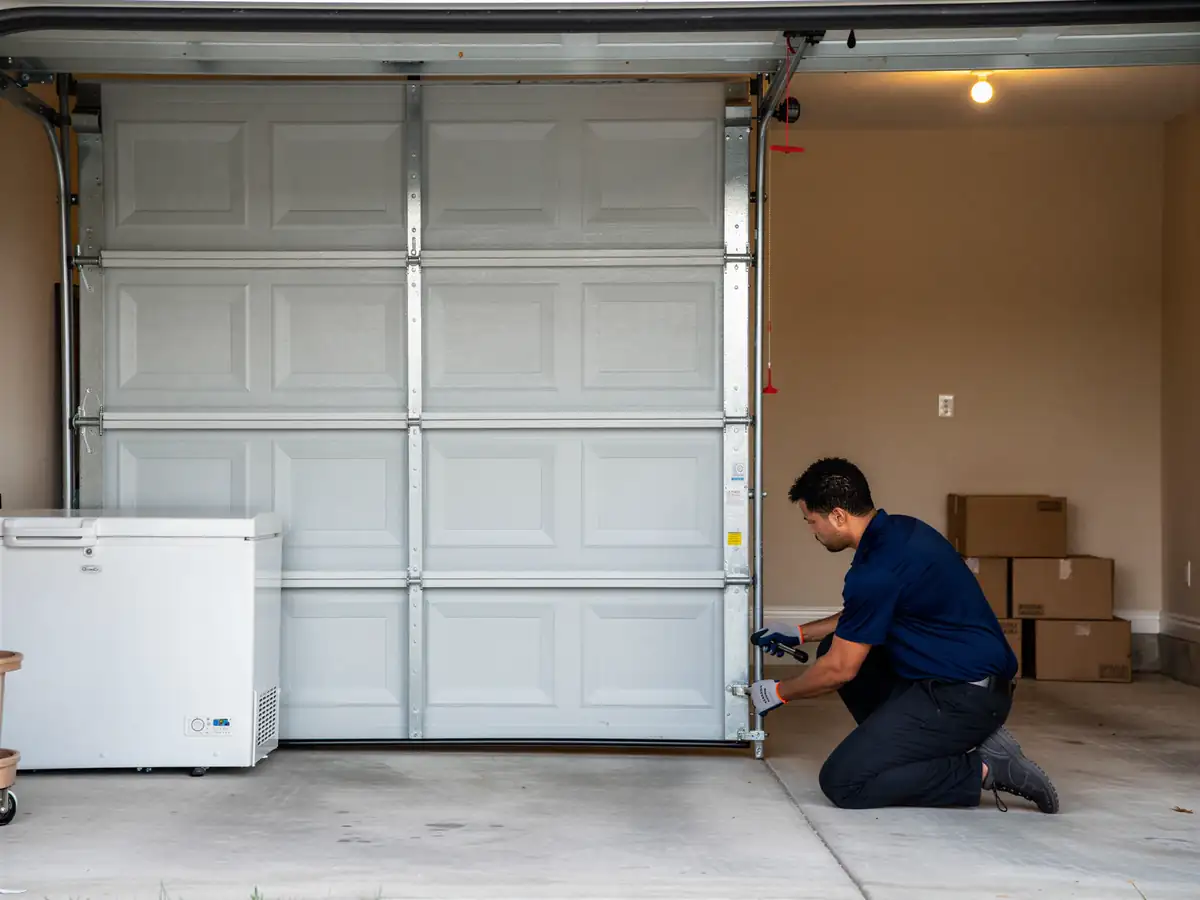
The repair is done, the door is set true and tested, and the work area left clean.
Not sure which repair your door needs in Spring Valley, CA? Describe what it’s doing - every job starts with a diagnosis.
My garage door is from the 1970s and still works fine. Should I replace it anyway?
Not on age alone. If it opens smoothly, the spring has a safety cable, and the panels aren't warped or rotted, there's no reason to replace a working door just because of its build year. Check the hardware and the opener's safety sensor first; those are the parts that actually create risk, not the door's age by itself.
Why does my door only stick in the afternoon?
That's heat, not age on its own. Steel expands as the day warms up, and if a door faces direct sun for hours, the panel or track can bind slightly by mid-afternoon and loosen again overnight. It's common on doors from the 1967-1988 build era with no insulation layer to buffer the temperature swing.
Is it worth repairing a wood garage door from this period?
Depends on where the rot or damage is. A wood door with surface weathering and a stiff spring is usually worth fixing. One with soft, crumbling bottom panels or a racked frame usually isn't, because matching original hardware and panel dimensions gets expensive and slow, often costing close to a full replacement anyway.
Ready to get your garage door sorted?
Tell us what it’s doing and where you are in Spring Valley - we’ll take it from there.