Spring Valley Garage Door Pros fixes the spring, track, and opener failures tied to this area's 1967-1988 housing stock. Straight talk on cost, cause, and fixes.
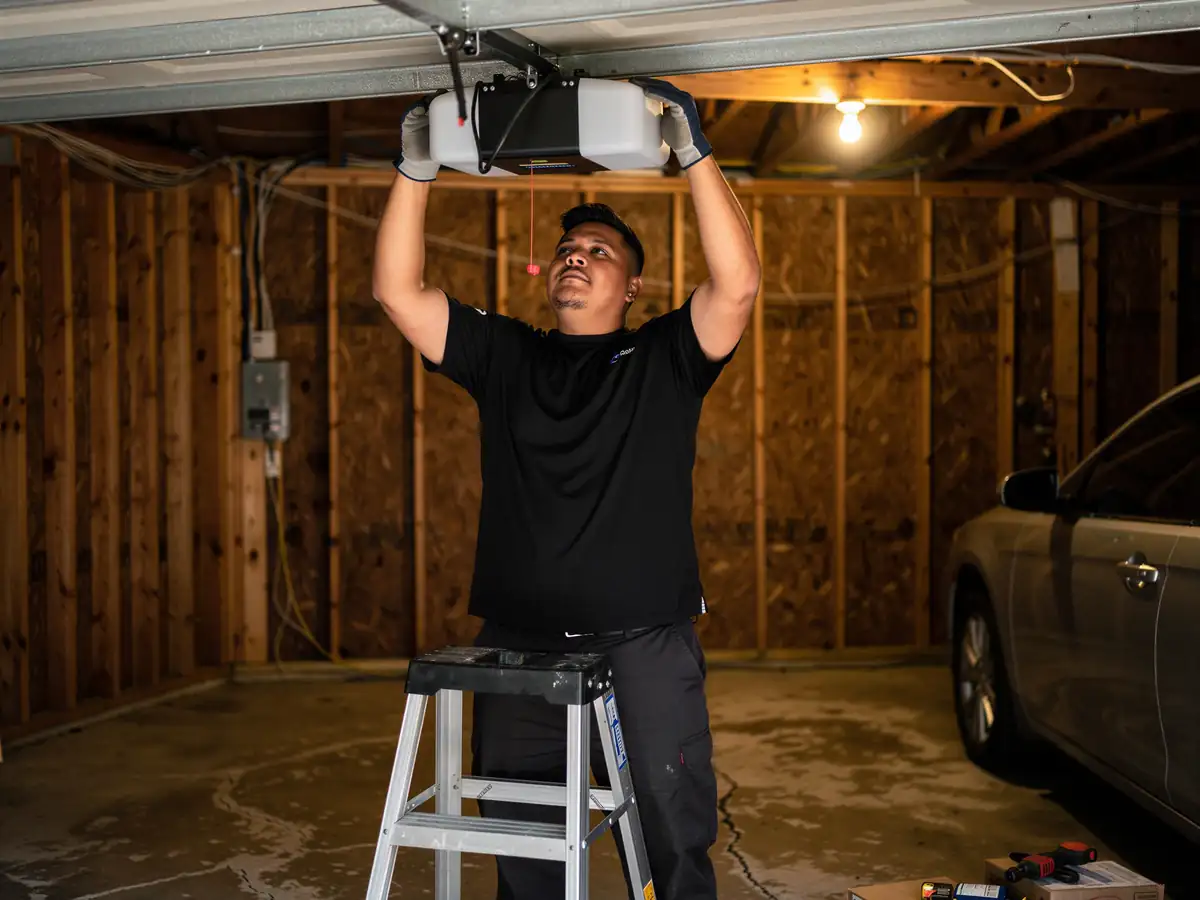
We don't post a flat number here because the job isn't flat. A broken torsion spring on a single door costs less than a full opener swap, and a bent track from a car bump costs less than either. What we can tell you is what drives the number up in this area specifically: most Spring Valley houses were built between 1967 and 1988, with the median landing around 1975. That means a lot of original hardware - torsion springs sized for doors that are heavier than what's sold today, openers with chain drives from a renovation decades back, track brackets mounted to framing that's now shifted with the house. Matching new parts to fifty-year-old mounting isn't always a drop-in swap, and that adds labor time you won't see quoted on a generic price list. On the other end, a clean repair - roller replacement, cable re-tension, sensor realignment - is usually the cheapest call we make all week. We'll tell you on the phone which category your door falls into before we quote anything, not after.
What You Are Seeing
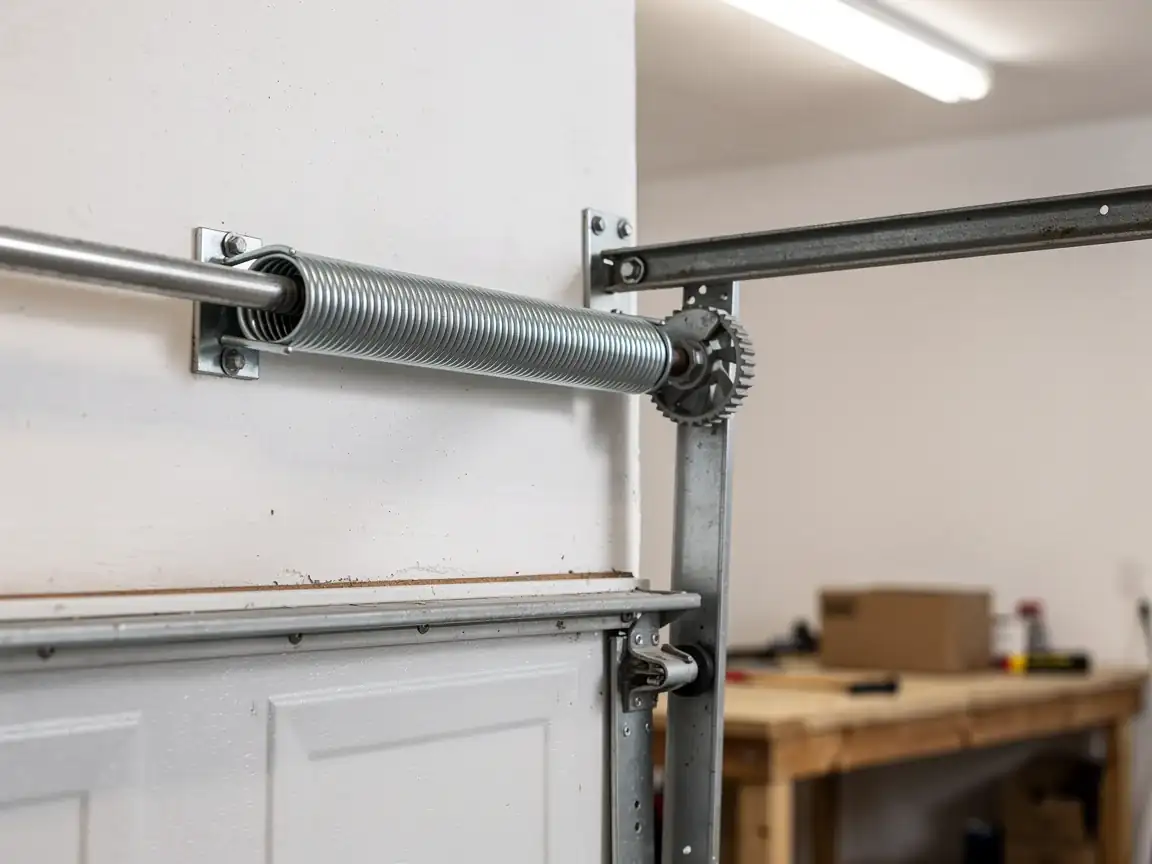
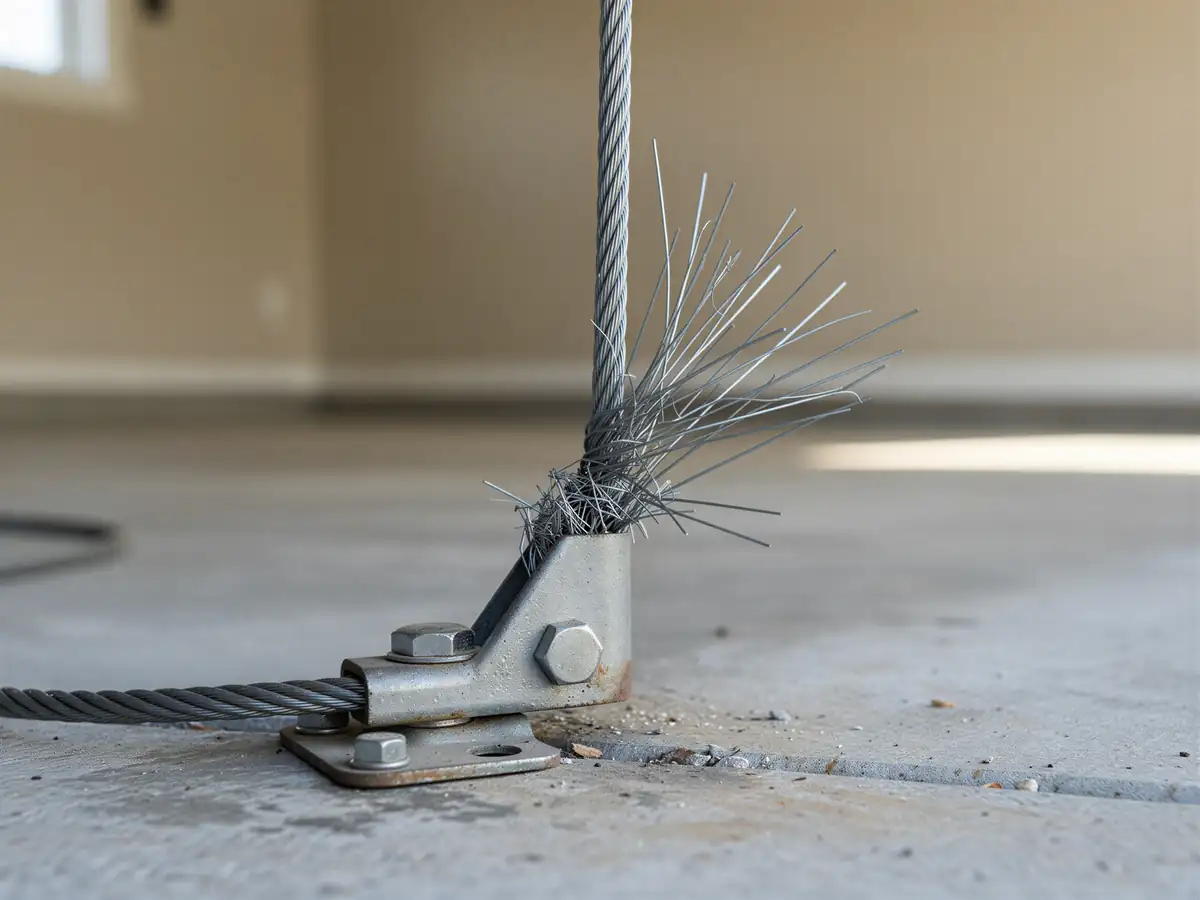
The door shudders a few inches off the floor and stops. It opens fine but closes crooked, dragging one side. It reverses halfway up for no reason you can find. Or it's just loud now in a way it wasn't last year - a grinding on the track, a bang when the spring lets go. These aren't random. Houses in this part of the county, going up in the 1960s and 70s wave, tend to share the same failure points at the same age: torsion springs rated for a 10,000-cycle life that are well past it, rollers that were steel and never swapped to nylon, openers original to a remodel rather than the house. When one part fails, it usually takes the adjacent part down a notch with it - a dead spring strains the opener gears, a dry track chews up the rollers faster. What you're seeing on the surface is rarely the actual failure.
Why This Fails Locally
Spring Valley sits in a mild temperate band - we don't get the freeze-thaw cycling that snaps hardware up north, and we don't get the gulf humidity that rusts cable guides either. That's good news in one sense: it's not the climate killing your door. It's the age. A door installed when the house was built in 1975 is now fifty years into a mechanism rated for ten to fifteen years of hard use. The mild climate just means the spring doesn't fail on a January morning like it might somewhere colder - it fails on an ordinary Tuesday, mid-cycle, because metal fatigue doesn't care what the weather's doing. Across the eighteen named areas in this part of the county - from Casa de Oro-Mount Helix and La Mesa two miles out to Lakeside and Alpine farther east - we see the same 1960s-70s builds carrying the same original torsion hardware. The failure mode isn't a Spring Valley problem so much as a 1975-house problem, and this is a 1975 kind of town.
The DIY Question
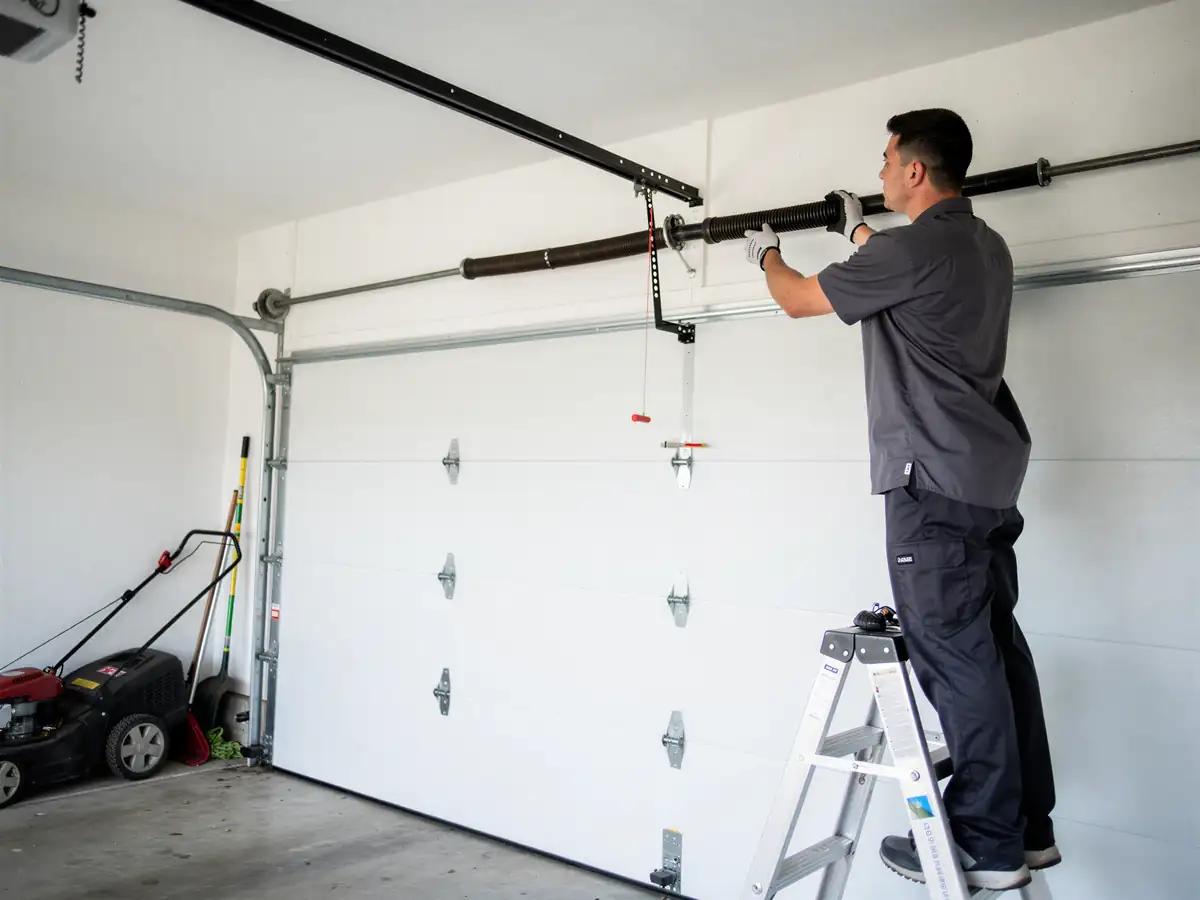
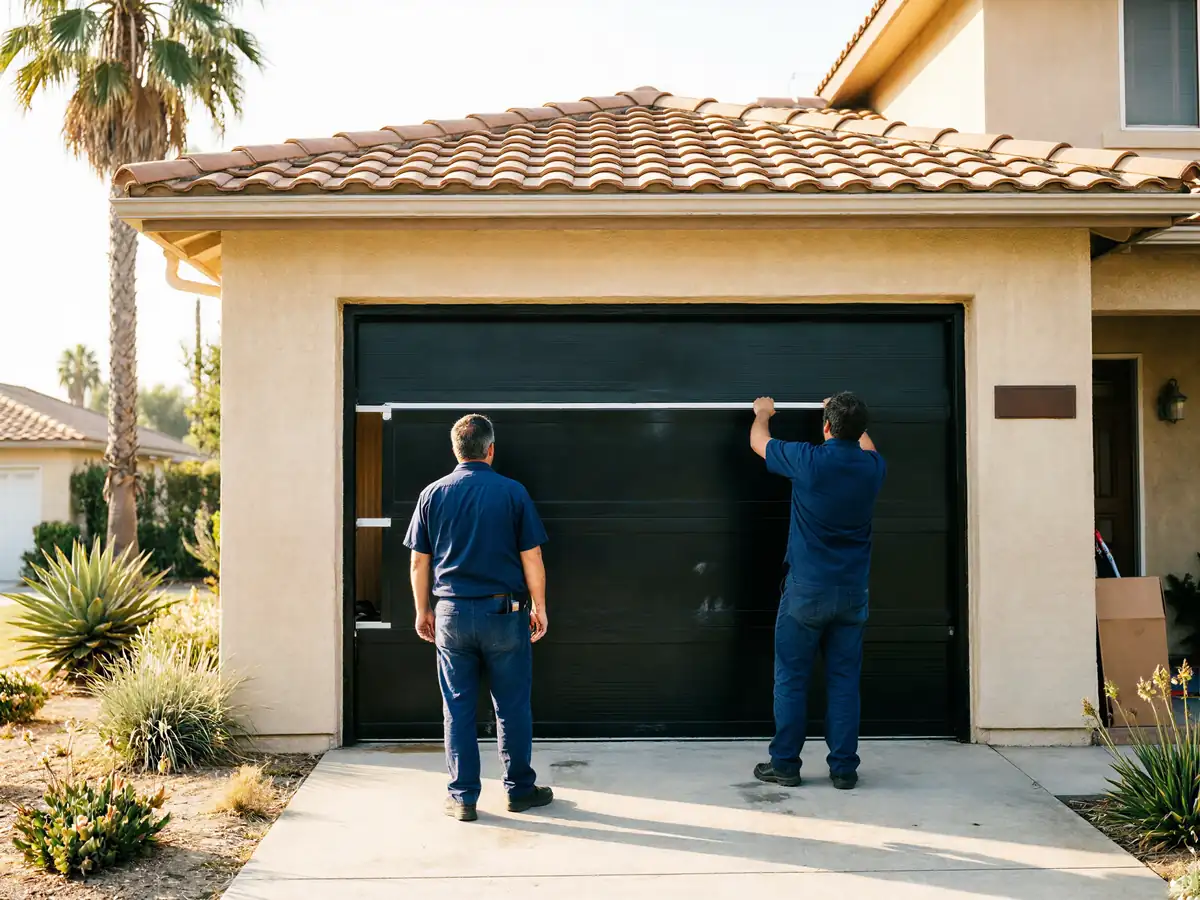
Some of this you can do yourself. Lubricating the track, tightening loose hinge bolts, clearing the photo-eye sensors of dust - that's an afternoon, not a call. Torsion springs are not on that list. A door spring under tension can put you in the hospital, and on the older single-spring setups still common on houses from the 1967-1988 build window, there's no secondary spring to catch a failure mid-release. If your door is sagging on one side, making a popping sound, or the opener strains and reverses, that's a call, not a project. We'll also tell you straight when replacement beats repair - if the door itself is original steel from that same era and the panels are rusted or dented beyond true, sinking money into a new opener on top of it doesn't make sense. Sometimes the honest answer is to replace the whole unit, not patch around it.
How it works
From “it’s stuck” to “it’s fixed”
1
Tell us what’s wrong
Describe the symptom - won’t open, loud bang, opener runs but the door won’t move.
2
On-site diagnosis
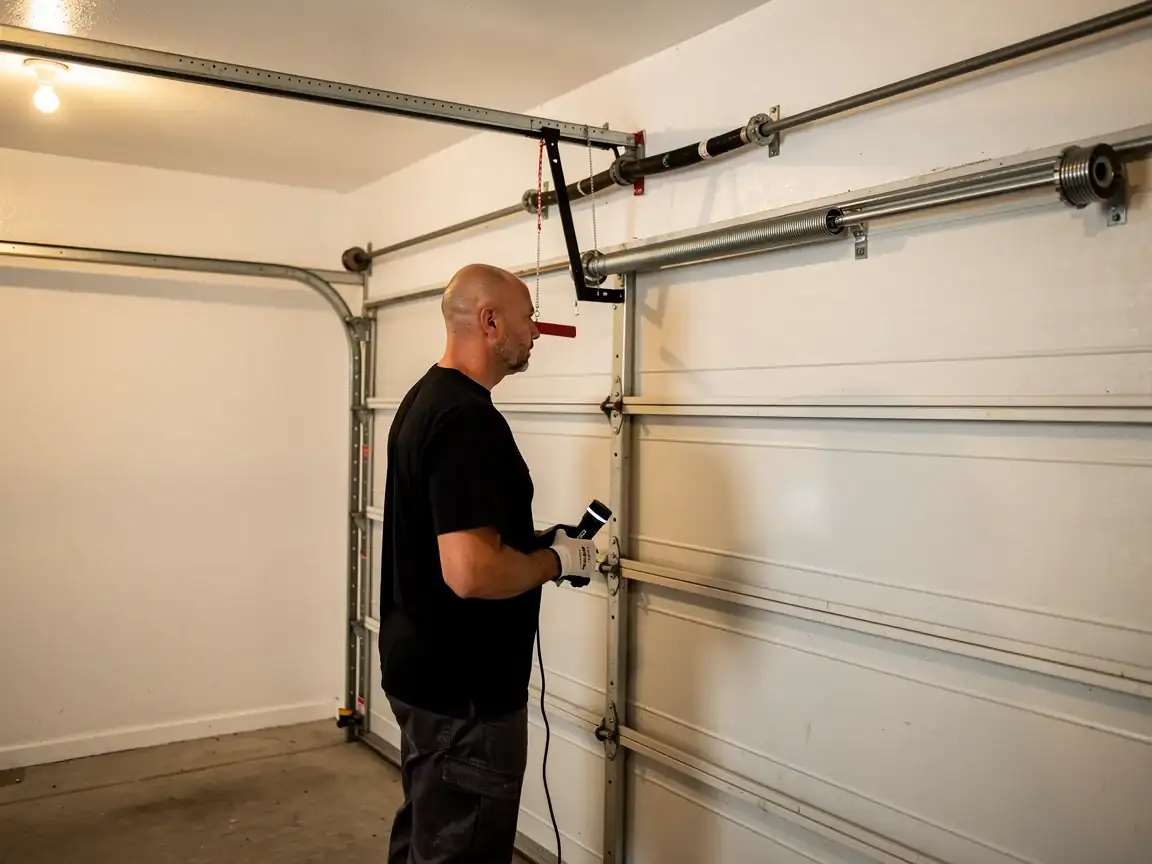
A technician tests the door under power and by hand and finds what actually failed.
3
Clear, up-front plan
You get the fix that’s needed and what drives the cost - before any work starts.
4
Repaired & tested
The repair is done, the door is set true and tested, and the work area left clean.
Not sure which repair your door needs in Spring Valley, CA? Describe what it’s doing - every job starts with a diagnosis.
Why did my garage door spring break with no warning?
Torsion springs are rated for a set number of open-close cycles, not years. Many Spring Valley homes still carry original hardware from their 1967-1988 construction window, and at this age the spring is well past its rated life. It doesn't fail from use spiking - it fails because the metal has simply fatigued out.
Does the mild climate here cause garage door problems?
Not directly. Spring Valley's mild temperate conditions mean we don't see the freeze-thaw or heavy humidity swings that wear hardware fast elsewhere. Most failures we find trace back to age and original parts, not weather.
Should I repair or replace an opener from the 1970s or 80s?
Depends on the unit and the door. If the opener is original to a house built in that 1967-1988 stretch and the drive gears or circuit board are failing, replacement usually makes more financial sense than sourcing parts for a decades-old chain drive.
How do I know if my door is a repair or a full replacement?
If the panels are original steel and showing rust or warping along with hardware failure, a repair is often a short-term patch. We'll look at the door in person and tell you honestly which side of that line your job falls on before quoting anything.
Ready to get your garage door sorted?
Tell us what it’s doing and where you are in Spring Valley - we’ll take it from there.