The Cost of This Job
We can't quote you a number without seeing the door, but here's what moves the price
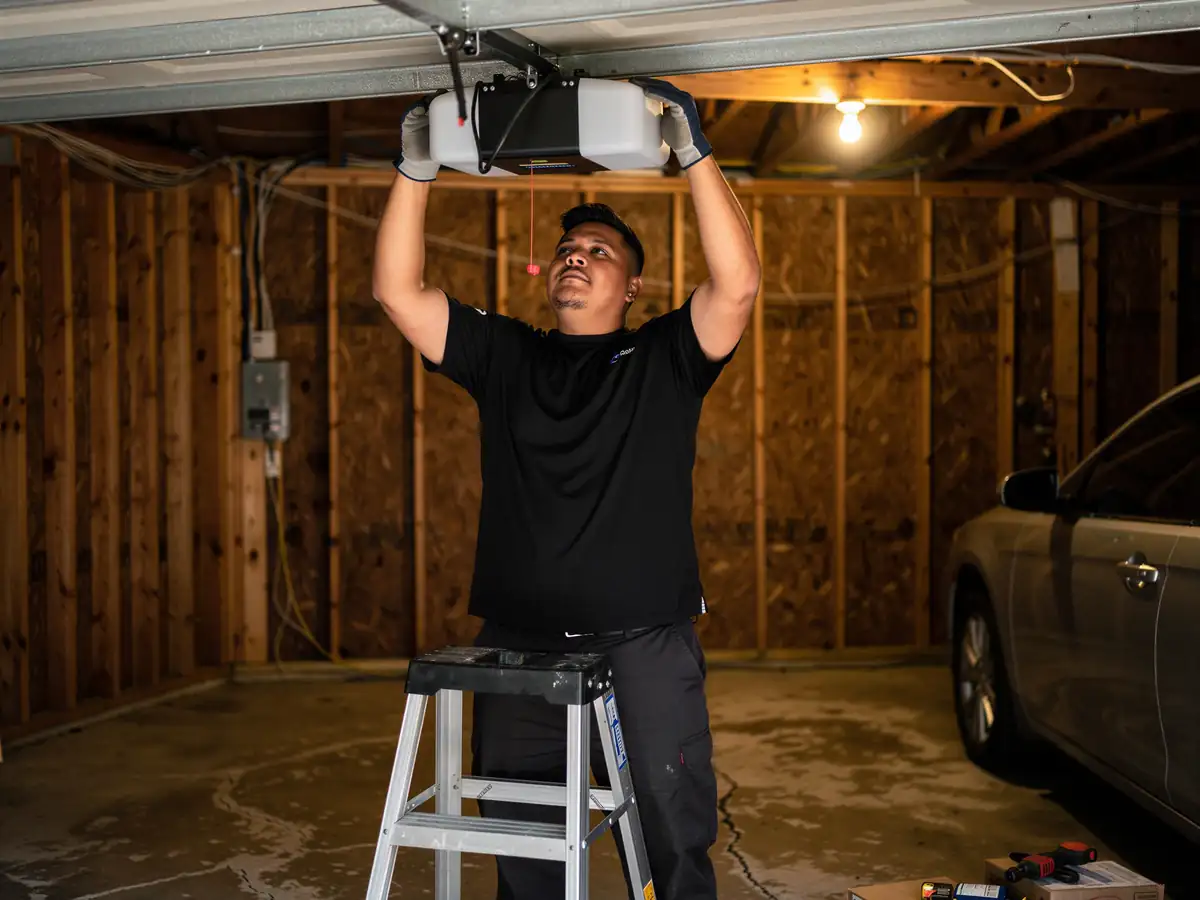
A broken torsion spring on a single door costs less than the same job on a double, because a double usually runs two springs instead of one, and if one went the other is close behind it. An opener swap costs more if the old unit is chain-drive and hardwired into a switch box that doesn't match anything sold today - common in houses built here between 1967 and 1988, where the median build year sits around 1975. Track and roller work is cheaper than spring work, almost always.
With a median household income of $105,887 across this part of the county
Most owners we talk to choose a full spring or opener replacement over a patch job, because the patch doesn't last and they know it. That's a choice you get to make, not one we push on you.
- $105,887 median household income
The honest limitation
If your door is original to a house built in the 1970s, parts for that exact torsion hardware may not exist anymore. In that case the real cost isn't the repair, it's replacing hardware that was never designed to be serviced forty-plus years later. We'll tell you straight when that's where you're at instead of billing you for a fix that won't hold.
What You Are Seeing
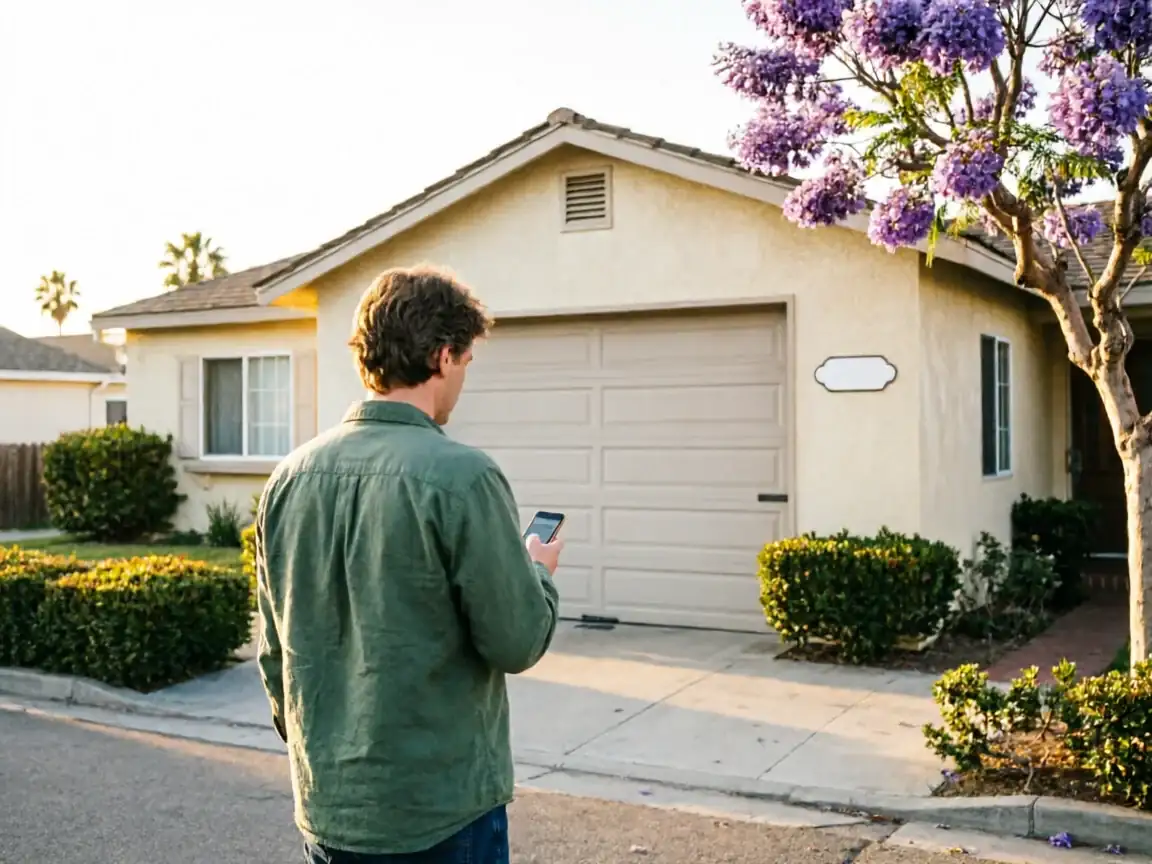
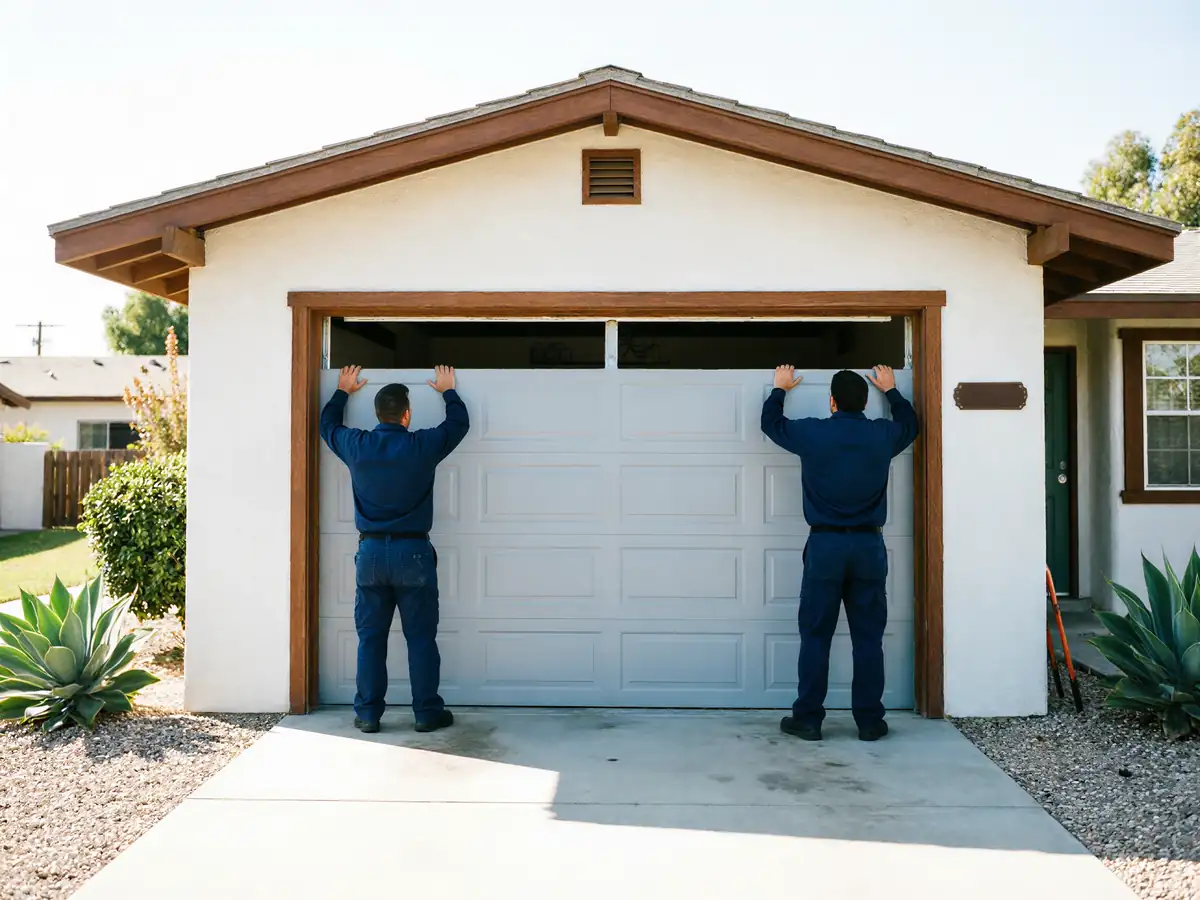
The door stops a foot off the ground and won't go further. It slams the last six inches on the way down instead of settling. The opener motor runs but the door doesn't move, or it moves and reverses for no reason you can see. One side lifts before the other, so the panel racks sideways in the track. These are the four calls we get most from this side of the county, and they almost all trace back to the same two or three parts.
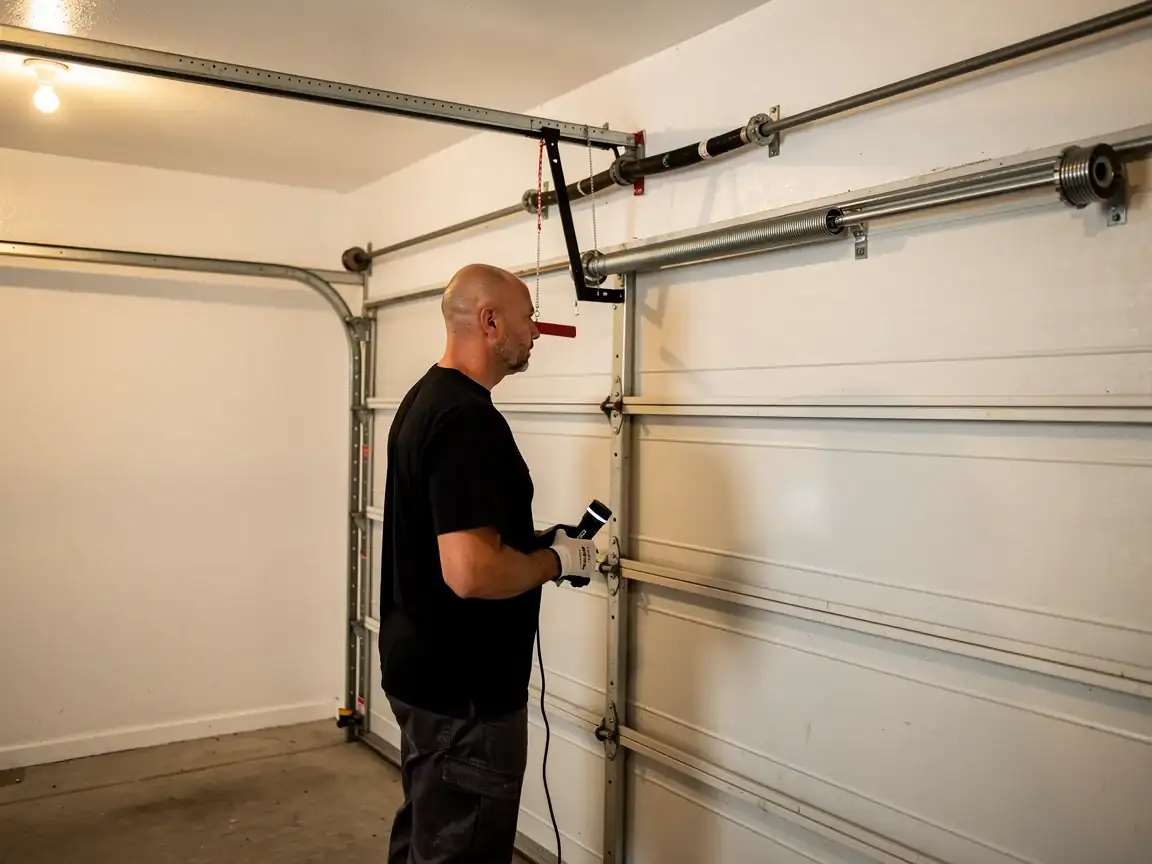
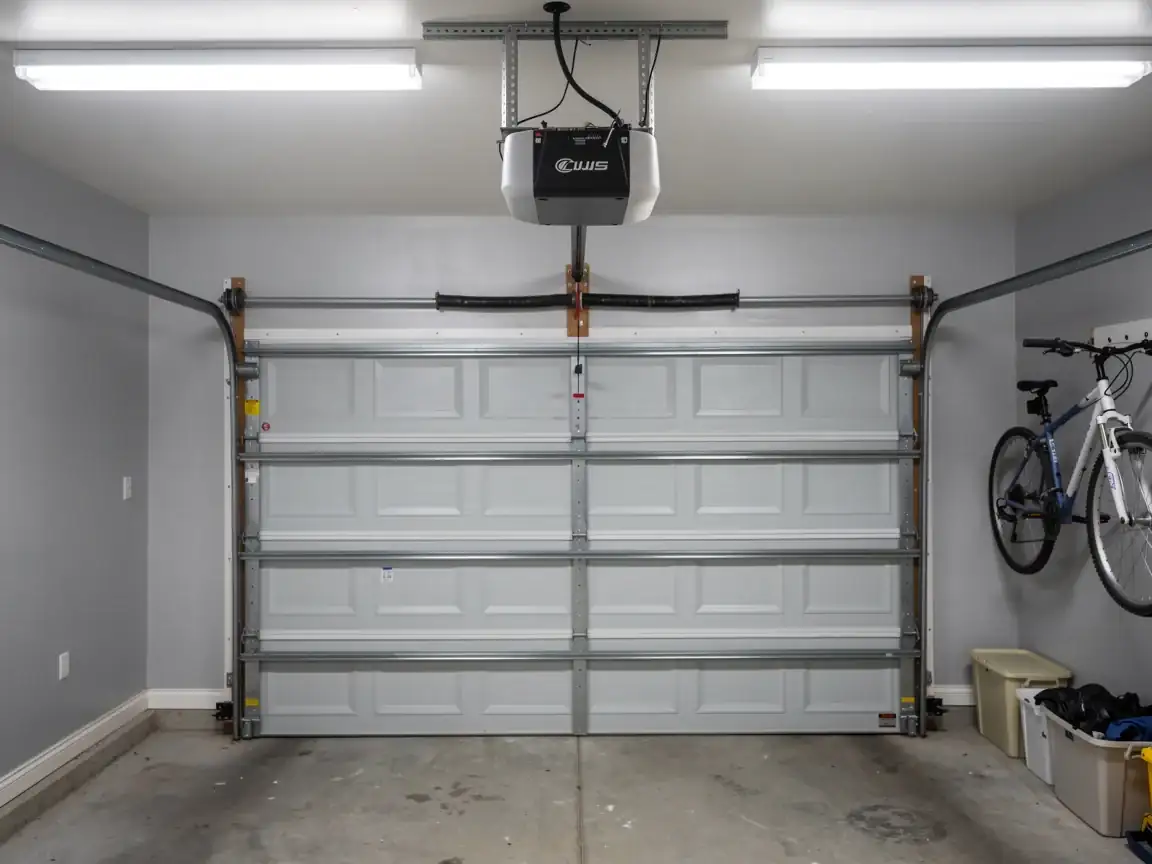
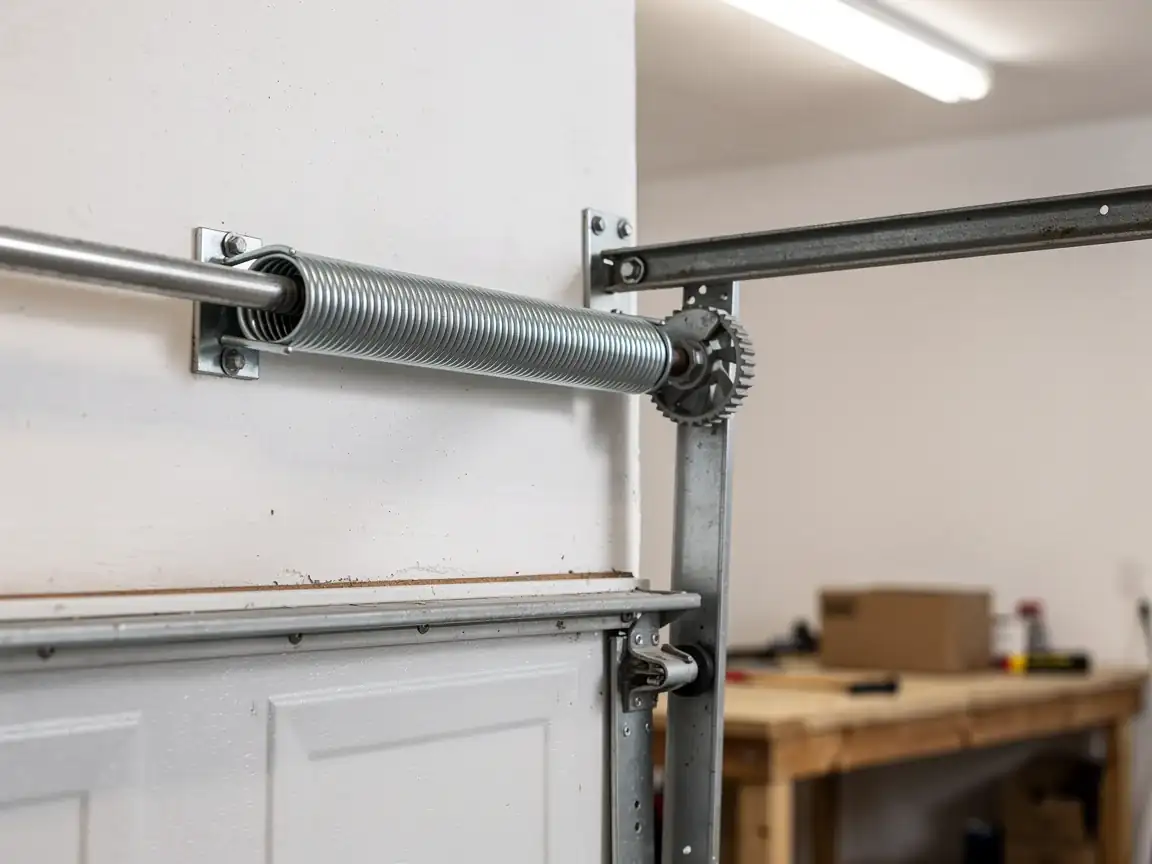
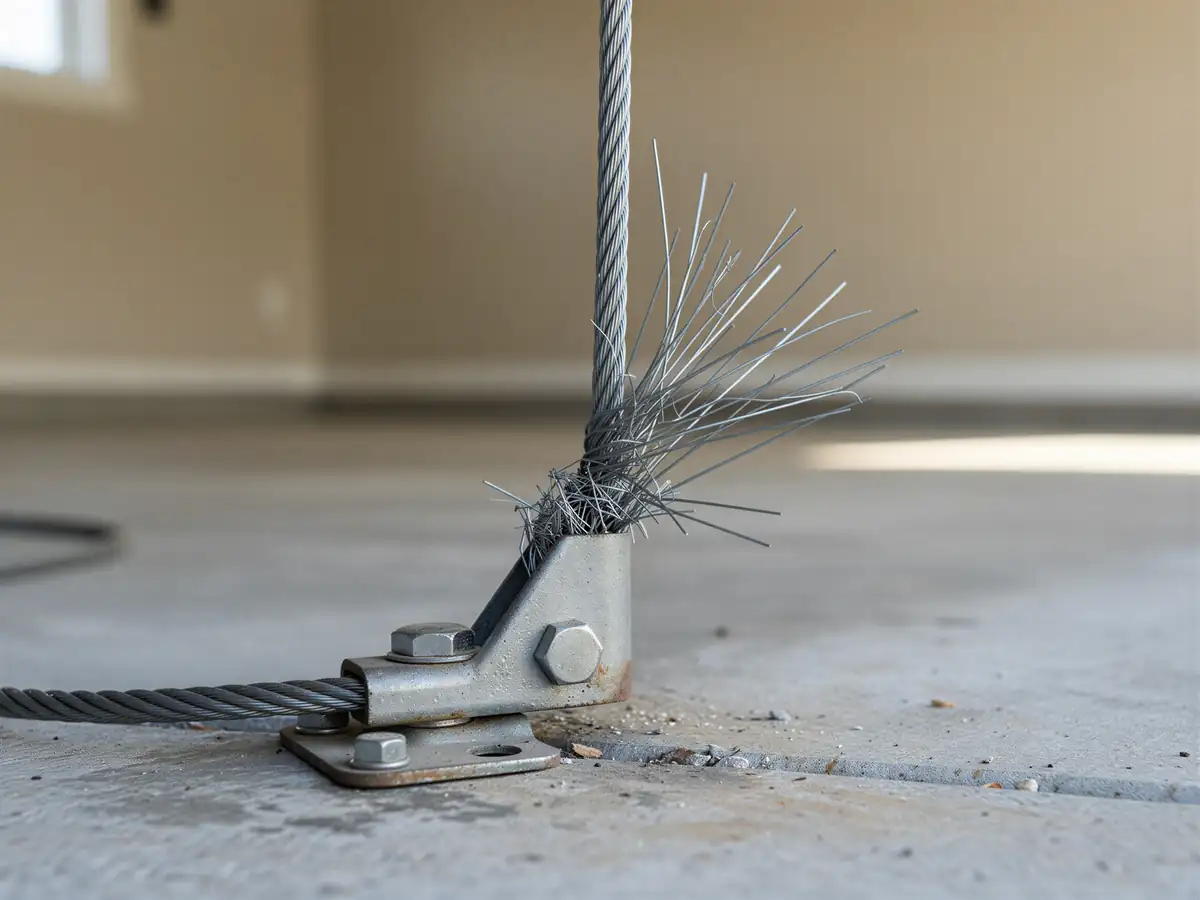
A torsion spring that's lost tension shows up as the door feeling heavier than it used to, or an opener straining against weight it was never built to lift alone. A worn cable or a roller that's gone from steel to plastic-and-dust shows up as noise first, then as a door that won't track straight. None of this is dramatic. It's wear, showing up on schedule, on hardware that's been doing the same job since Gerald Ford was president in a lot of these houses.
Why This Fails Locally
Most houses on this side of the county went up between 1967 and 1988, with the median landing around 1975, across the eighteen named areas that make up this stretch of 1960s-and-70s housing stock. That means a lot of garages still run original torsion springs on side-mount hardware that predates the parts aisle at any supply house. When that spring finally lets go, it's not because anything was done wrong - it's because thirty, forty, fifty years is the natural end of a steel spring's life, and nobody replaced it on a schedule because nobody tells you to.
The mild temperate climate here doesn't crack a door the way freeze-thaw cycles do in colder states, so you won't see the sudden winter failures some regions get. What you get instead is slow failure: decades of sun baking lubricant out of rollers and hinges, dust working into a track that was never sealed, and a spring that's simply cycled past its rated life with no weather event to blame it on. With 46,922 owner-occupied houses out of 132,698 households in this part of the county, that slow failure is playing out in a lot of garages at once, just quietly.
The DIY Question
Tightening a loose track bolt, lubricating hinges and rollers
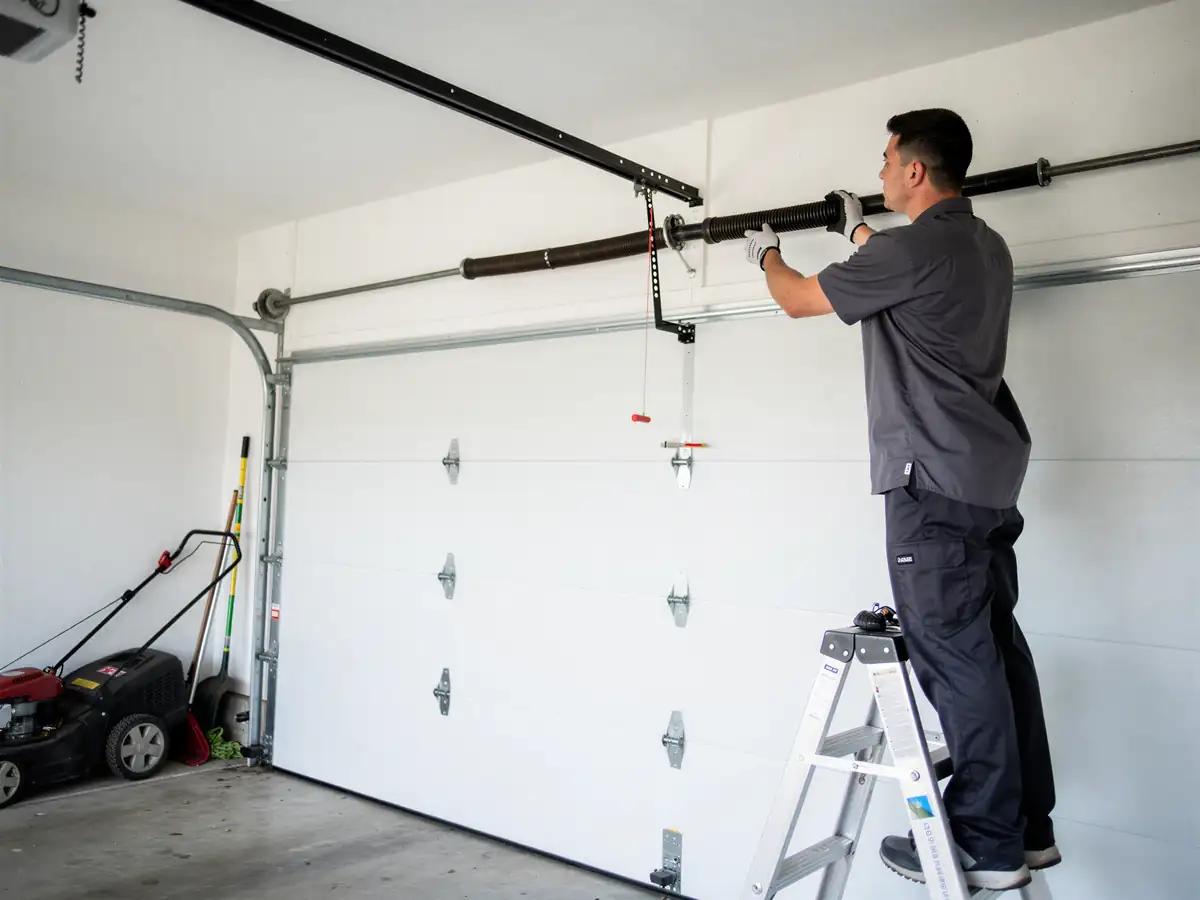
Or swapping a remote battery - fine, do it yourself, it's not where people get hurt. A torsion spring is a different animal. It's wound under enough tension to break a bone or worse if it lets go while you're working on it, and that's true whether the door is five years old or original to a 1975 build. We don't recommend it as a homeowner job, full stop, and that's not us protecting billable hours - it's the same thing any honest tech will tell you.
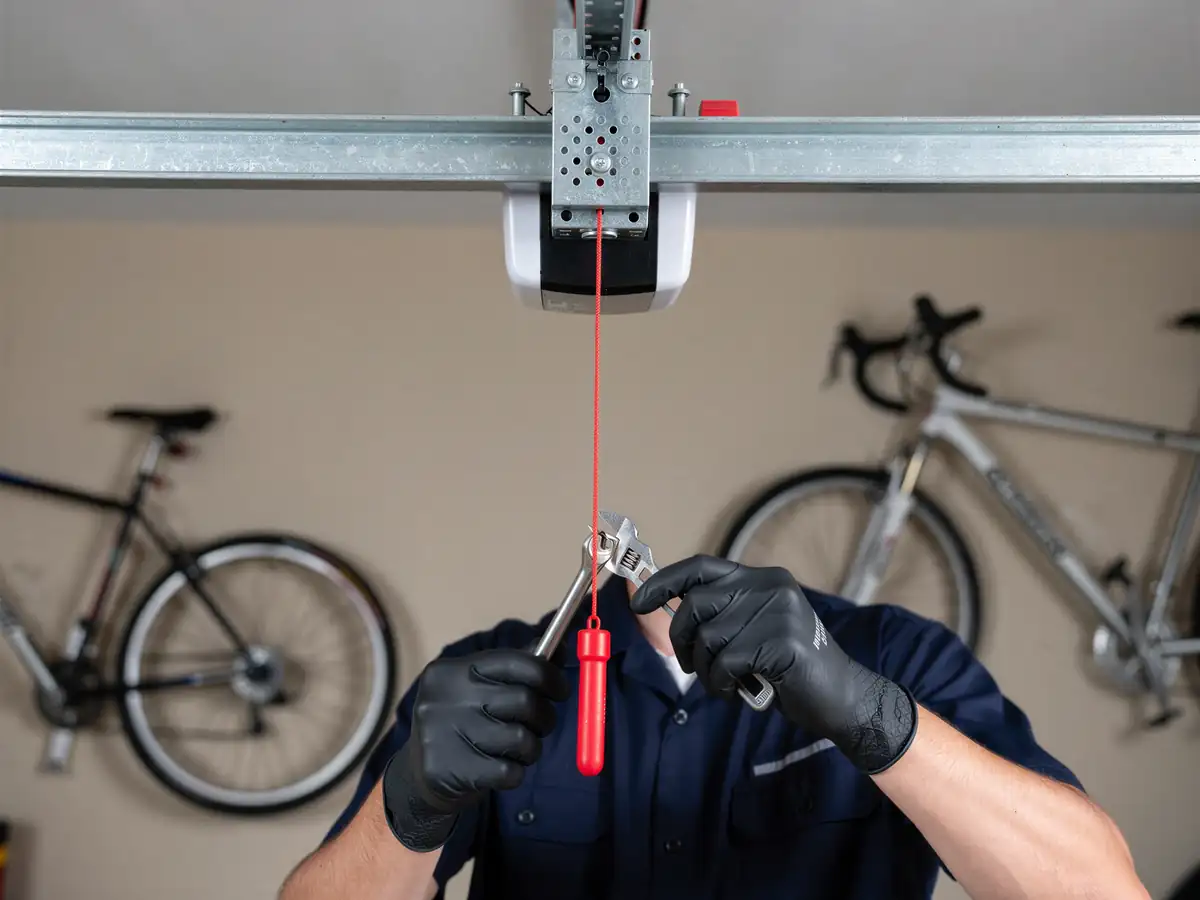
Opener troubleshooting sits in between
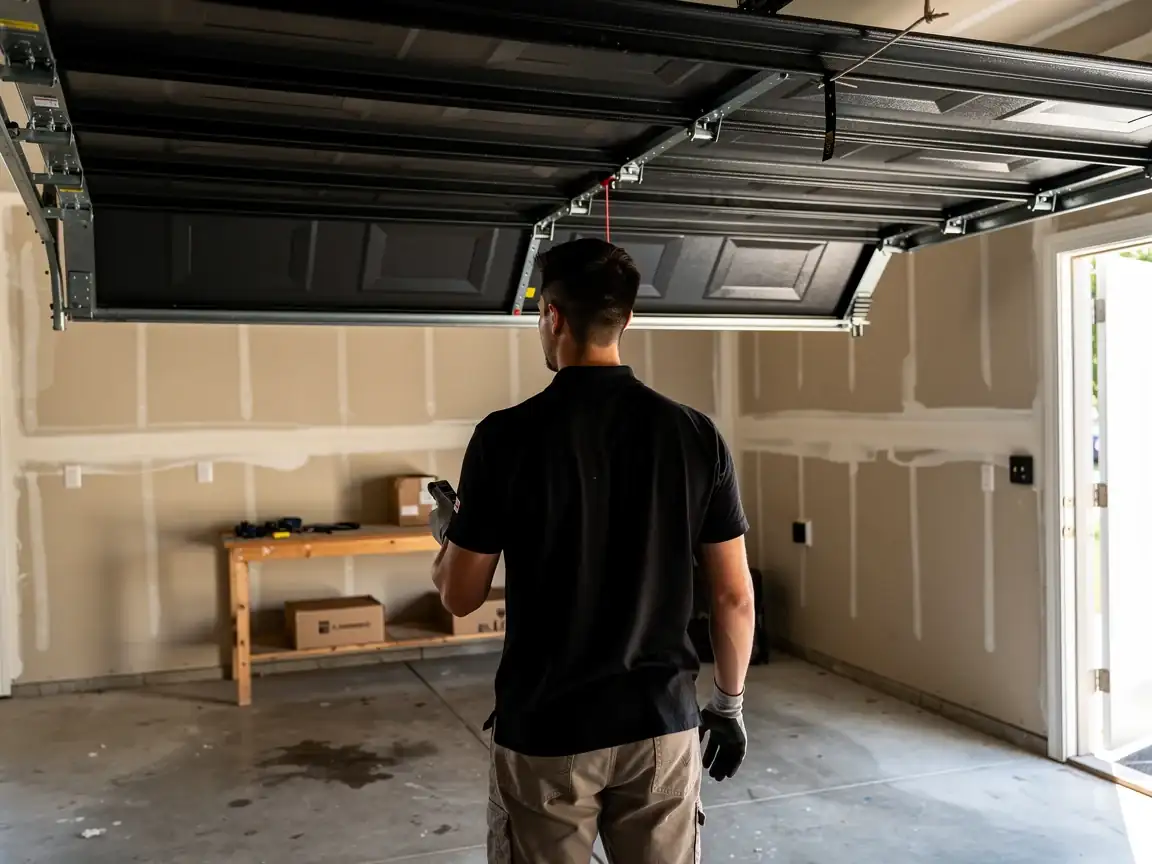
Checking the safety sensors for alignment or dirt, or resetting the force settings per the manual, is reasonable. Diagnosing a dead circuit board or a motor that's drawing too much current isn't, unless you're comfortable with household wiring and know what you're looking at. If the door is original to a house built before 1988 and the opener or spring hardware looks original too, that's the point where calling it in costs less than a trip to the ER or a second repair after a first one done wrong.