The Cost of This Job
We're not going to throw a number at you that we can't back up for your specific door
Because spring repair cost swings on a few things: whether you've got one torsion spring or two, whether it's torsion or the older extension-spring setup, the size and weight of the door, and whether the drums or cables need replacing along with the spring itself. A single-spring torsion setup on a standard double door is a different job than a two-spring system where one side let go and stressed the other.
What we can tell you is what drives price up versus down
Jobs cost less when it's a clean spring swap - old spring off, correctly sized spring on, nothing else touched. Jobs cost more when the spring broke because a cable snapped first, or when a drum is worn and needs replacing, or when the door's been running on a spring that's been undersized for years and the hardware around it is tired too. If you want an actual dollar figure, that's a call where we look at the door, not a page where we guess.
One honest limit here
We quote spring jobs off a look at the door, not off a phone description. Owners sometimes describe a dead opener when it's actually the spring, or the other way around, and that changes what you're paying for.
What You Are Seeing
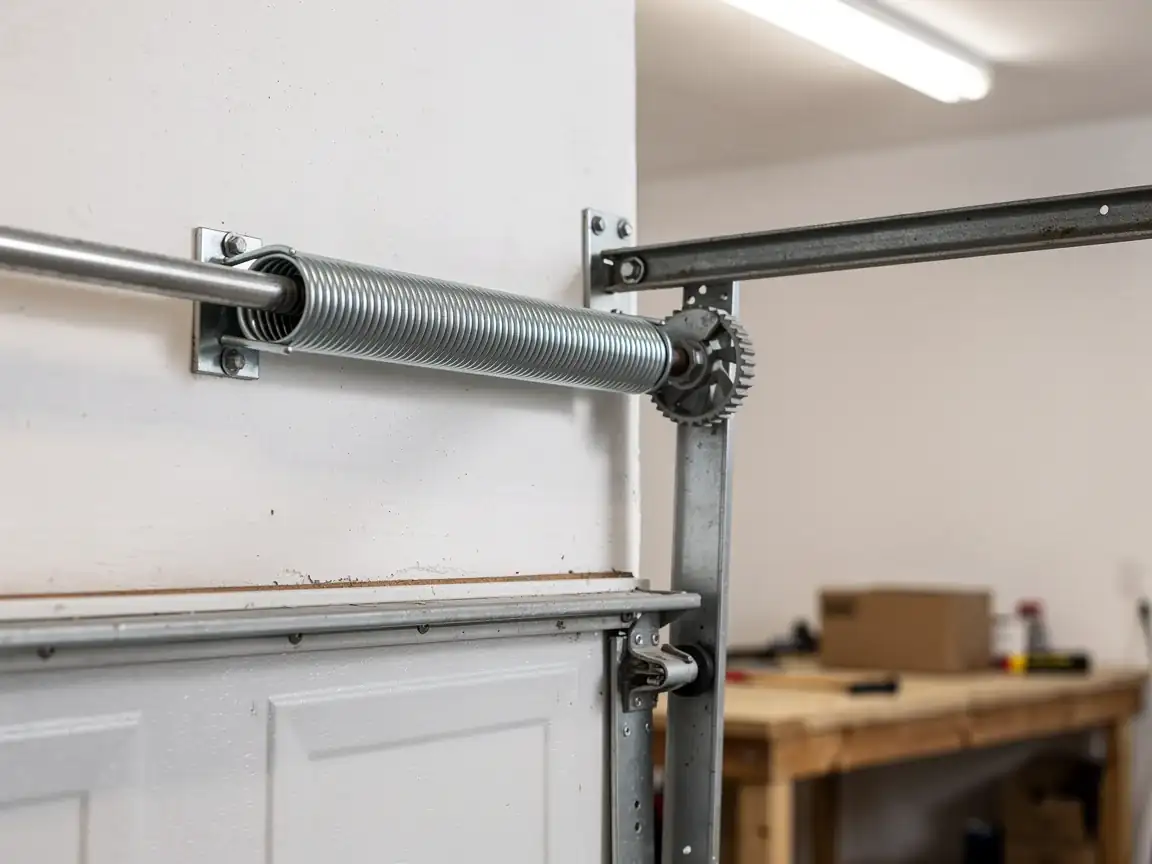
A garage door spring doesn't fail quietly. You hear a bang - loud enough that people think something fell or a car hit the house - and after that the door either won't budge or it slams down fast when you try to lift it by hand. That bang is the torsion spring letting go under tension, or one of a pair of extension springs snapping along the side tracks.
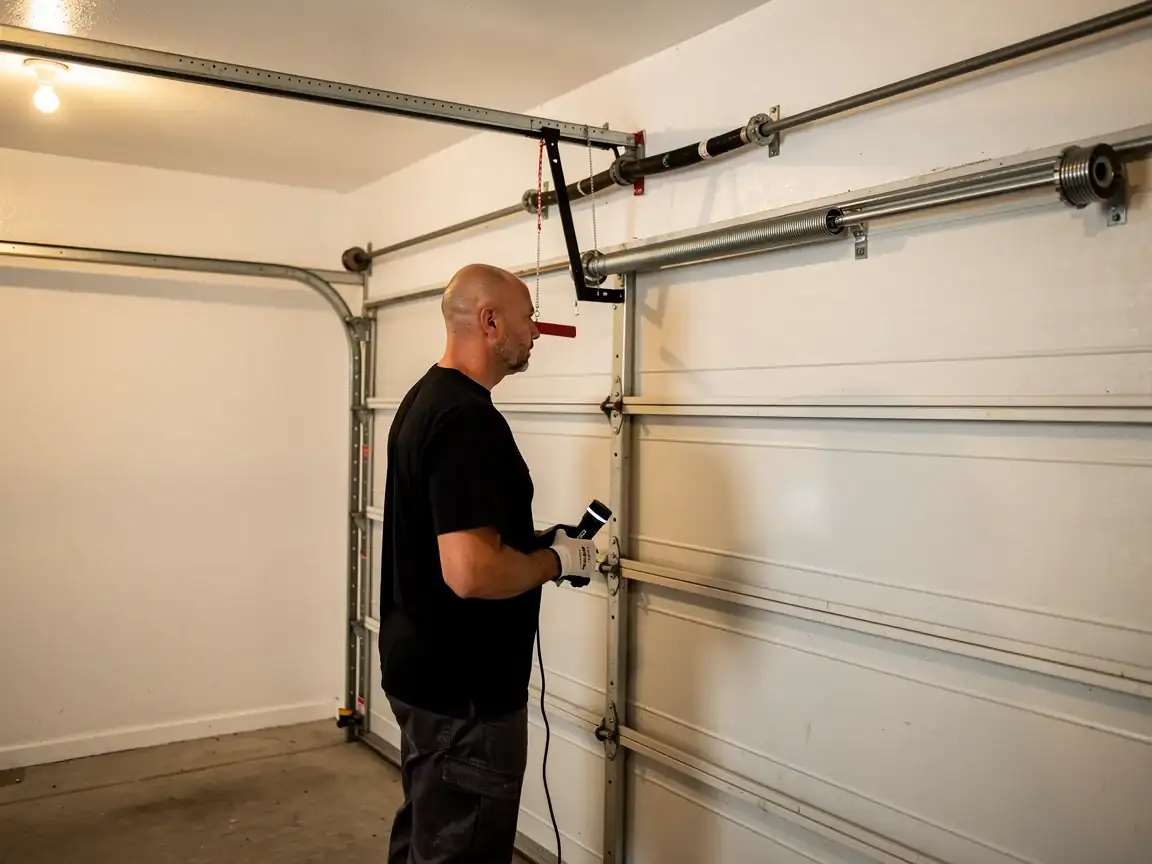
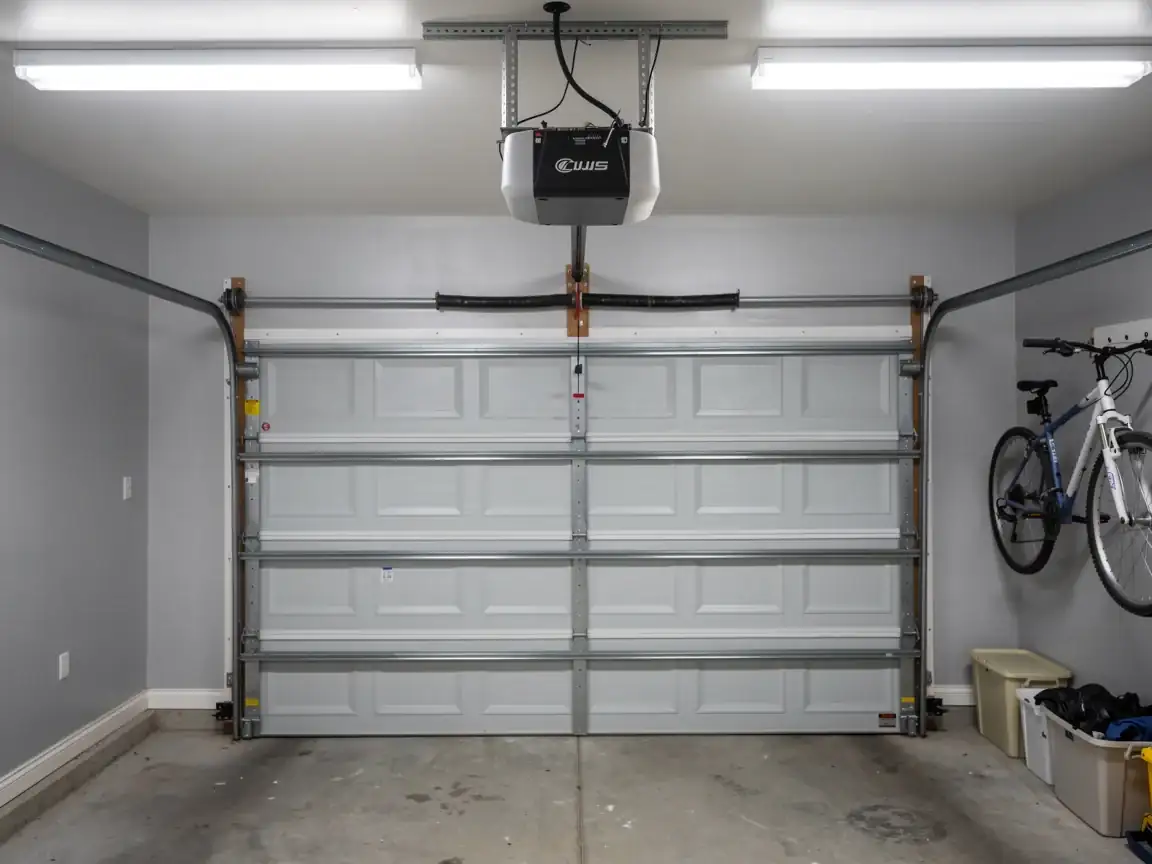
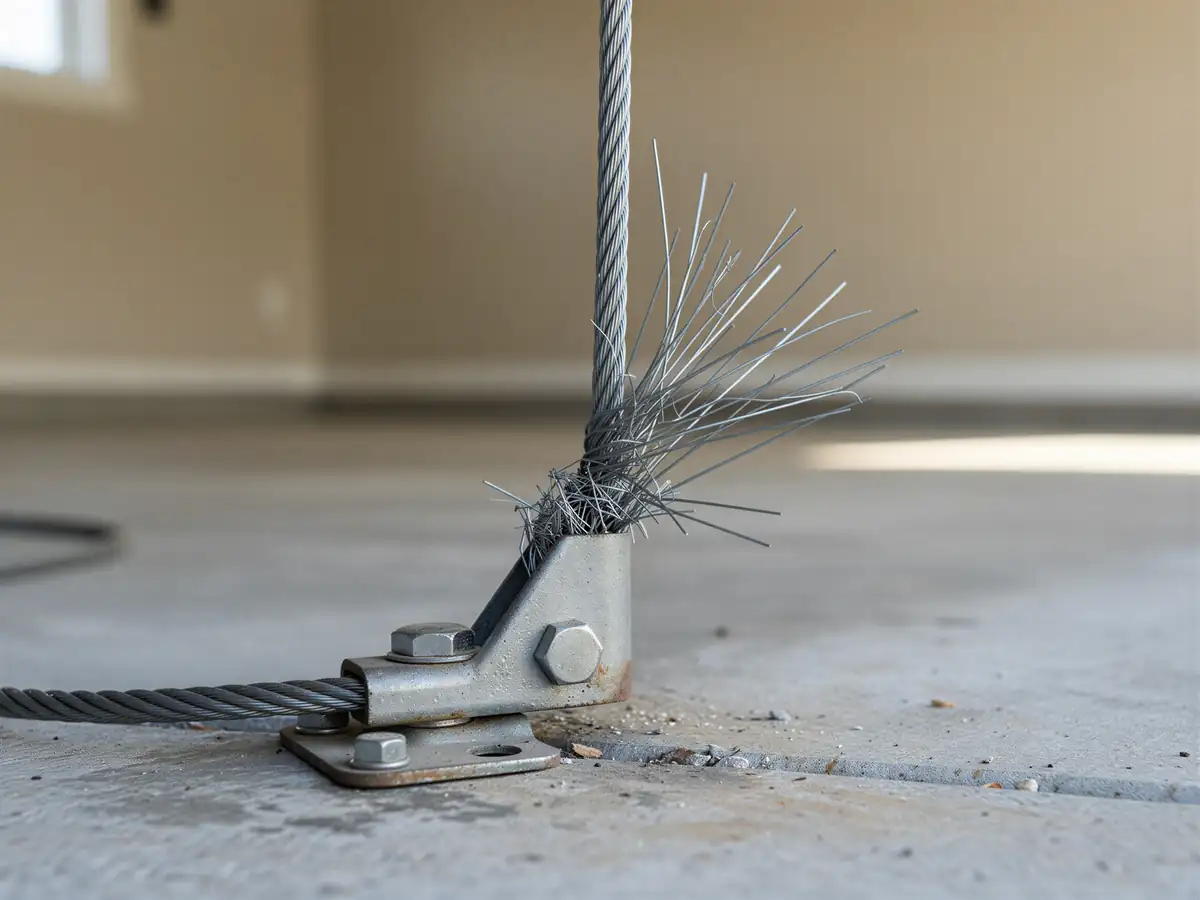
Before the full break, there are usually warning signs owners miss: the door feels heavier than it used to when you lift it manually, the opener strains and runs slower than it did a year ago, or you notice a visible gap in the coil when you look at the spring above the door. Cables that look frayed near the bottom bracket are often a sign the spring has already been overcompensating.
If your door won't open at all and the opener motor just hums, that's consistent with a broken spring taking all the resistance off the opener's small motor - openers aren't built to lift a door's full weight alone, and they won't try for long before something else gives. Don't keep hitting the button. That's how a spring failure turns into an opener failure too.
Why This Fails Locally
Most of the garage doors we're called out on across this service area sit on houses built between 1967 and 1988, with a lot of that stock clustering around 1975 - across the 18 or so areas we cover, the pattern holds from Casa de Oro-Mount Helix and Lemon Grove out to Rancho San Diego and Bonita. That means a huge share of the springs we replace aren't original to a door that's seven years old; they're the second or third spring on a door whose track, drums, and opener hardware are also from that same build era.
A torsion spring is rated for a number of open-close cycles, not years, and a spring installed decades ago on a house from this stretch has usually cycled past its rating regardless of how well it was maintained. The mild temperate climate here doesn't put the same thermal stress on steel that extreme heat or hard freezes do elsewhere, so corrosion and brittle metal from weather aren't the main driver the way they'd be in other regions. The failure here is closer to straightforward fatigue: an aging spring, on aging hardware, on a door that's been opened and closed tens of thousands of times since the Ford administration-era building boom put it there.
That combination - older housing stock concentrated in a narrow build window, moderate climate, decades of cycles - is why spring repair calls here skew toward tired original hardware rather than weather damage.
The DIY Question
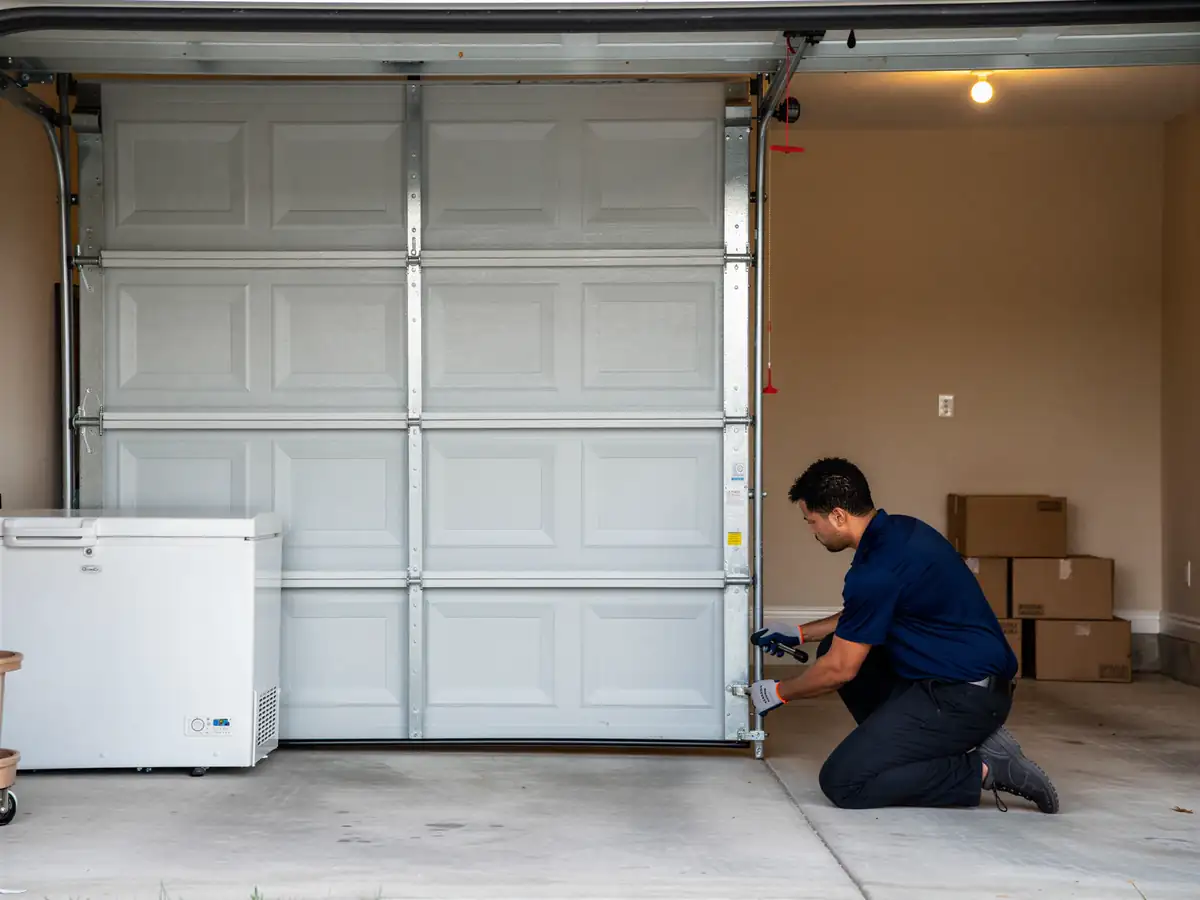
A torsion spring is wound under enough tension to break a bone or worse if it lets go while you're working on it
And the winding bars and gauge needed to do it safely aren't something most owners keep in a toolbox. We'll say plainly: this is not a job we recommend doing yourself, and it's one of the few repairs where the safety argument outweighs the savings argument.
What you can safely do yourself is the diagnosis
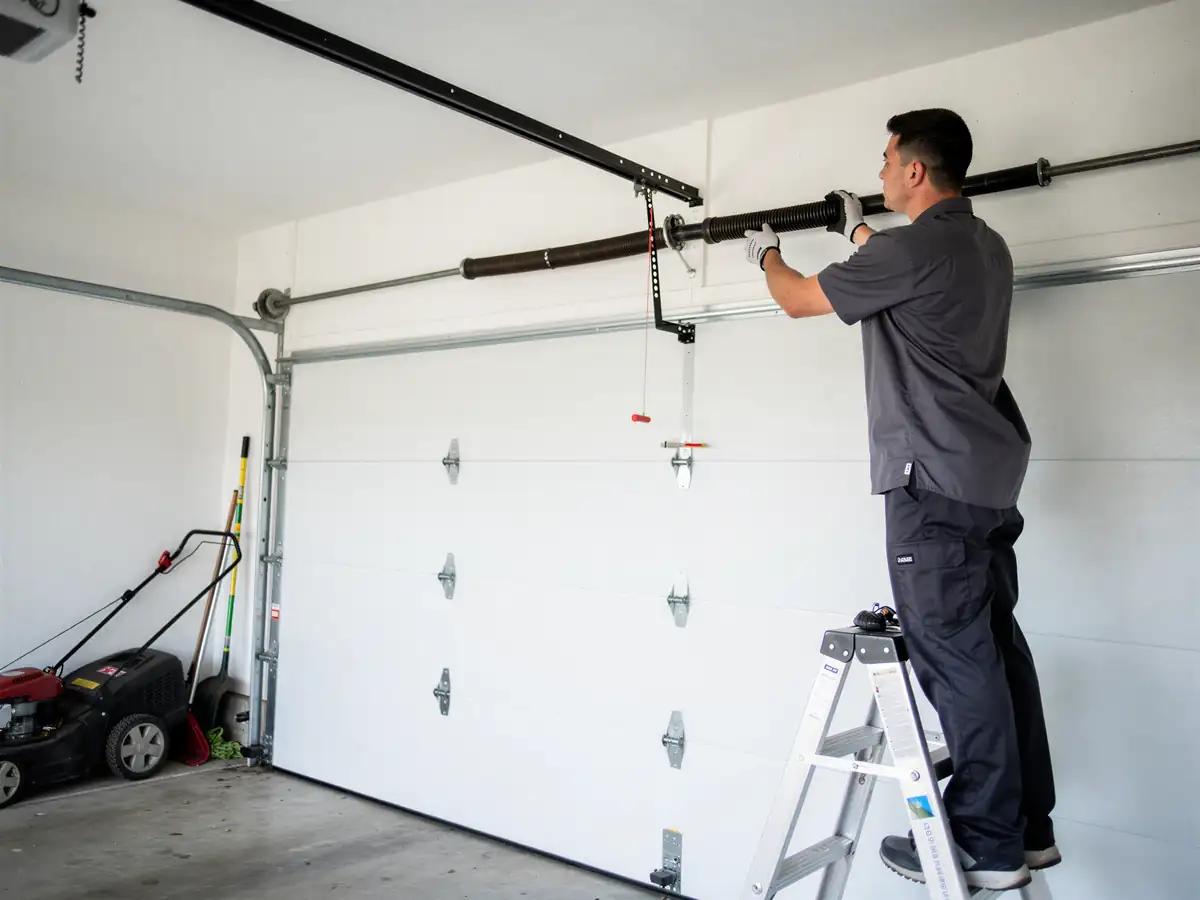
Look at the spring above the door - a visible gap in the coil means it's broken. Check if the door is unusually heavy to lift by hand with the opener disconnected. Listen for that bang, and note when it happened. All of that helps whoever comes out to fix it work faster, and it tells you whether you're dealing with a spring or something else, like a bad opener logic board or a jammed track.
What doesn't make sense is replacing a spring with a mismatched one bought off a shelf because it looked close
A spring sized wrong for your door's weight will fail again, often faster than the first one did, and it puts uneven strain on the opposite side if you've got a two-spring system.