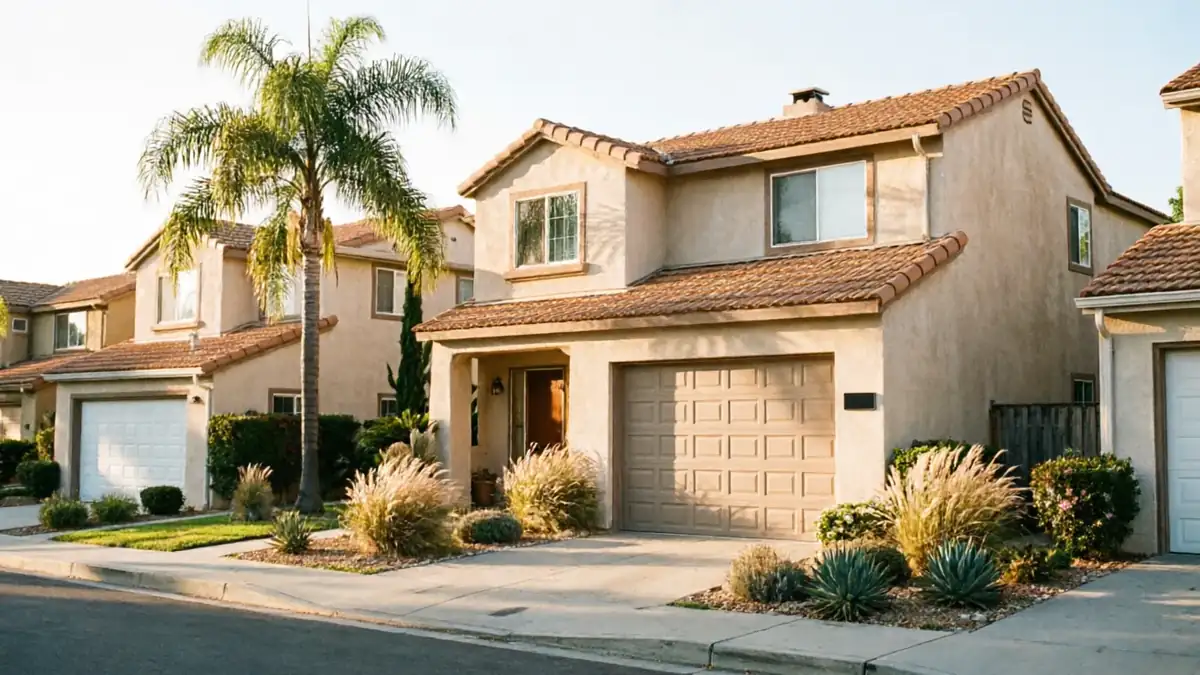
Coronado homes went up mostly around 1974, a notch earlier than the 1975 median across our service area. We travel the 11 miles from Spring Valley to work on that era's hardware.
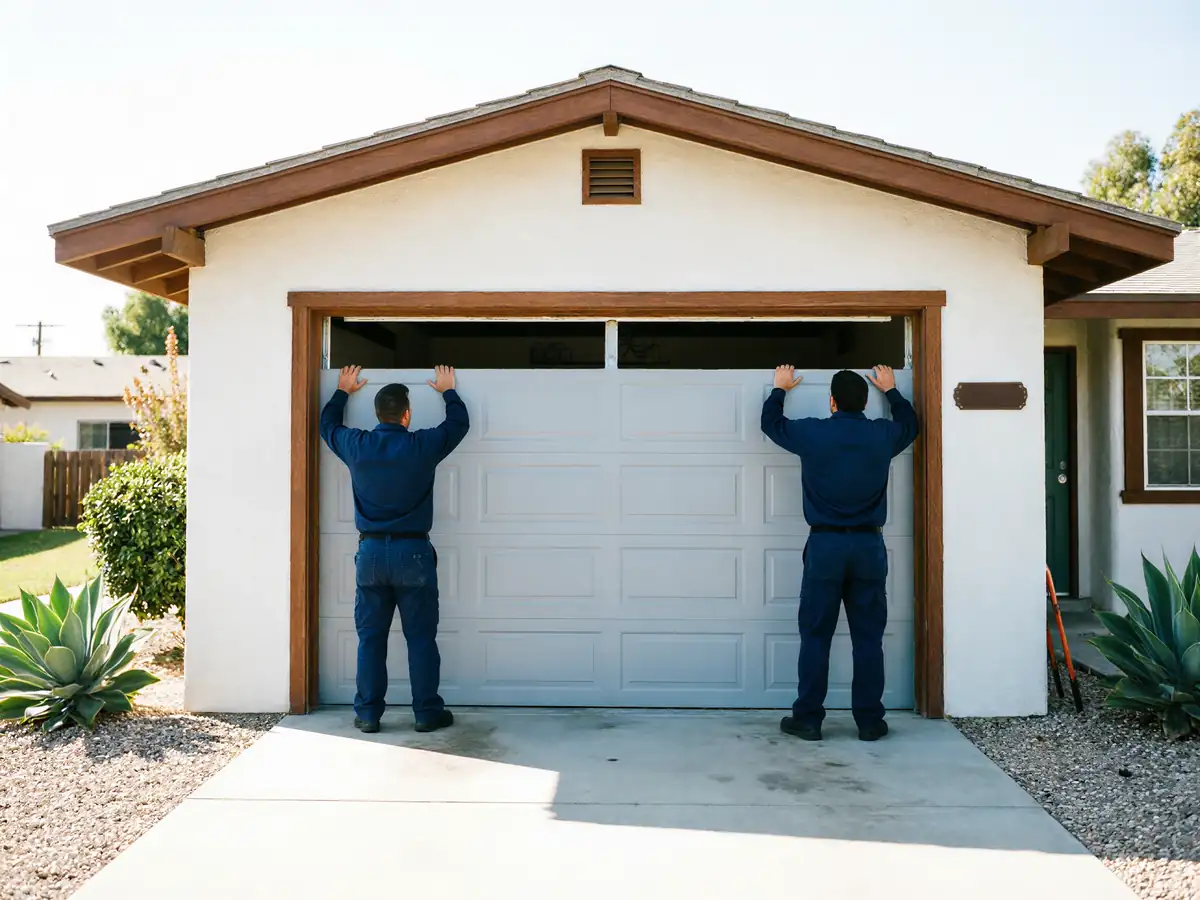
Coronado sits right at the edge of the 1967-1988 build window that covers most of the houses we work on, but the homes here skew a hair earlier, clustering around 1974. That one year matters more than it sounds like it should. A door built in 1974 is old enough that the opener bolted onto it has probably been swapped out at least once, but the torsion hardware above the door is very often original. We get calls from Coronado about springs that have simply run out of cycles after four decades, about galvanized tracks that have pitted from being near the water, and about openers from the 1990s or early 2000s that are on their second or third remote. We don't get many calls here about brand-new builder-grade doors, because there just aren't many of those in this part of the service area. Most of what we see is a door that has been patched once already and is due for a real decision: fix the spring and keep going, or replace the whole unit while the opener is still worth keeping. We don't pretend every call is an emergency. A door that's slow to close but still closing can usually wait a day for the right part.
How That Shows Up in the Door
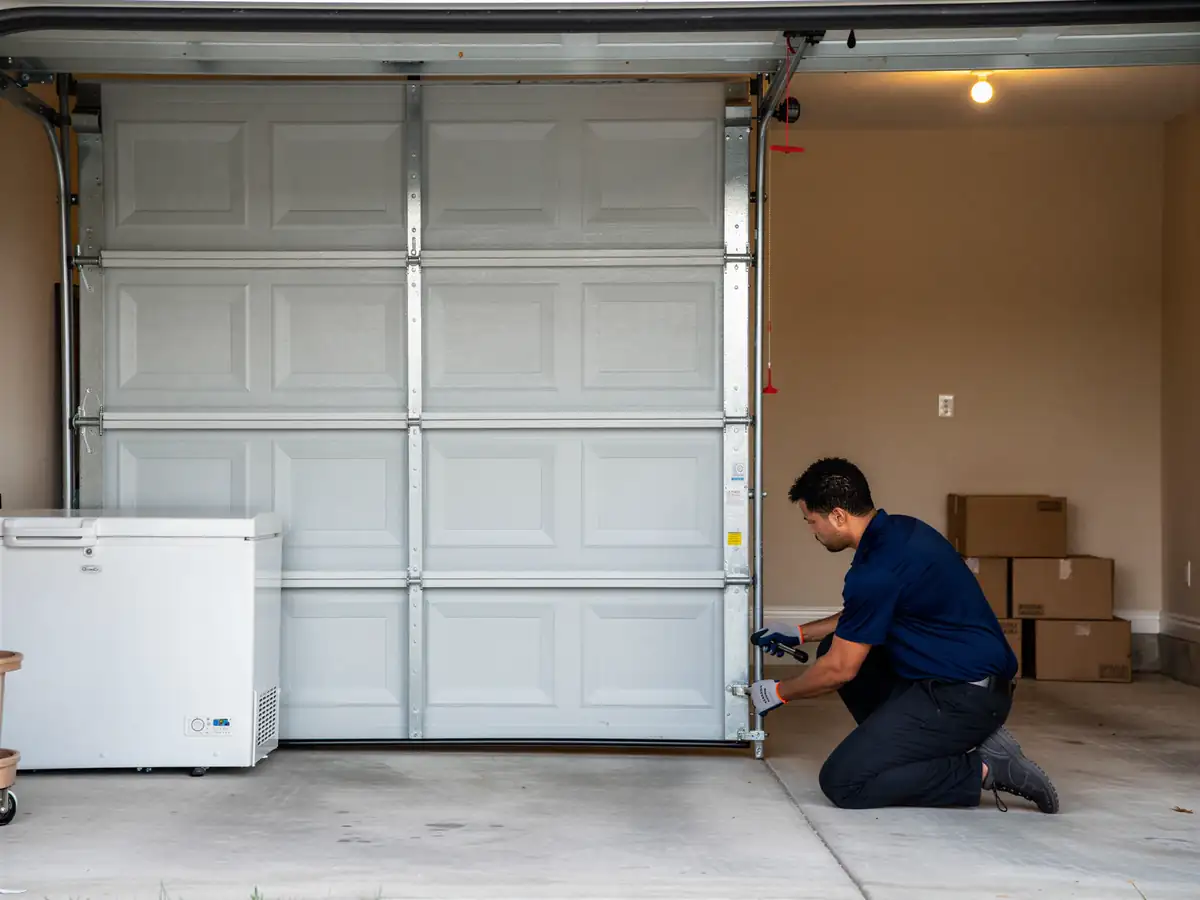
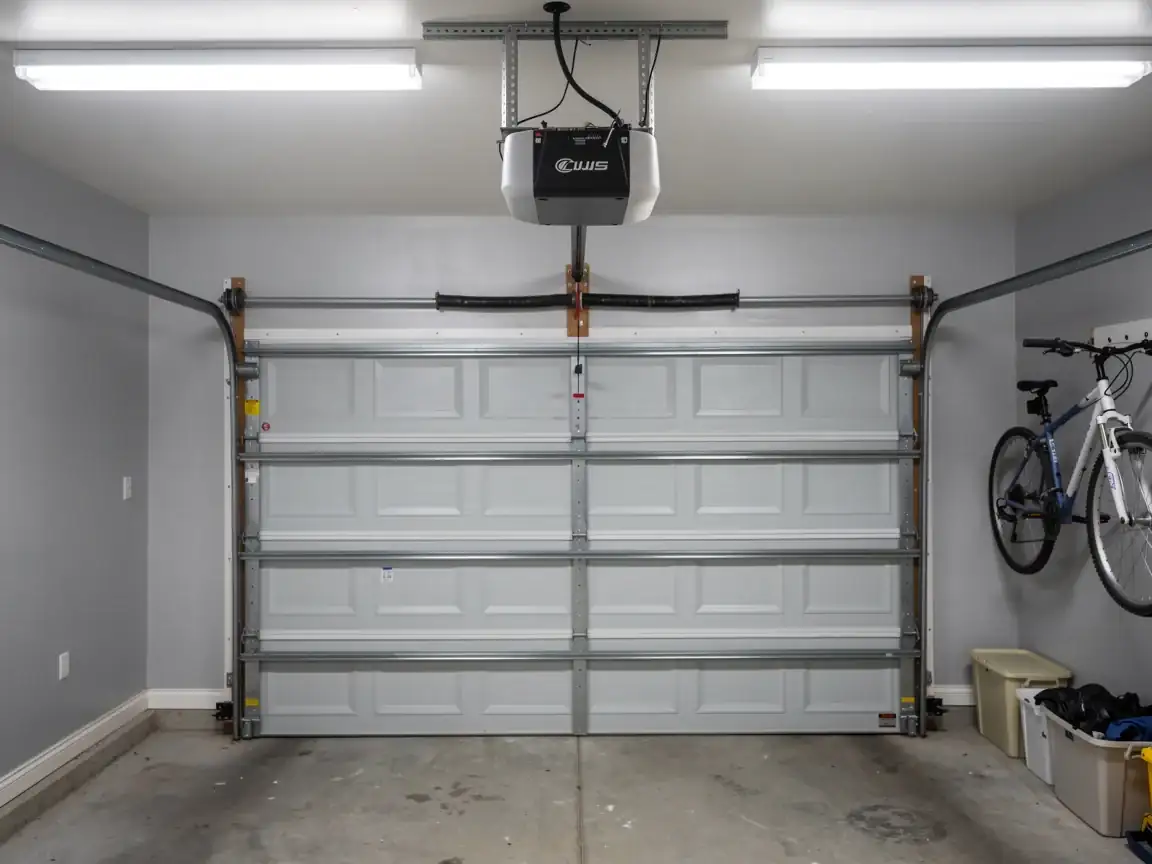
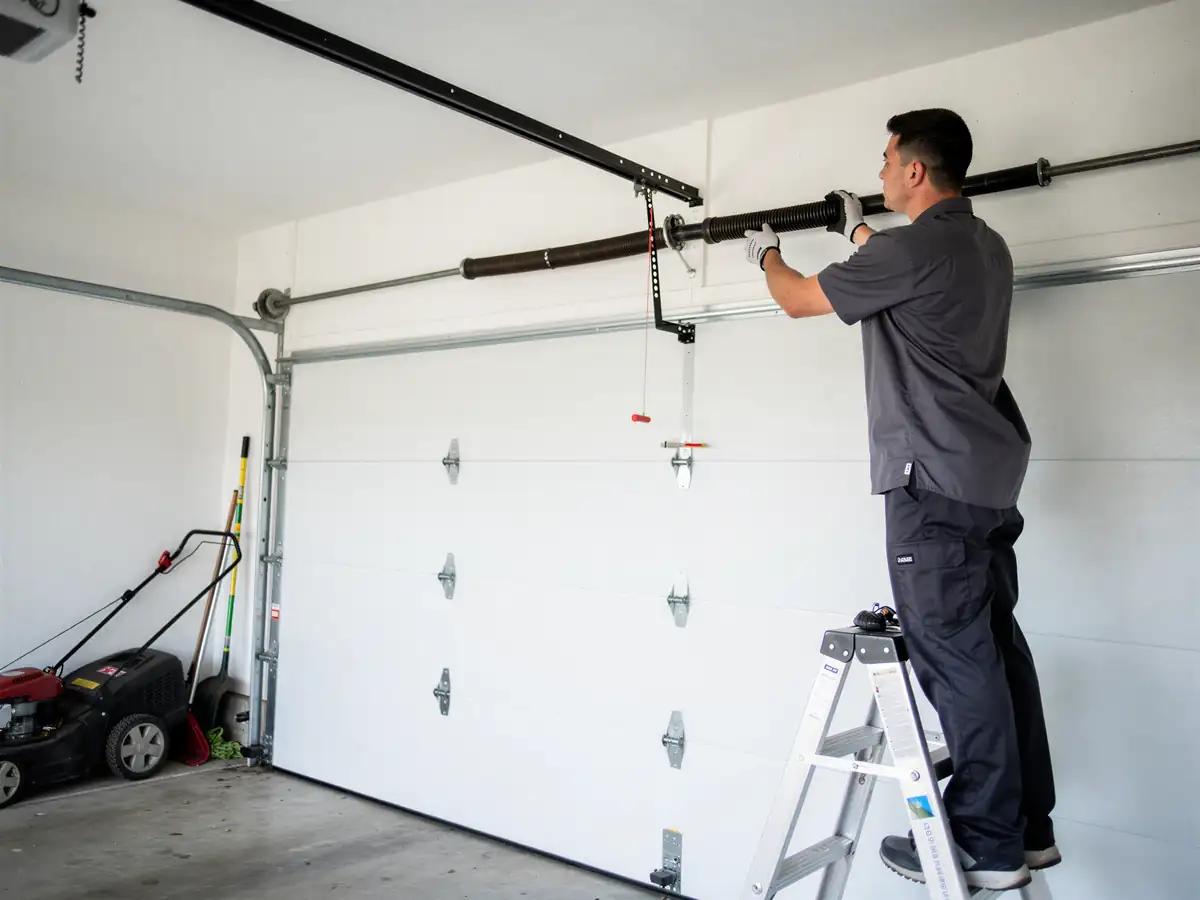
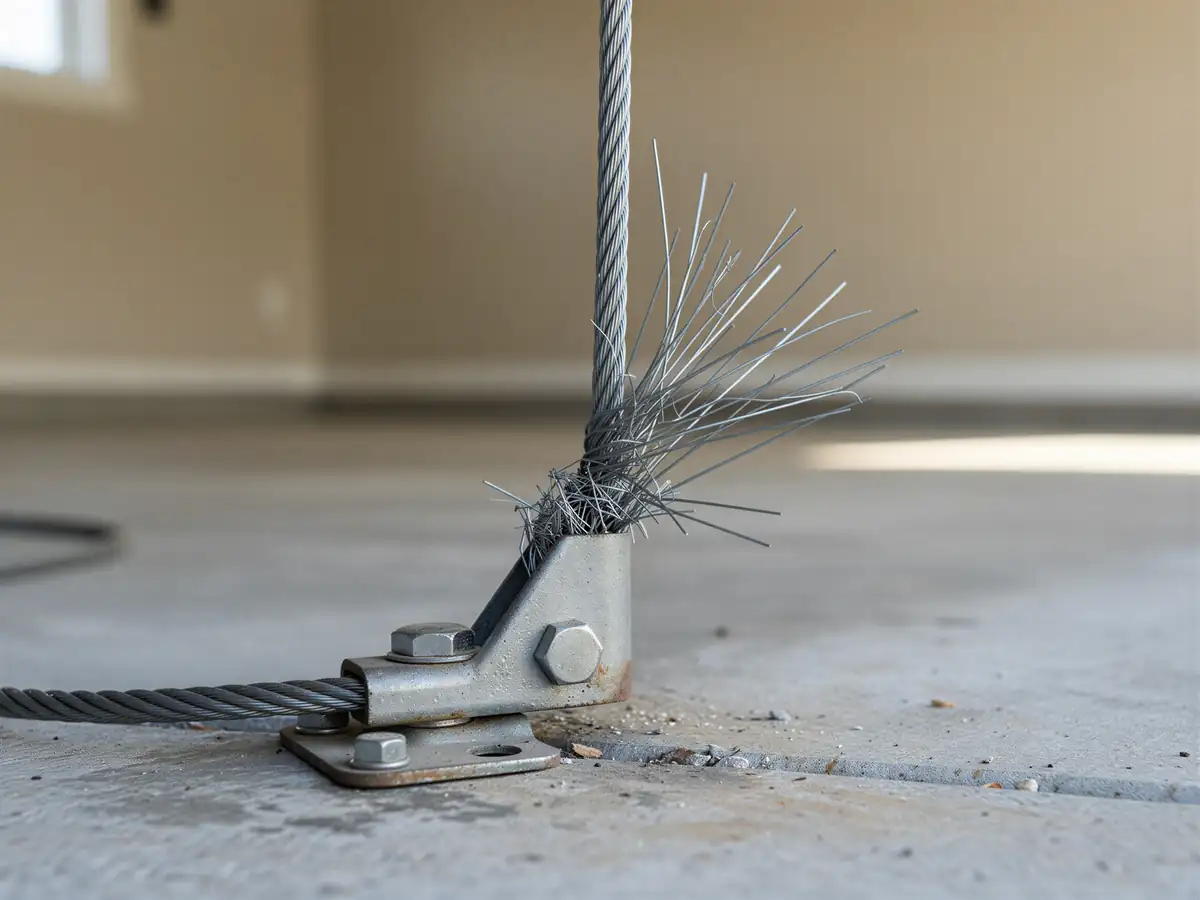
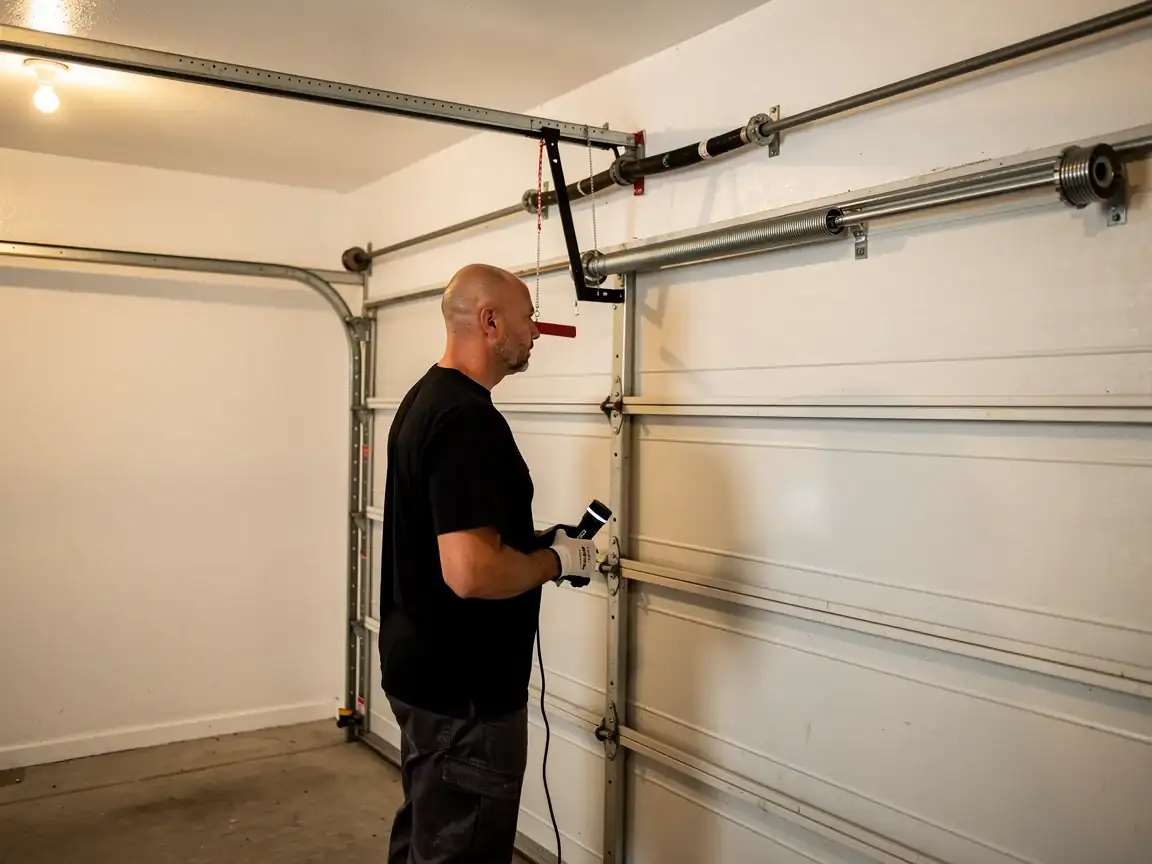
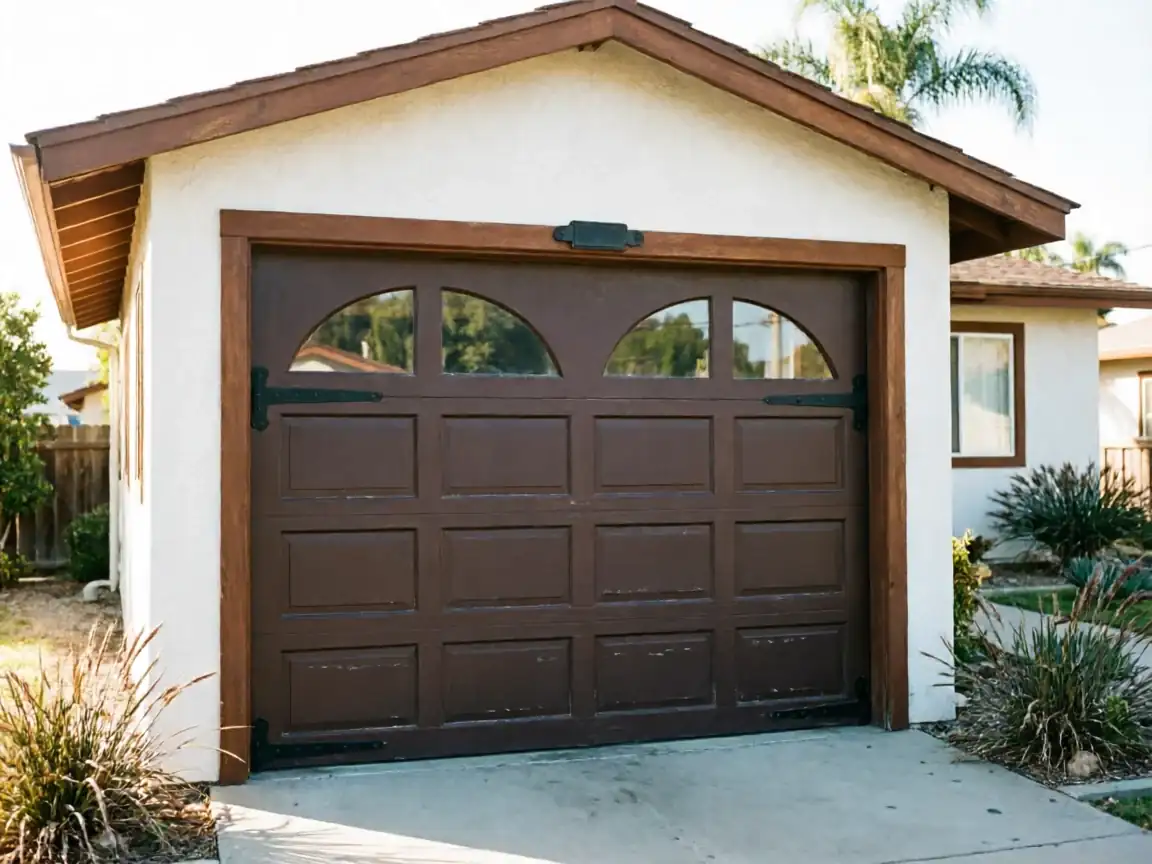
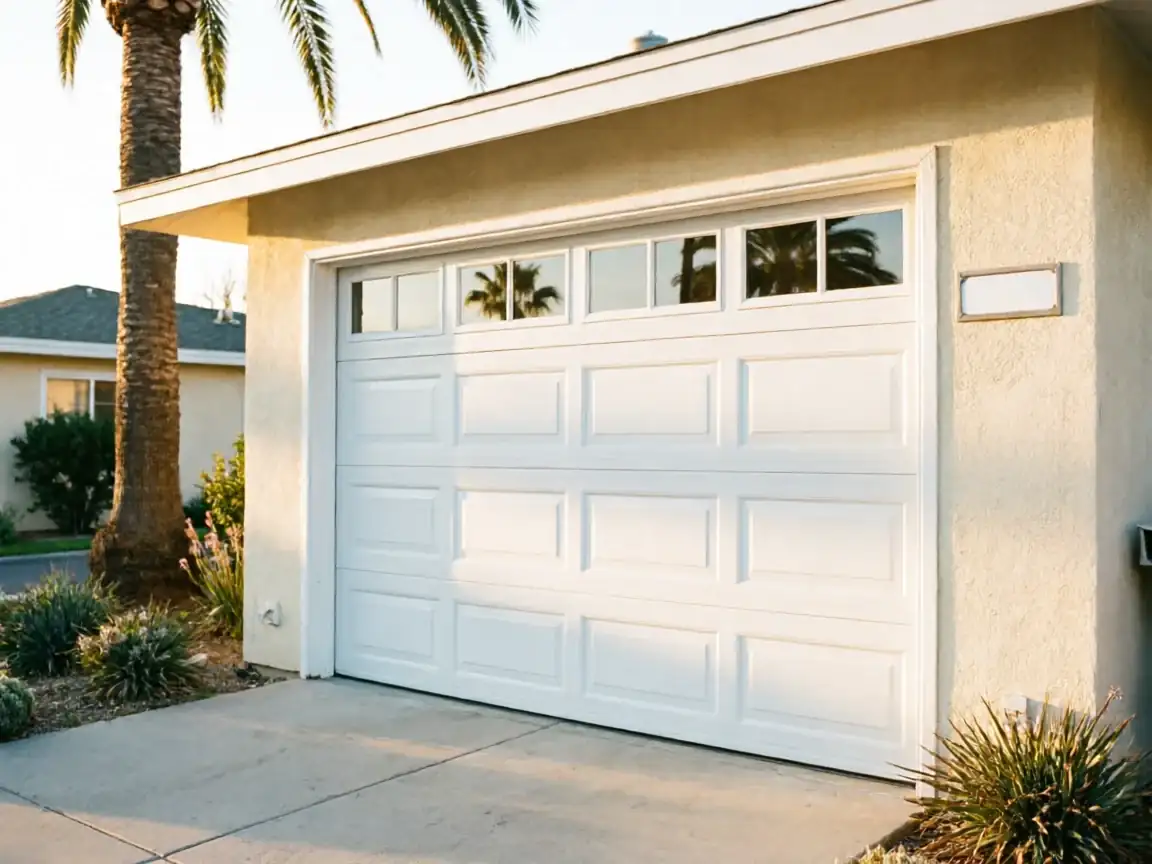
A 1974 door usually means a sectional door on extension or early torsion springs, steel panels without the foam-core insulation that became common later, and rollers that were never meant to run this many cycles without replacement. On a lot of these doors the spring is sized for the original door weight, and if a homeowner swapped in a heavier insulated door at some point without upsizing the spring, you get an opener straining on every cycle. We also see a fair number of single-spring setups on double-wide doors, which was standard practice for this build era but which fails harder and faster than a two-spring setup when it finally lets go. The mild coastal climate here is kind to the doors in some ways - no freeze-thaw cycling, no snow load - but salt air corrosion on hardware is real, and we look for it specifically on anything within a mile or two of the water. None of this is unique to one house. It's the pattern across the 1960s-70s stock that makes up most of this part of the service area, just more consistent here because of how tightly the build years cluster.
How We Get to You
We run out of Spring Valley, about 11 miles from Coronado. There's no depot or storage yard out here - every truck and every part comes from Spring Valley on the day of the job. That means we schedule Coronado calls in blocks rather than treating every one as a drop-everything dispatch, and we're upfront about that instead of promising a response time we can't back up. For a same-day spring break we'll tell you honestly whether that's realistic once we know what else is on the truck's route that day. What we don't do is keep a Coronado-specific inventory, so if a job needs an unusual part - an odd-width track, a discontinued panel - that part has to be sourced before the second visit, not carried on the first one. We'd rather say that upfront than have a crew show up without what the job needs.
This Area's Housing
Coronado has roughly 6,989 households, a small slice of the 132,698 households across the wider service area and the 46,922 owner-occupied houses we draw from for most of our work. The median year built here runs close to 1974, just ahead of the 1975 median across the full service area, and it tracks the same general pattern - a run of houses built mostly in the 1960s and 70s across the eighteen named communities we cover. Where Coronado stands apart is income: median household income here runs $135,056, well above the $105,887 median across the broader service area. That gap shows up in the work - more owners choosing full door replacement over a patch repair, more interest in insulated panels and quieter openers rather than the cheapest fix available. It doesn't change what the hardware is or how old it is. A 1974 torsion spring behaves the same whether the house around it is worth more or less than the one next door.
How it works
From “it’s stuck” to “it’s fixed”
1
Tell us what’s wrong
Describe the symptom - won’t open, loud bang, opener runs but the door won’t move.
2
On-site diagnosis
A technician tests the door under power and by hand and finds what actually failed.
3
Clear, up-front plan
You get the fix that’s needed and what drives the cost - before any work starts.
4
Repaired & tested
The repair is done, the door is set true and tested, and the work area left clean.
Not sure which repair your door needs in Spring Valley, CA? Describe what it’s doing - every job starts with a diagnosis.
How far is Coronado from your shop in Spring Valley?
About 11 miles. We don't keep a depot or stock in Coronado itself - every truck and part comes from Spring Valley, so we schedule calls out here in blocks rather than promising instant dispatch.
Are Coronado garage doors older than other parts of the service area?
A bit. Most of the service area has a median build year around 1975, but Coronado runs closer to 1974. Not a huge gap, but it means original torsion hardware and early-generation openers are still common here.
Do you carry parts for older doors on the truck already?
Not always. If a job needs an uncommon part - an odd track width or a discontinued panel - we usually have to source it after the first visit rather than carry it in on day one. We'd rather tell you that than guess.
Does the coastal air affect the hardware?
Yes, more than inland parts of our service area. We check specifically for corrosion on springs, tracks, and fasteners on homes near the water, since salt air speeds that up even in a mild climate without freeze-thaw cycling.
Ready to get your garage door sorted?
Tell us what it’s doing and where you are in Spring Valley - we’ll take it from there.