The DIY Question
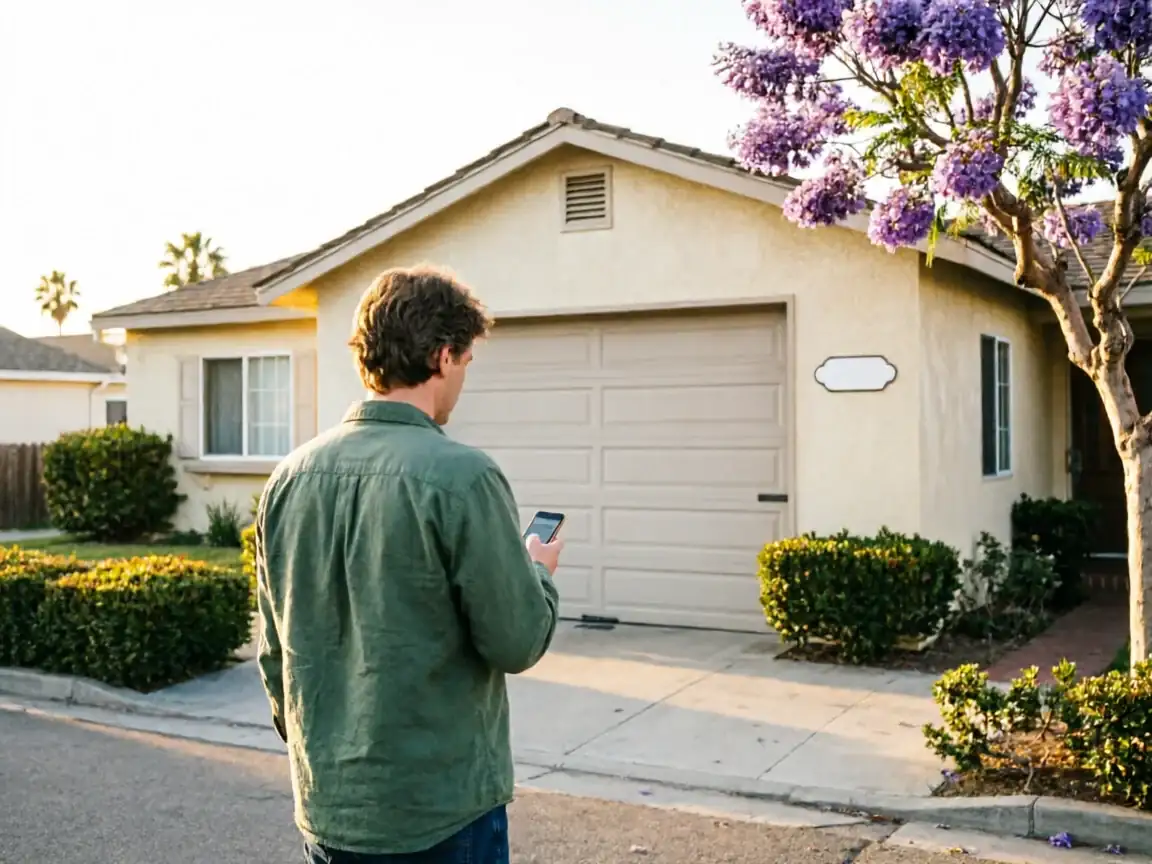
Most houses in Jamul went up around 1984
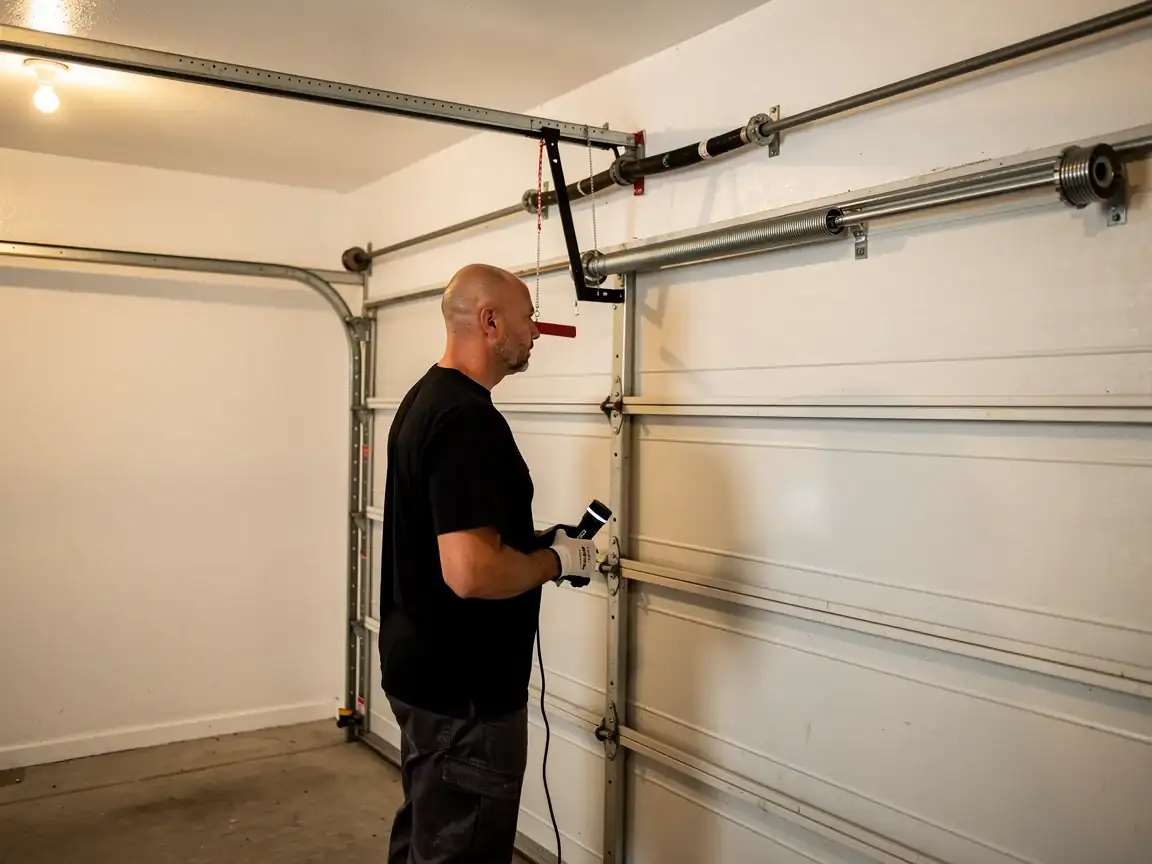
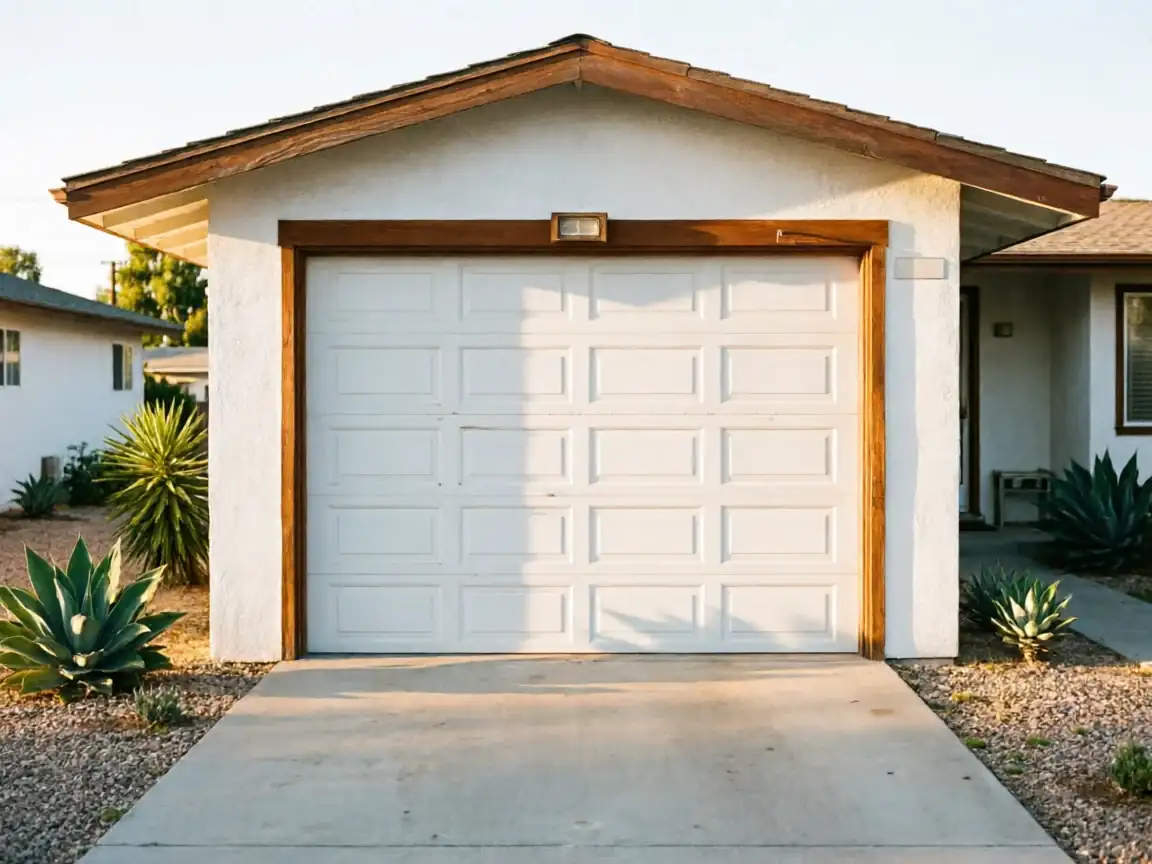
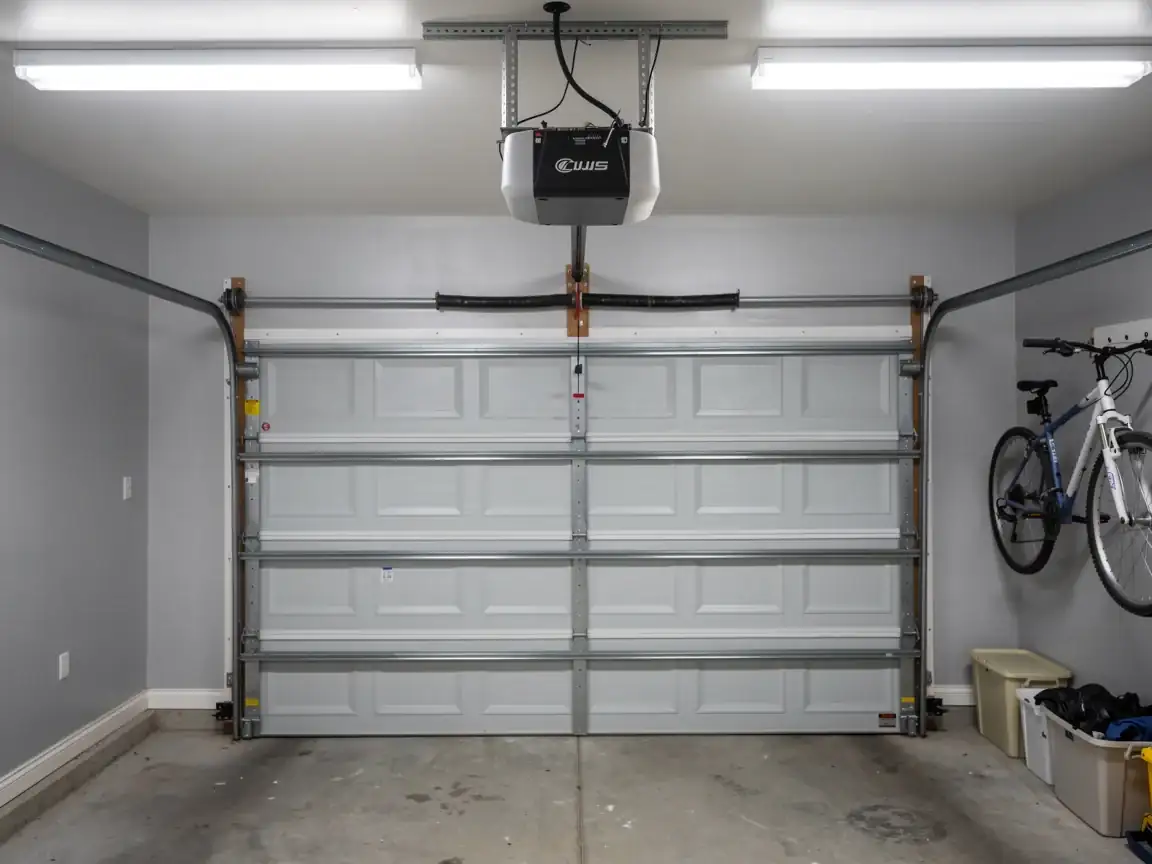
Which puts the garage door hardware squarely in the era before openers came with safety reversal sensors as standard and before insulated steel panels were common on tract-built homes. A lot of that original hardware is still bolted to the jamb. Nobody ever had a reason to touch it until a panel caves in.
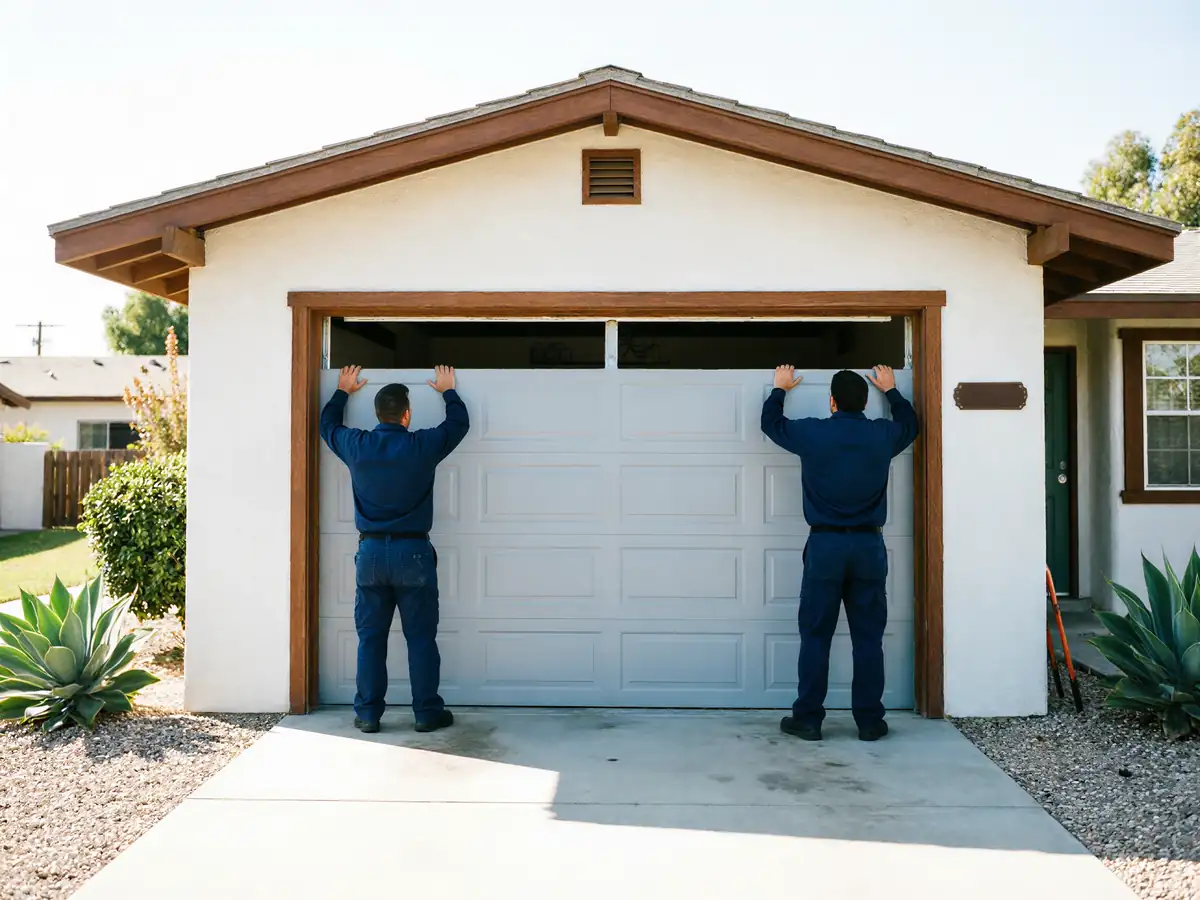
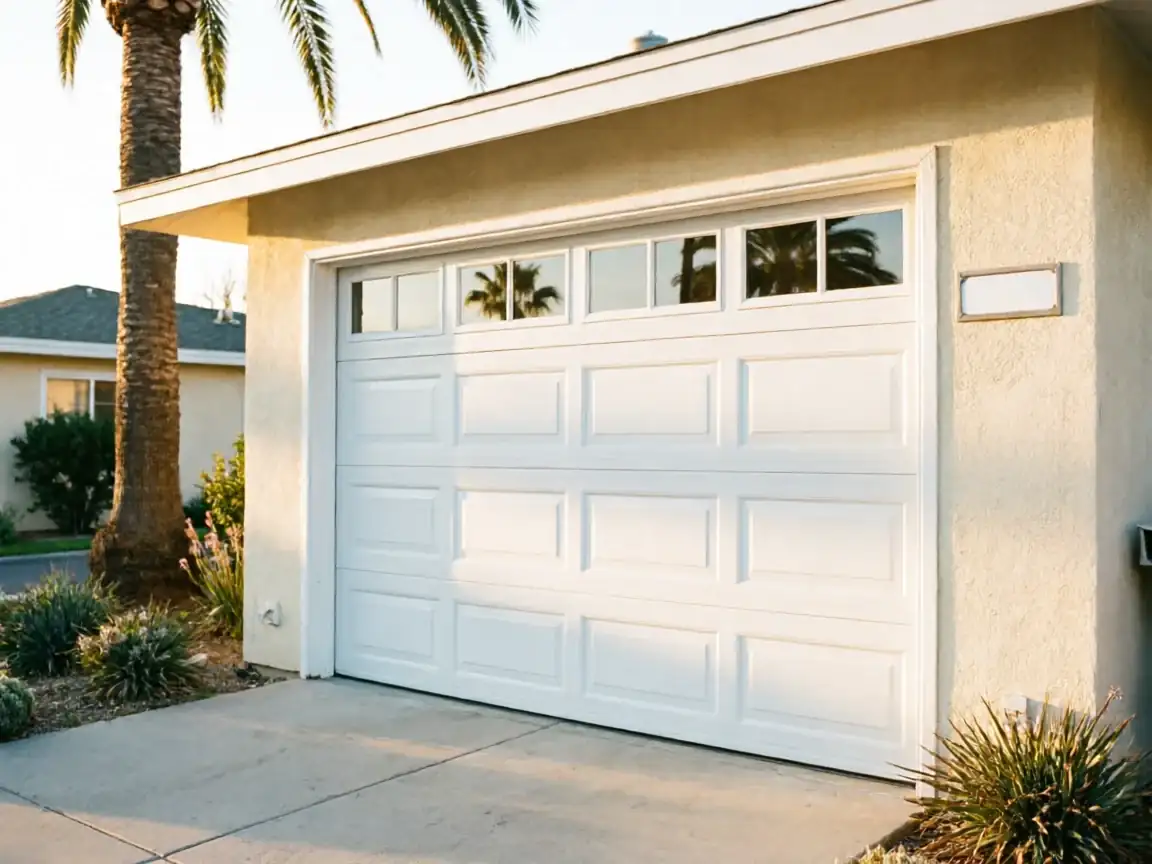
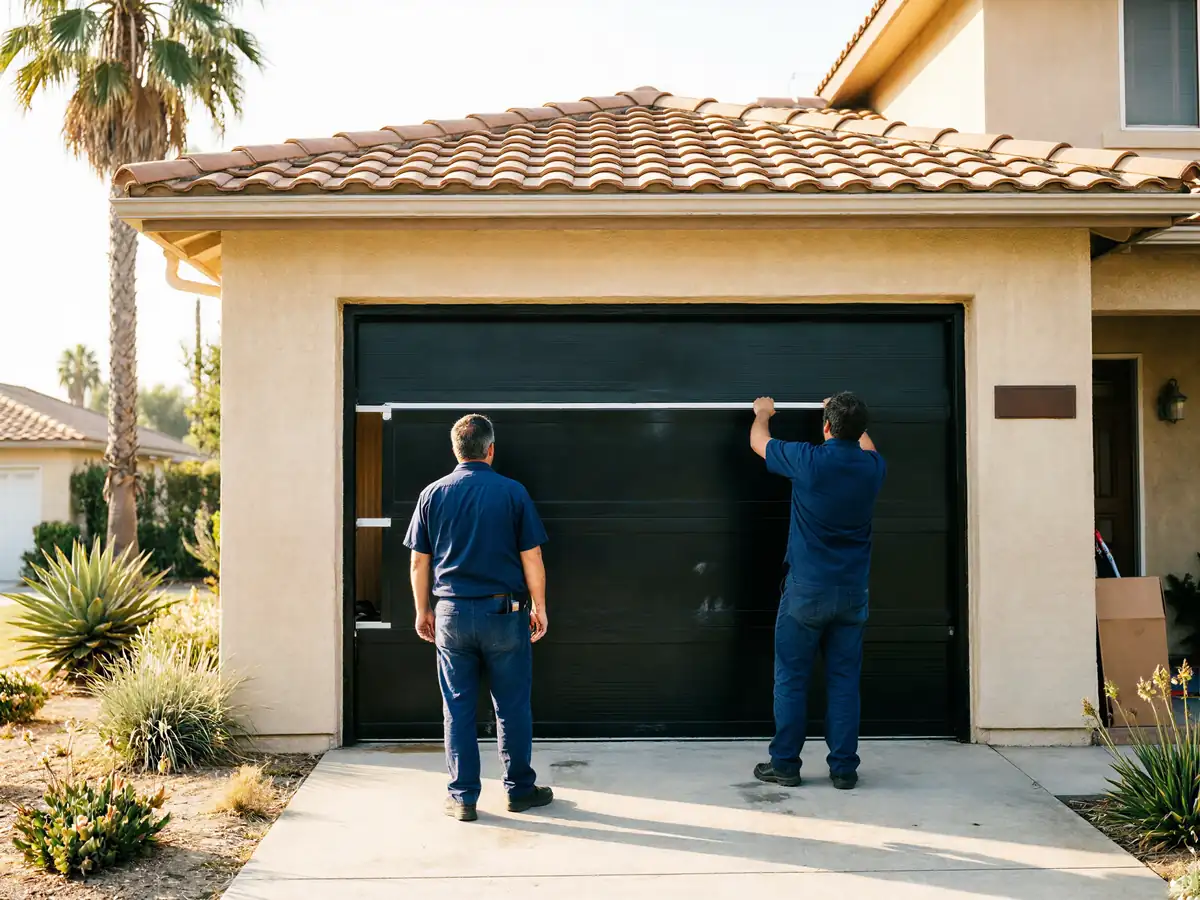
Swapping one dented panel yourself sounds simple until you're matching a 40-year-old section width or rail profile that the current manufacturers don't stock anymore
The track spacing, the panel height, even the hinge pattern can be a half inch off from what's sold today. Order the wrong panel and you've got a door that won't seat square, which strains the opener and the spring on every cycle after that.
We're honest about where DIY makes sense
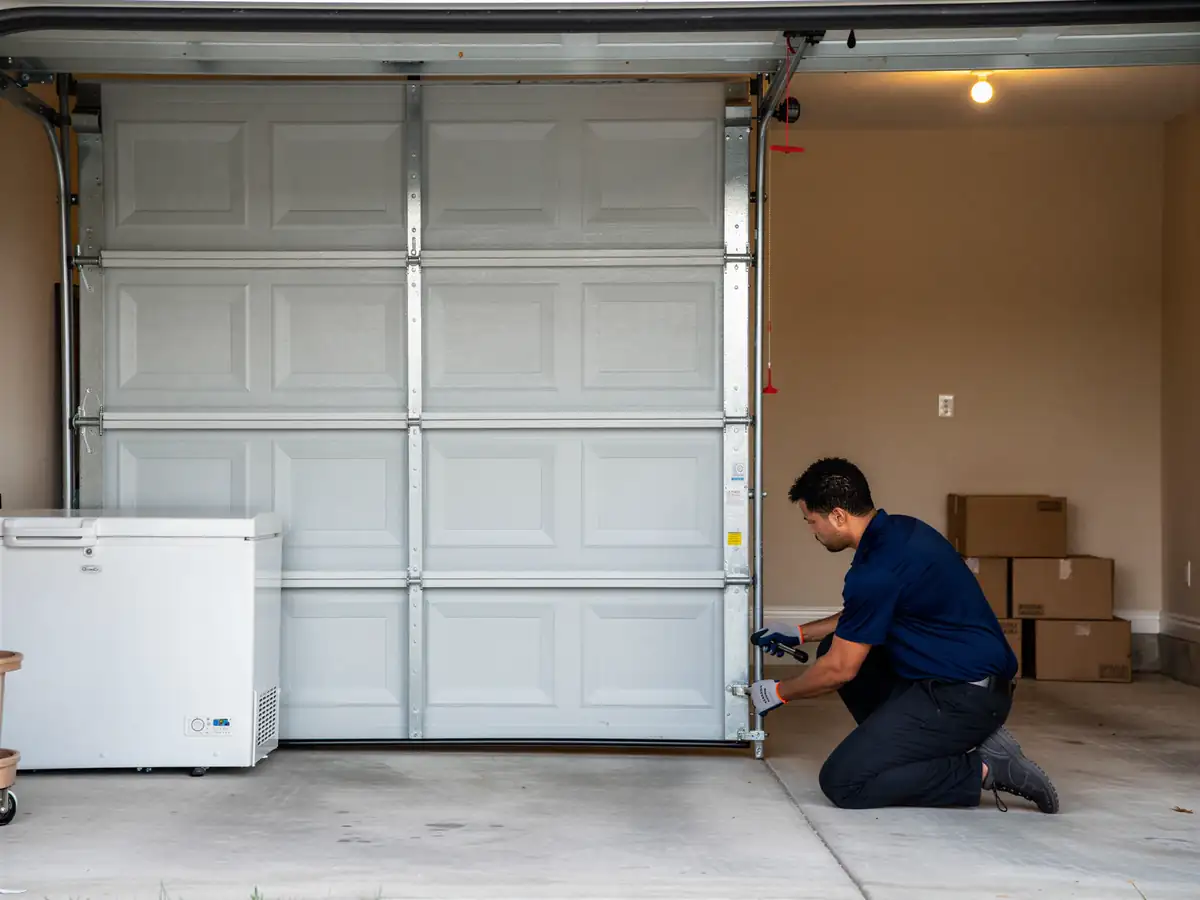
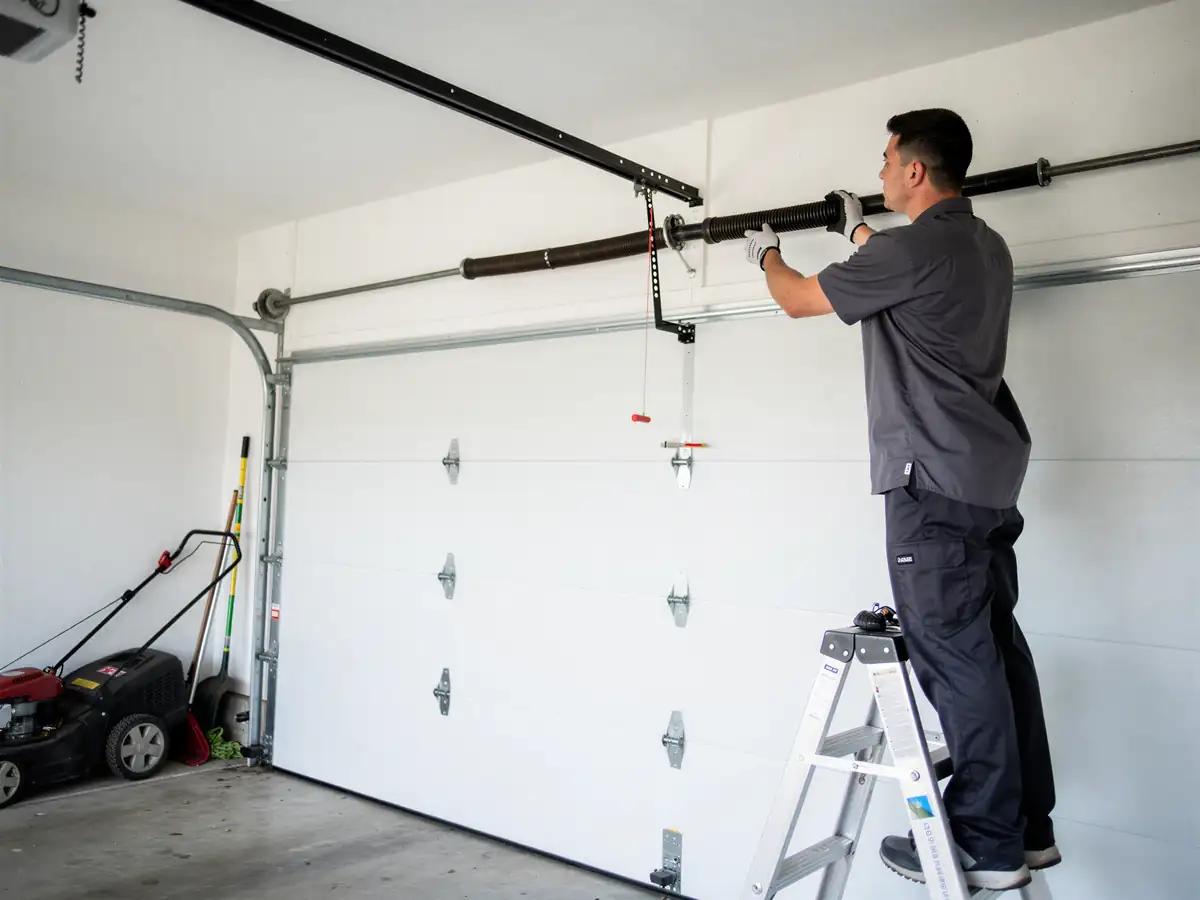
Tightening a loose hinge, cleaning a track, lubricating rollers - fine, do it yourself. Pulling a full panel off a door this old without knowing what's underneath it, on hardware you can't buy new, is where people get hurt or end up paying twice.
Booking a Visit
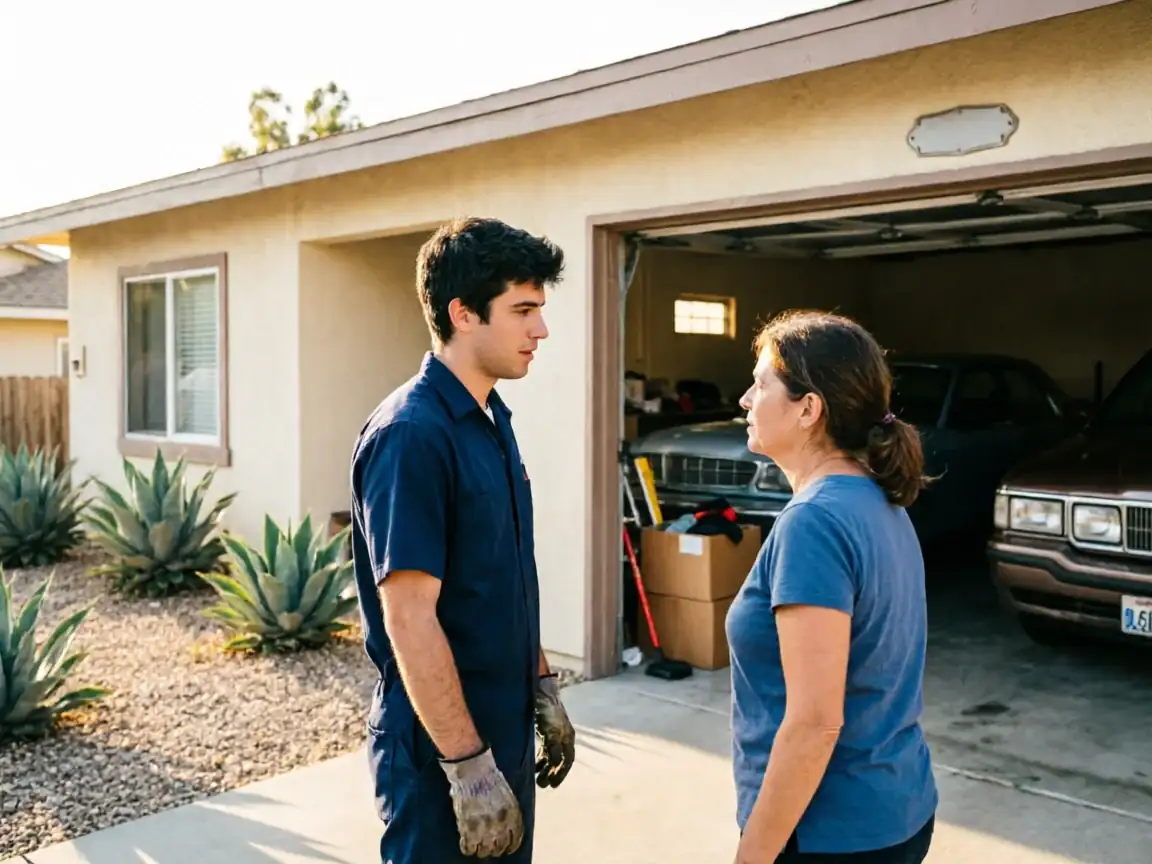
We run out of Spring Valley, about 8 miles from Jamul, so there's no branch office here and no separate crew - just the same truck making the drive out. That distance doesn't change what we can fix, but it does mean we schedule the trip rather than drop by on a whim, so a call ahead gets you a real time window instead of a guess.
Jamul is a smaller pocket of the service area - about 2,073 households, far fewer than the denser suburbs closer to Spring Valley - so we're not running multiple jobs a day out here. We bring along a stock of common panel sizes and hardware on the truck, but if your door turns out to need a section nobody carries anymore, that part gets ordered once we've confirmed the exact model on site, not before.
What You Are Seeing
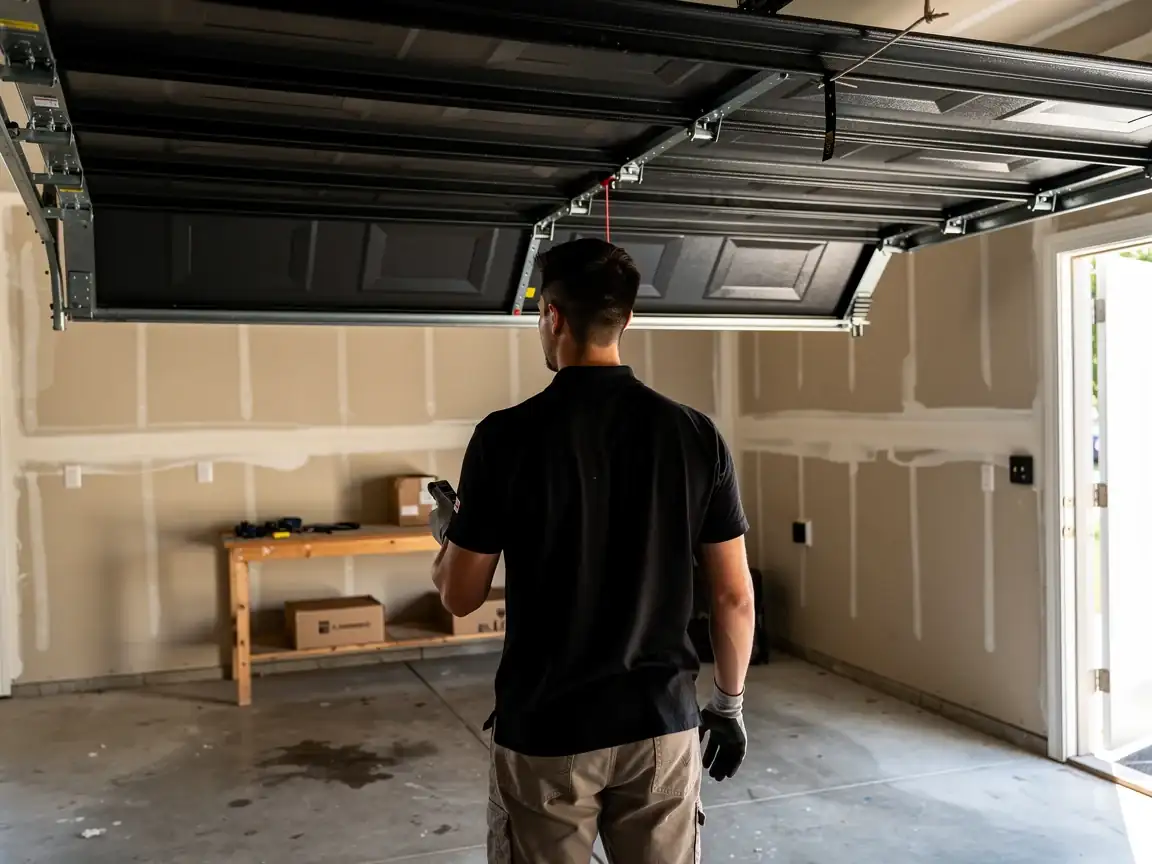
A dented or buckled panel almost never shows up alone in a door this age. If the bottom section took the hit - a trailer hitch, a bike, a gust catching an open door - the vertical track on that side is probably bent too, even if it looks straight from a few feet back. Push the door up by hand and feel for a catch partway through the travel; that's the track telling you it's not just cosmetic.
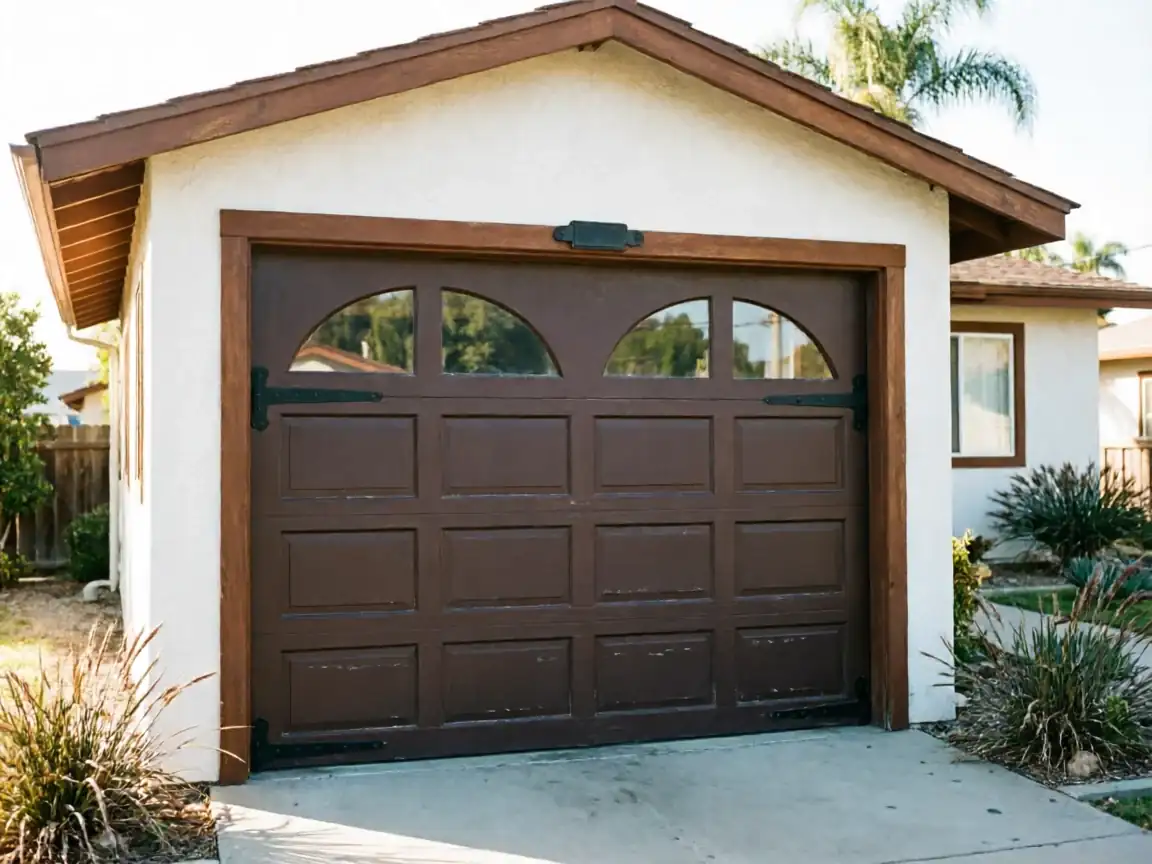
On the older hinge styles still common on 1984-built doors, a cracked panel at the hinge bolt holes is a different repair than a dent in the middle of a flat section. The hinge-bolt crack means the steel is fatigued around the fastener, and a patch won't hold - the section needs replacing, hinge included.
At a median household income of $148,740 across the broader service area's upper range, a lot of owners here default to replacing the whole door rather than chasing a matching panel. That's a reasonable call when the door's old enough that one panel is already hard to source, but it's not required - we'll tell you honestly which repair actually fits the damage.
Why This Fails Locally
The mild temperate climate here doesn't put the kind of ice-load or wind-shear stress on garage doors that you'd see somewhere with real seasonal extremes
So panels in Jamul don't usually fail from weather fatigue the way insulation or weatherstripping might elsewhere. What actually takes a panel out here is almost always physical - an impact, a door forced past a jam, or decades of UV and heat cycling on steel that's held up fine structurally but has rusted thin at the seams.
The failure mode that catches people off guard is sourcing, not damage
A 1984 panel width or color is no longer a catalog item, and once one section is replaced with a mismatched panel, the door runs unevenly - heavier on one side, pulling at an angle on the spring and track. That uneven load is what turns a one-panel fix into a full-door job eighteen months later. We'd rather tell you that up front than sell you a patch that creates a bigger bill down the road.