The Cost of This Job
We don't quote a flat number for cable repair here because the job isn't flat
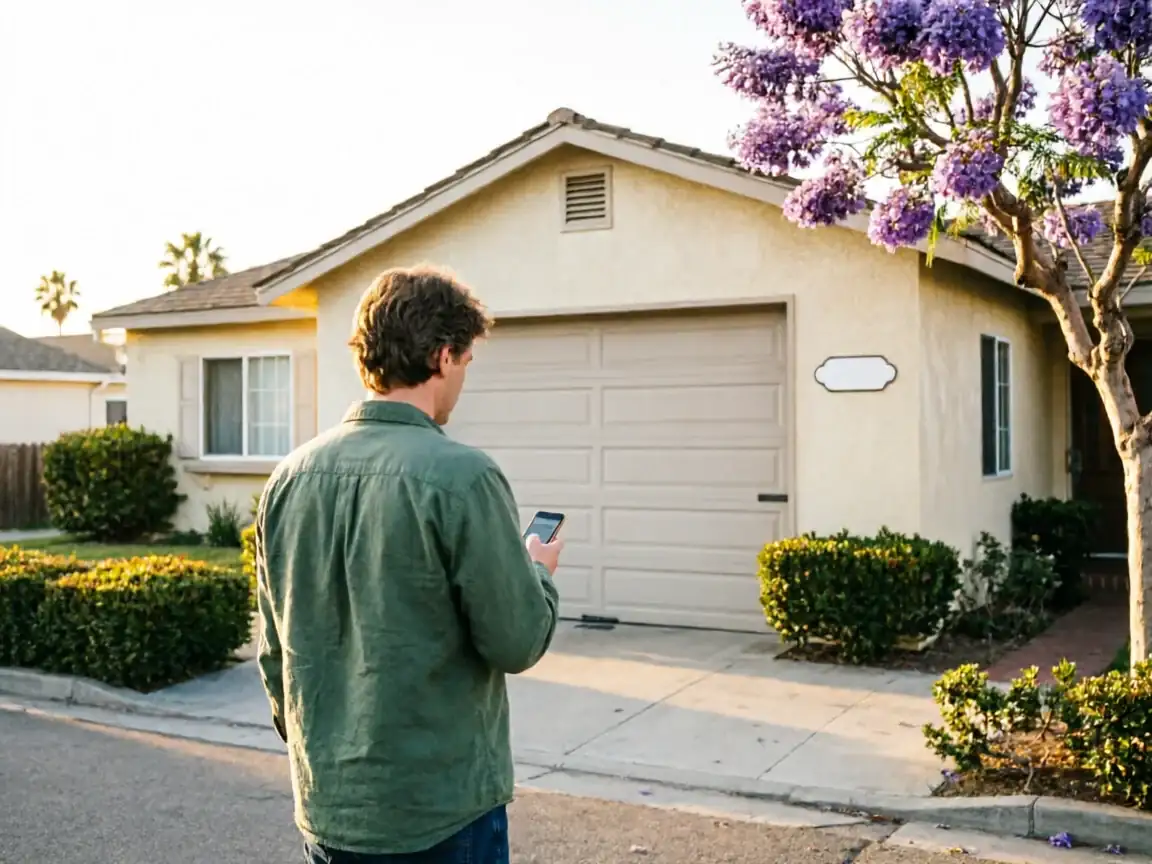
A single frayed cable on a torsion system runs different money than a snapped cable on an older extension setup with two drums and two cables instead of one. Rancho San Diego's housing stock runs newer than the wider service area average - median build year 1985 versus the 1975 mid-point across the rest of Spring Valley Garage Door Pros' coverage, where houses went up anywhere from 1967 to 1988. That ten-year gap matters because it usually means torsion hardware as the standard install rather than the older extension-spring doors still common closer to Spring Valley's center.
What drives the price up on any cable call
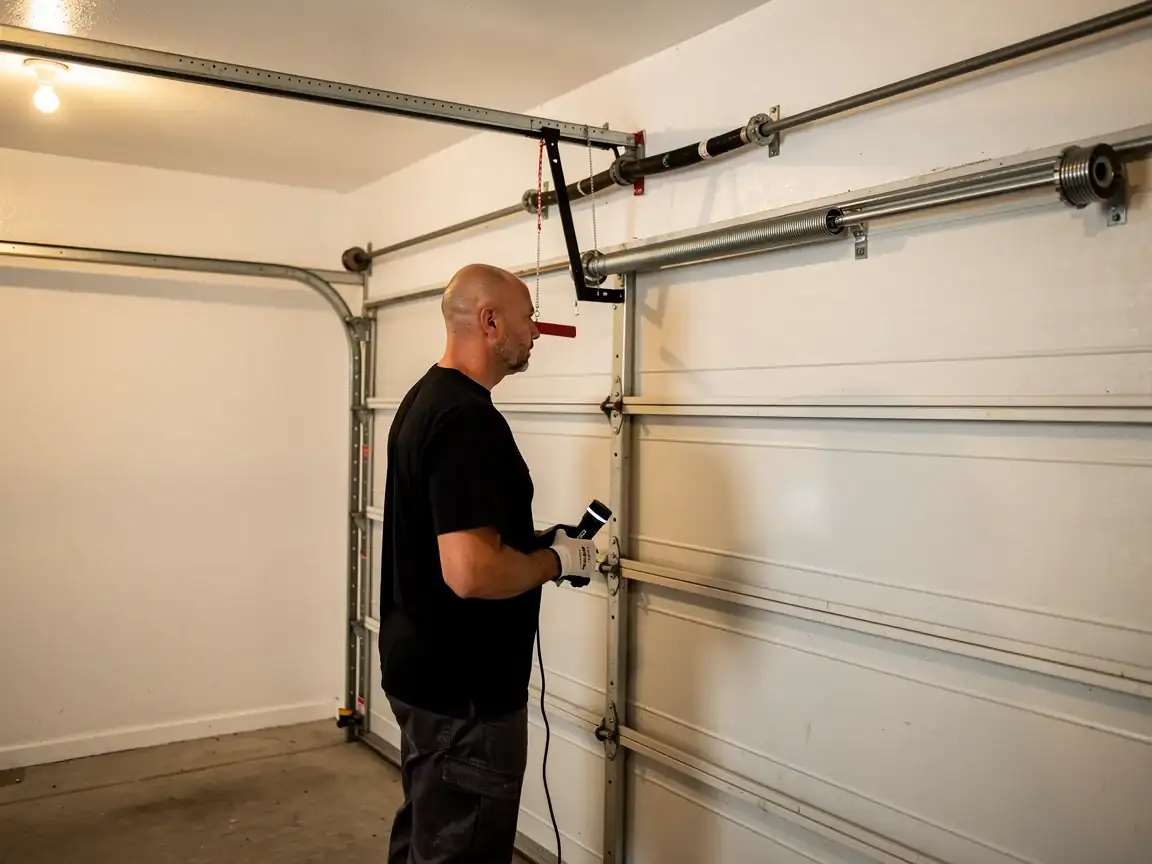
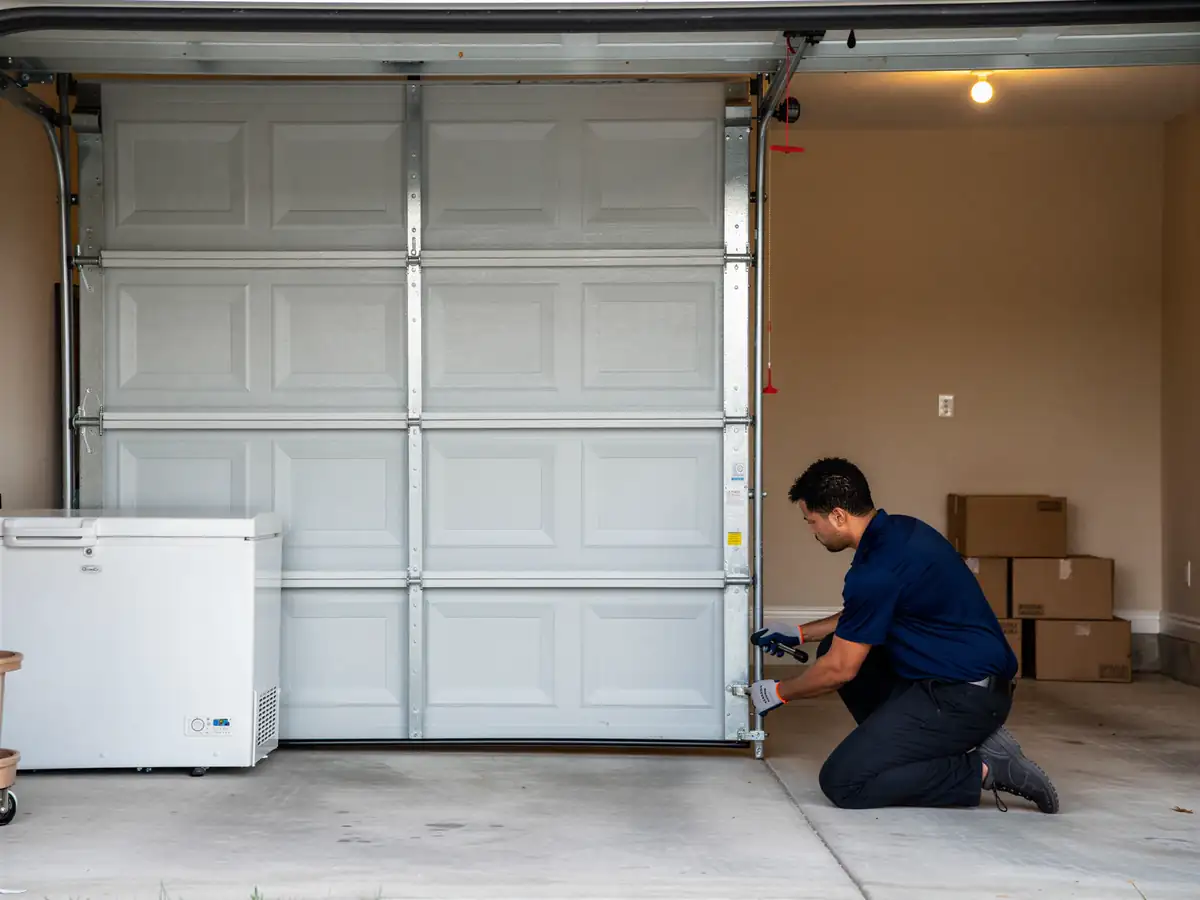
Whether the drums are also worn, whether the opener forced the door against a jammed cable and bent a track, and whether it's one cable or a matched pair that needs doing - we don't do half a job and leave the second cable to fail next month. We'll look at the drums, the bottom brackets, and the spring before we quote, because a cable rarely fails alone.
Parts We Carry
Galvanized aircraft cable in the common gauges, for both torsion-drum setups and extension-spring doors. Bottom fixture cables, safety cables for extension systems, and the clips and fittings that go with them. We stock what fits the torsion hardware that's standard on 1980s builds like most of what's in Rancho San Diego, and we still carry the extension-side parts for the older doors mixed into the area.
What we don't carry on the truck: odd aftermarket cable lengths for custom doors, or anything built for a non-standard track width. If a door's been modified from factory spec, that part may need an order, and we'll tell you that up front rather than string you along on-site.
Where This Job Goes Sideways
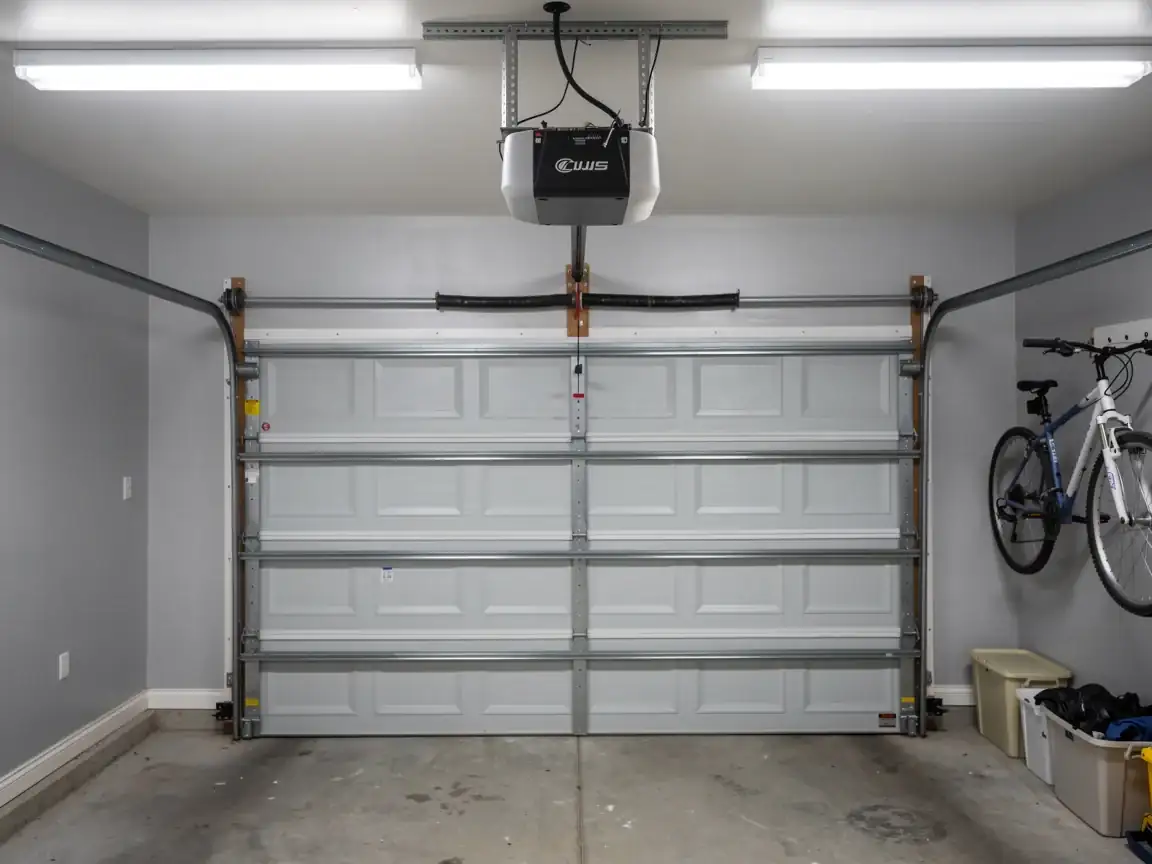
The cable itself is rarely the whole story. Once a cable frays, it's usually because the drum underneath has worn a groove, or because the cable's been riding off the drum edge for months without anyone noticing a slightly crooked door. Fix the cable and leave a chewed-up drum in place, and you're back out in a few months for the same call.
The other way this goes sideways: the door looked like a cable problem but the spring let go first, and the cable just took the load until it couldn't. On a lot of the 1985-era torsion doors around Rancho San Diego, that spring and that cable share the load on one side, so a failure in one stresses the other fast. We check both every time, not because we want to upsell a spring, but because replacing one and ignoring the other is how a two-week-old repair fails again.
The DIY Question
Don't do this one yourself
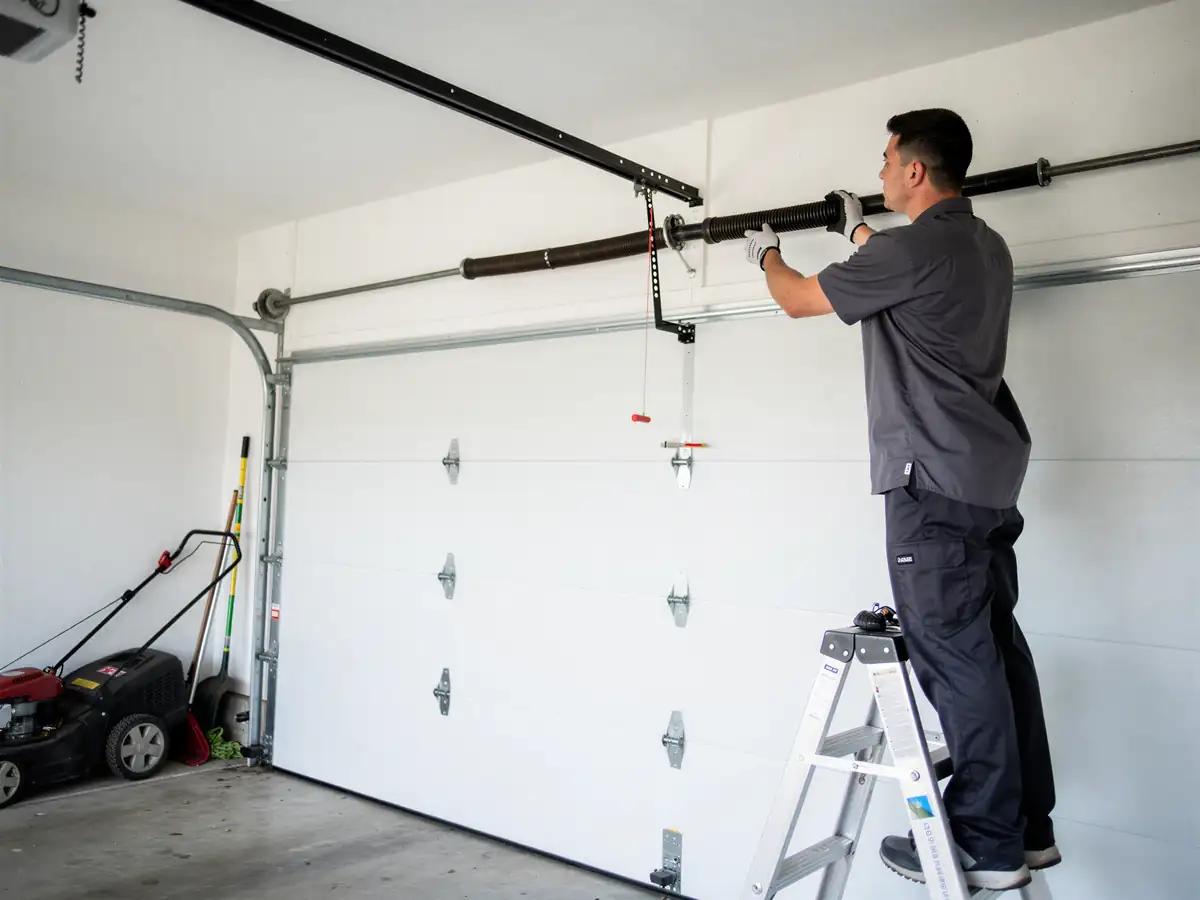
A torsion cable is under load from a wound spring, and an extension cable is under load from a stretched one - either way, there's stored energy in that garage, and a cable that lets go under tension can take a finger or an eye with it. We're not saying that to scare up a call; it's the actual reason cable work sits in a different category than swapping a roller or lubricating a track.
What you can safely do yourself
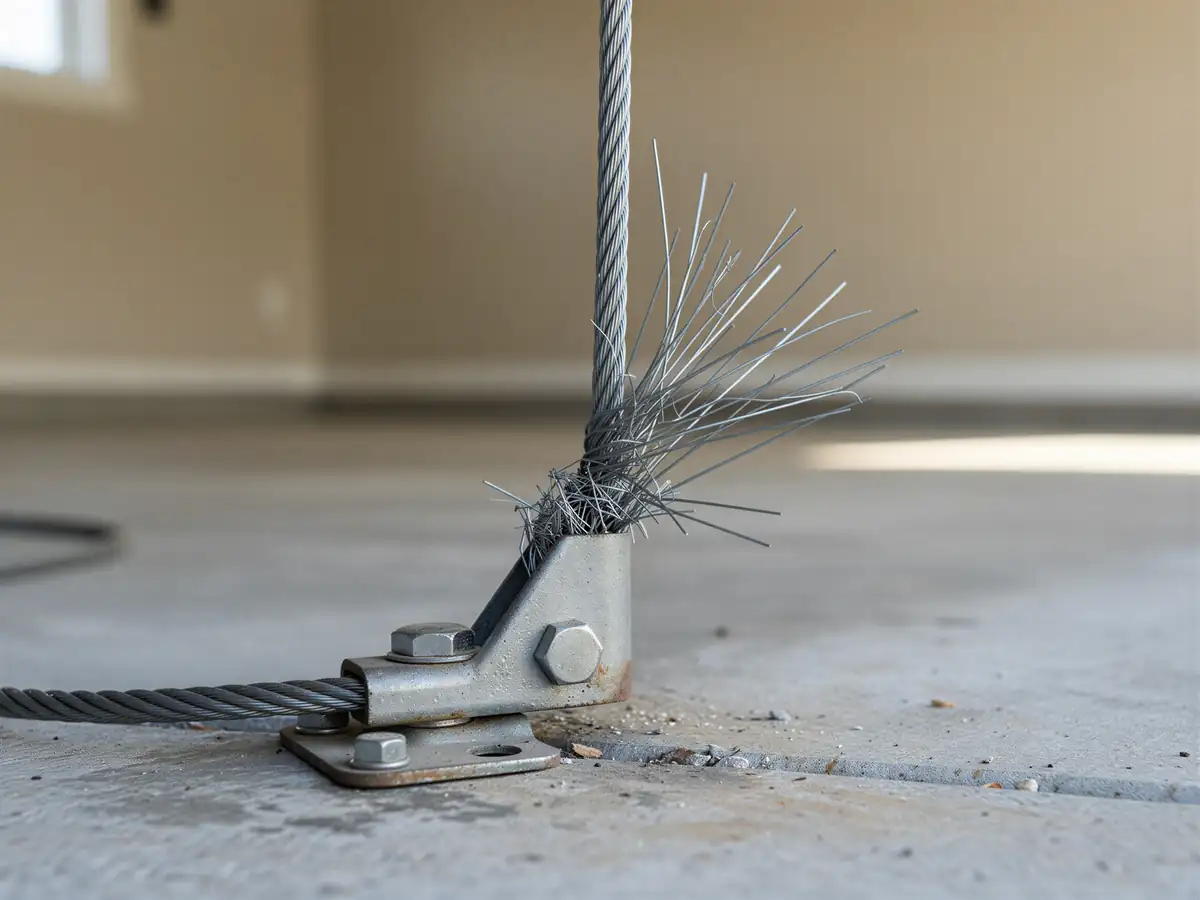
Look at the cable from a distance for fraying, rust, or a strand that's unwound slightly at the drum end, and check whether the door hangs level in the opening. If one side sits lower than the other, that's often the first visible sign before a full snap. See that, call before it fails all the way - it's a smaller job caught early than caught on the floor.
What You Are Seeing
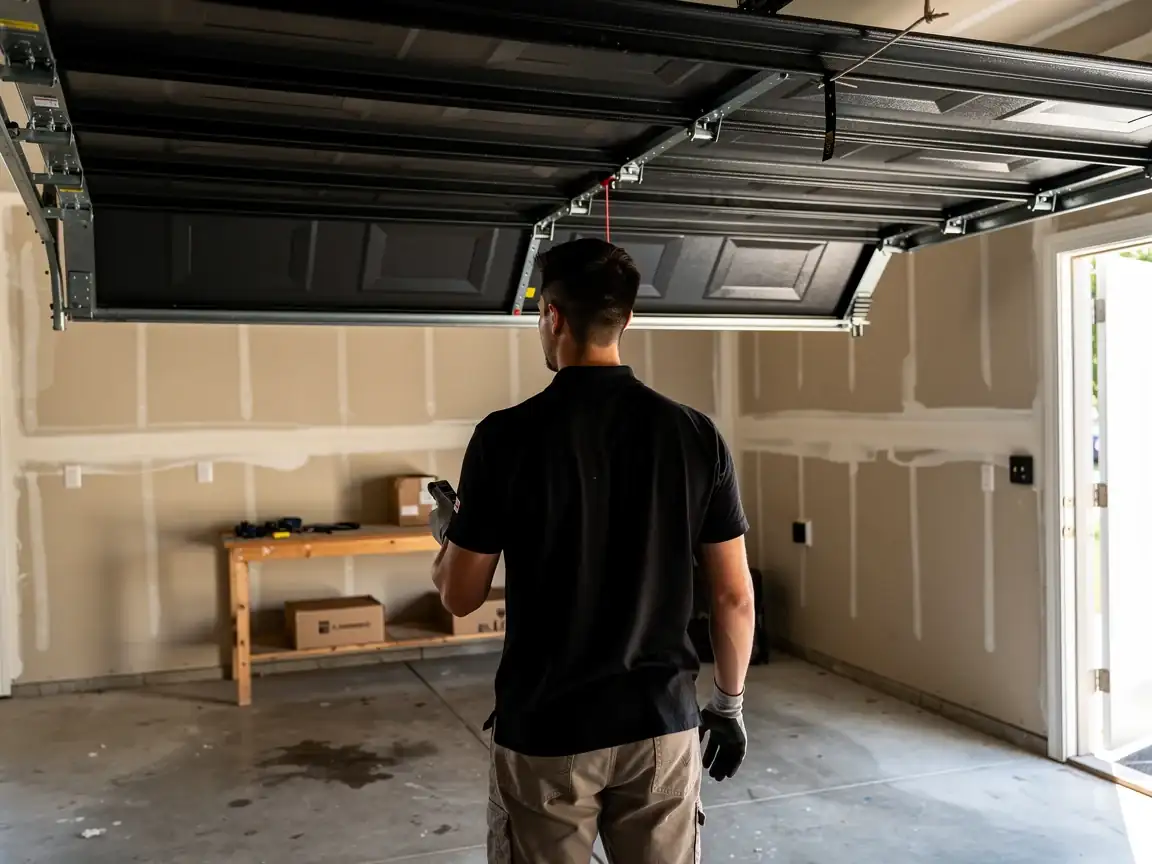
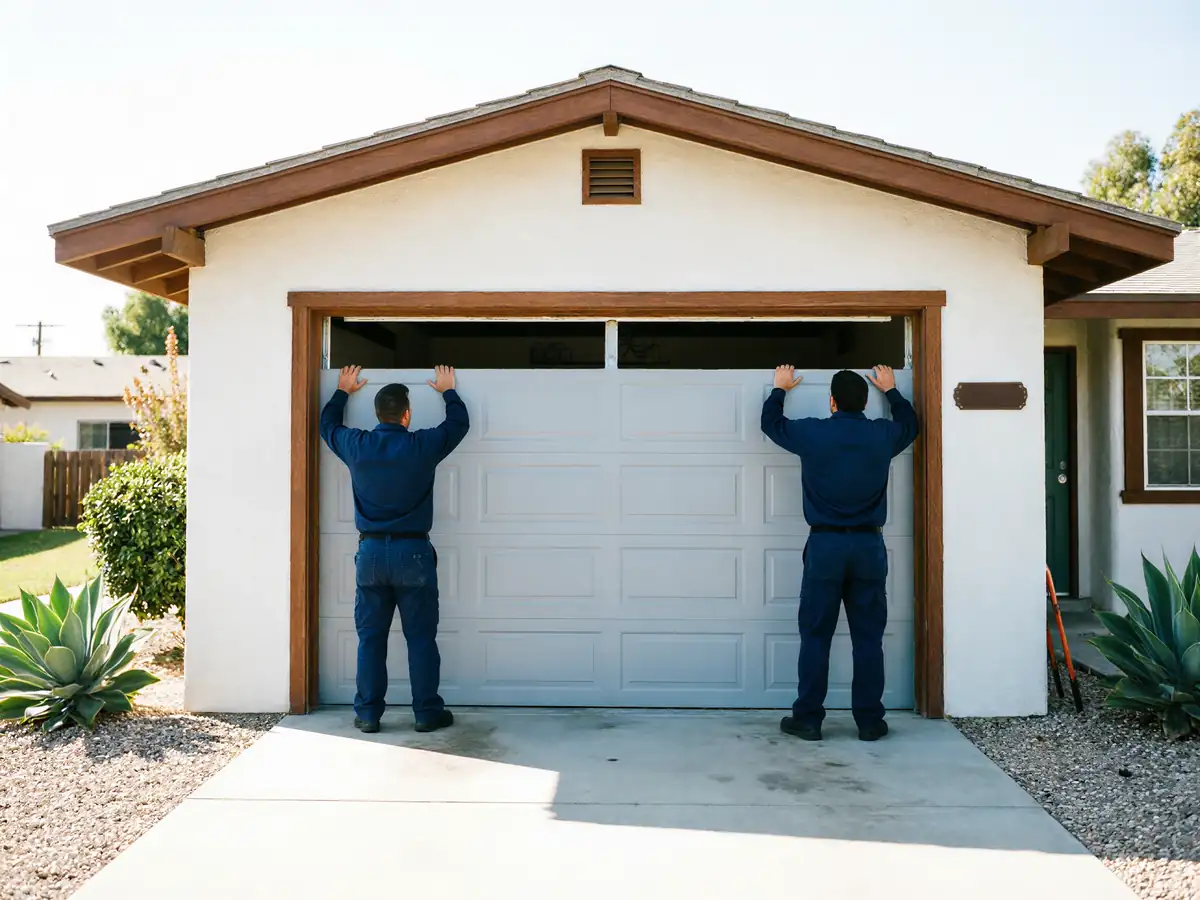
A door that drops hard and uneven when you hit the button, with one corner noticeably lower than the other, almost always means one cable has given out while the other is still holding. A door that won't budge at all, with the opener straining or reversing on its own, often means a cable has come off a drum or pulley and jammed the whole mechanism rather than snapping clean.
A visible fray near the bottom bracket or at the drum is the warning sign that precedes most of these calls - it's rare for a cable to go from fine to failed with no notice. If you hear a sharp bang and the door drops suddenly while closing, that's the cable letting go under full spring load, and the door needs to come off the track safely before anyone touches it. Don't reach under a door that's dropped unevenly; the remaining cable is still under tension and can move.
How Long You Are Without the Door
We run this job from Spring Valley, five miles out, so there's no local branch or depot sitting in Rancho San Diego to shorten that drive. Once we're on-site, a straightforward single-cable repair on a torsion system is usually a same-visit fix if the drums and spring check out fine. A pair of cables on an older extension door, or a job where the drum needs replacing too, takes longer because it's more hardware coming apart and going back together correctly.
What slows a job down isn't the drive, it's parts availability for anything outside standard gauge cable - if a door's been modified from the original factory setup, that part may not be on the truck and we'll tell you honestly if a return trip is needed rather than force a fix with the wrong part.