The Cost of This Job
What a panel replacement runs here depends mostly on door width and whether the panel has to match an existing finish
Rancho San Diego's housing stock centers on a median build year of 1985 - later than much of the rest of the service area, where the median sits closer to 1975 across homes built between 1967 and 1988. That later build date usually means wider two-car steel sectional doors rather than the narrower single doors or flush wood doors found in the older pockets nearby. Wider doors mean wider panels, and wider panels cost more to source and swap than a single-car replacement.
Household income in Rancho San Diego runs $118,431
Noticeably above the $105,887 median across the broader service area. That doesn't change what a panel costs to make or ship, but it does mean we see fewer requests to patch a door another five years and more requests to just replace the section and move on. We don't carry a price list here because door width, panel gauge, and whether insulation is involved all move the number - we quote it on the actual door, not over the phone sight unseen.
Parts We Carry
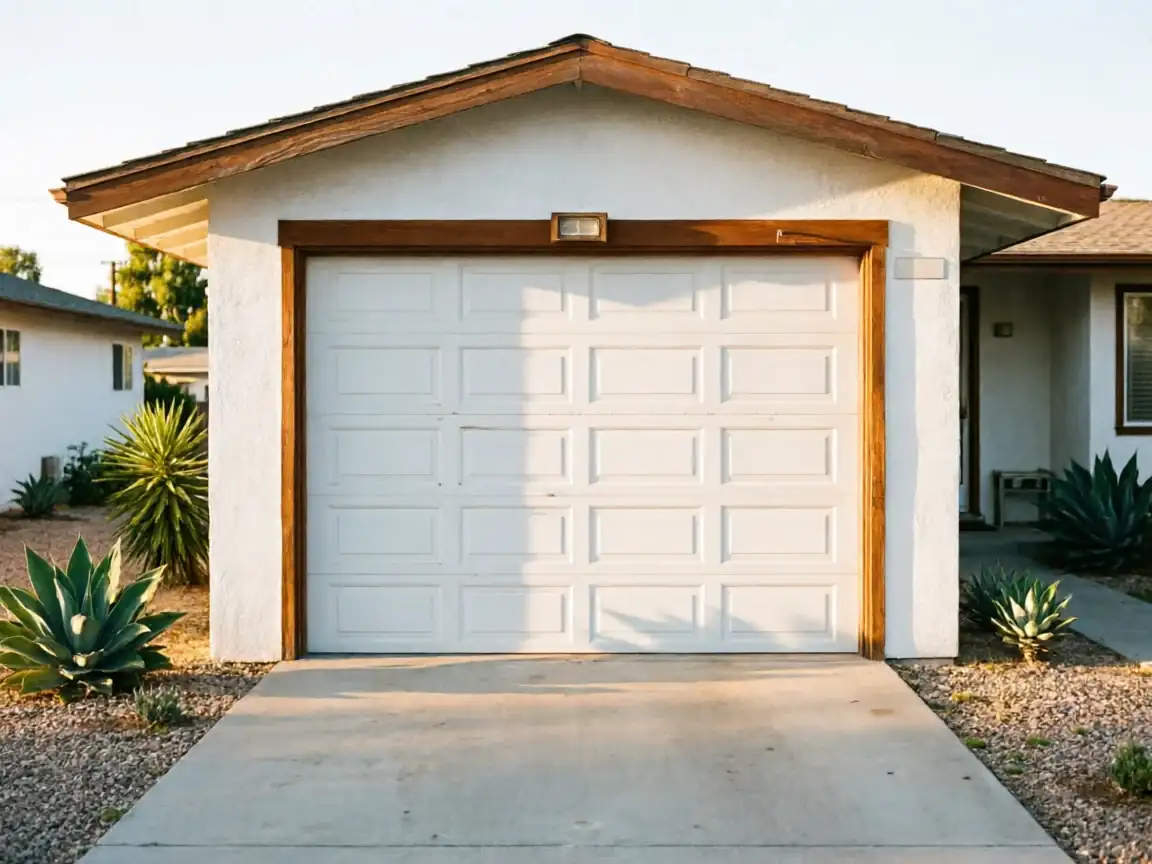
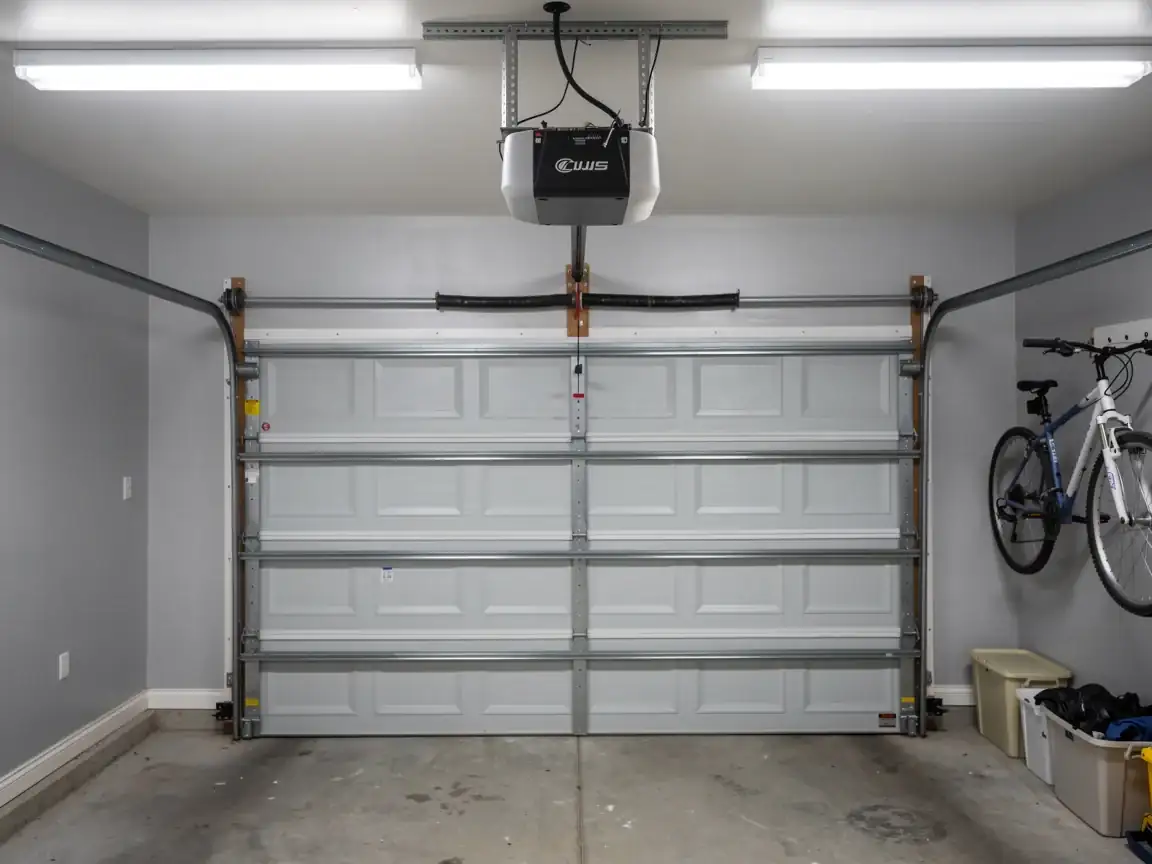
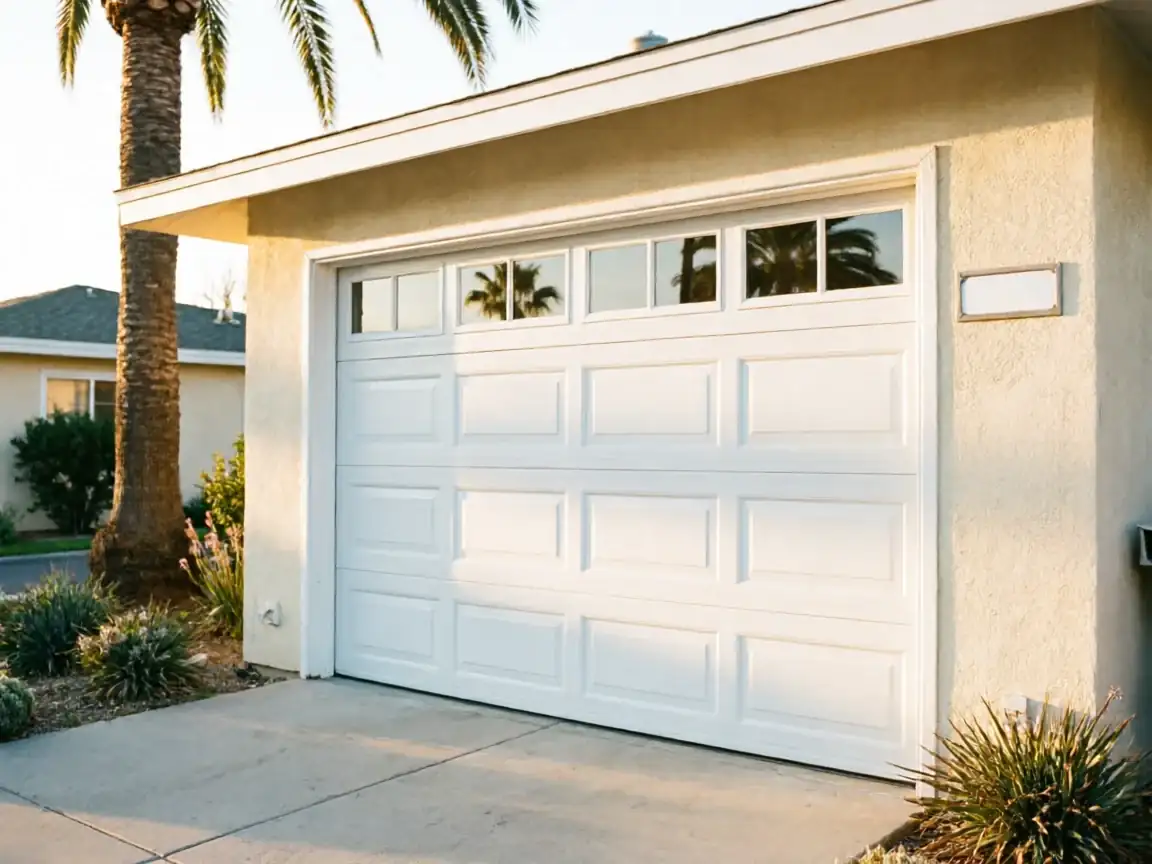
Doors built in the mid-1980s are almost always steel sectional, embossed raised-panel style, usually galvanized steel over a light foam or no insulation at all depending on the builder. That's good news for parts availability - steel sectional panels from that era are far easier to match or replace section-by-section than the flush wood or early fiberglass doors that show up on older streets elsewhere in the service area, where a damaged panel sometimes means replacing the whole door because nobody makes the matching piece anymore.
We stock standard steel panel sections in the widths and heights common to 16x7 double doors, since that's what shows up most often on this side of the service area. What we don't carry on the truck is a one-to-one match for every factory embossing pattern and color a 1985 builder might have used - if your door has faded unevenly or the manufacturer discontinued that exact woodgrain stamp, we'll tell you that up front rather than promise a seamless match we can't deliver.
Where This Job Goes Sideways
The mild temperate climate across this area is gentle on hardware - no freeze-thaw cycles cracking panels, no deep cold seizing springs. But thirty-plus years of steady sun does its own damage: factory paint on steel panels fades unevenly, especially on the side of the door that catches more afternoon light. Replace one panel on a faded door and the new section can look noticeably different from the rest, even in the same color code.
The other place this goes sideways is hardware mismatch. A single-panel swap on a door with worn rollers or a stretched torsion spring just exposes the next part that's about to fail - the new panel makes the old hardware look worse by comparison, and sometimes it reveals a bent track that was hiding behind a bowed panel the whole time. We'll flag that before we start, not after you've paid for a panel that doesn't fix the real problem.
The DIY Question
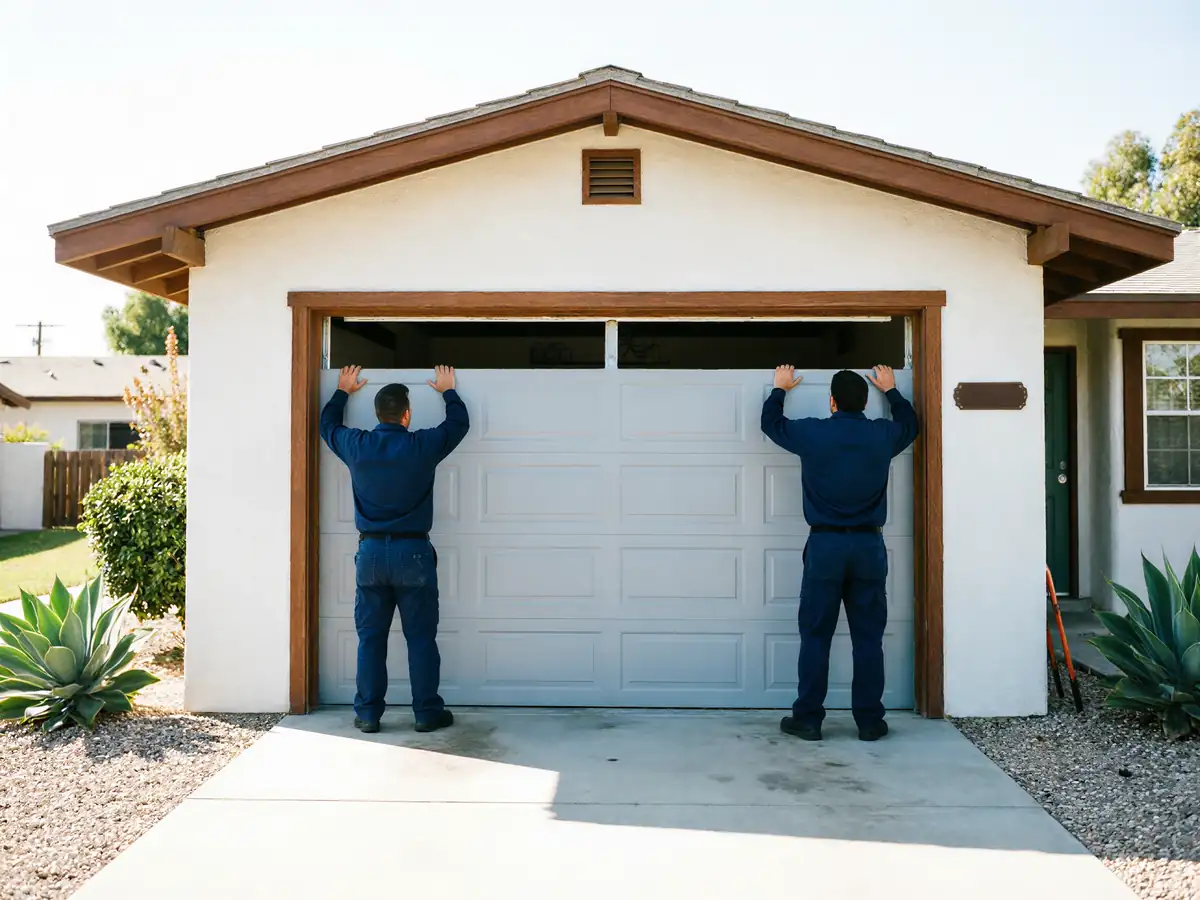
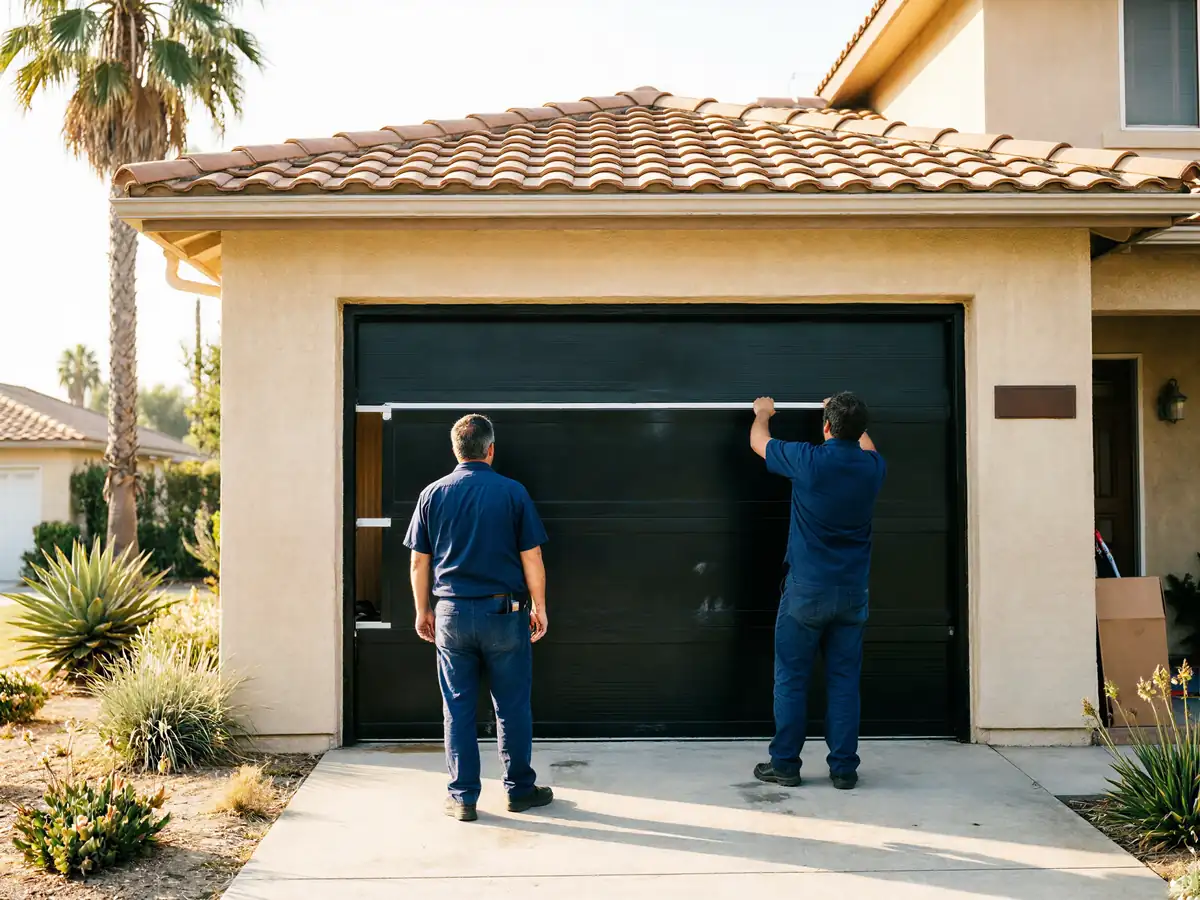
Swapping a single garage door panel sounds simple and sometimes is
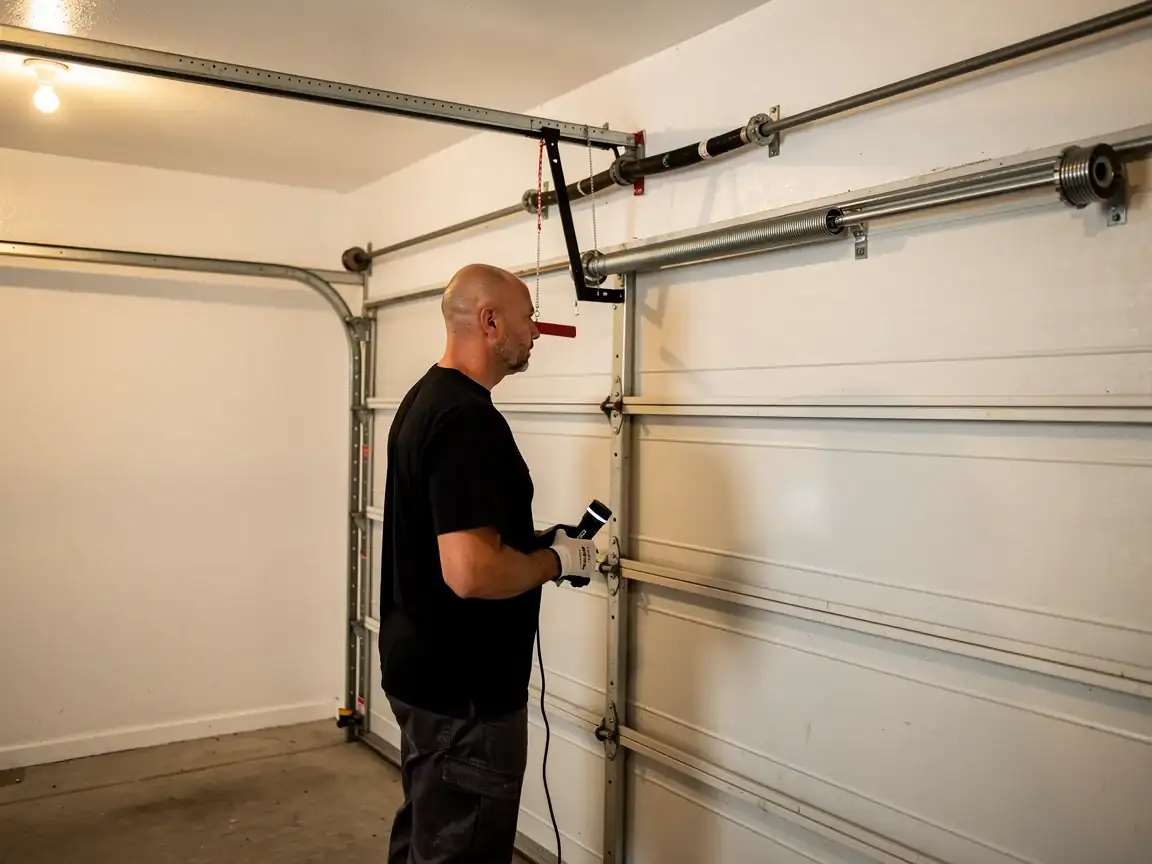
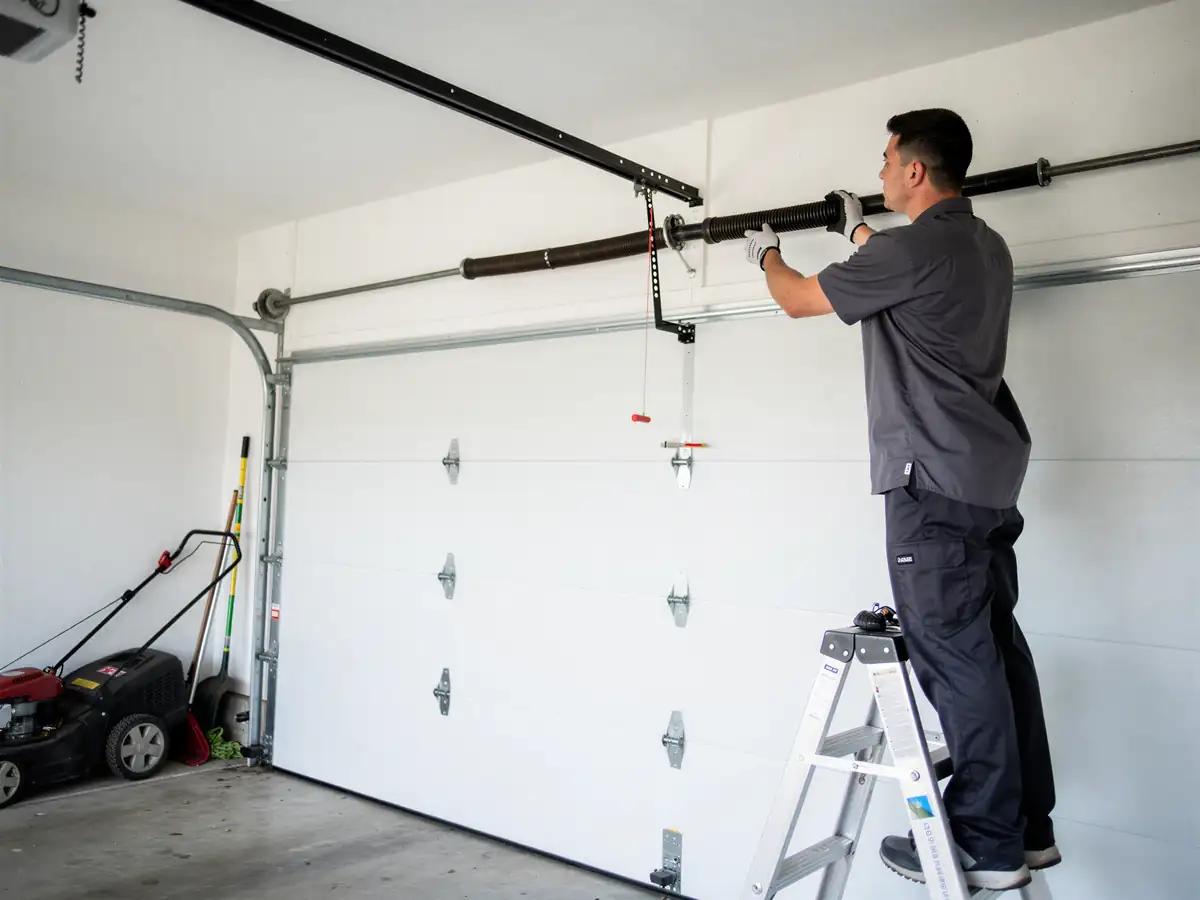
But sectional doors in this era are tensioned systems - the spring, cables, and track all assume the panel stack is a certain weight and balance. Pull one section out and the door's balance point shifts until the new piece is in and properly seated. Get the hinge alignment wrong on a steel panel and you can bow the track within a few open-close cycles.
We're not going to tell you it can't be done by a handy homeowner
Some panels bolt in cleanly with basic tools. What we will say is that matching the embossing pattern and finding the right panel gauge for a 1985-era door takes knowing what to order, and ordering the wrong panel means a second wait on top of the first. If you're set on doing it yourself, at least confirm panel dimensions before you buy.
What You Are Seeing
On a door this age, panel damage usually shows up as a dent from a backed-into car, a crack along the embossed ridge line from impact, or delamination where the outer steel skin has separated from backing material. Rust along the bottom panel edge is common too, especially where sprinklers or runoff hit the door directly - steel sectional doors from the 1980s weren't always galvanized to the same standard on every batch.
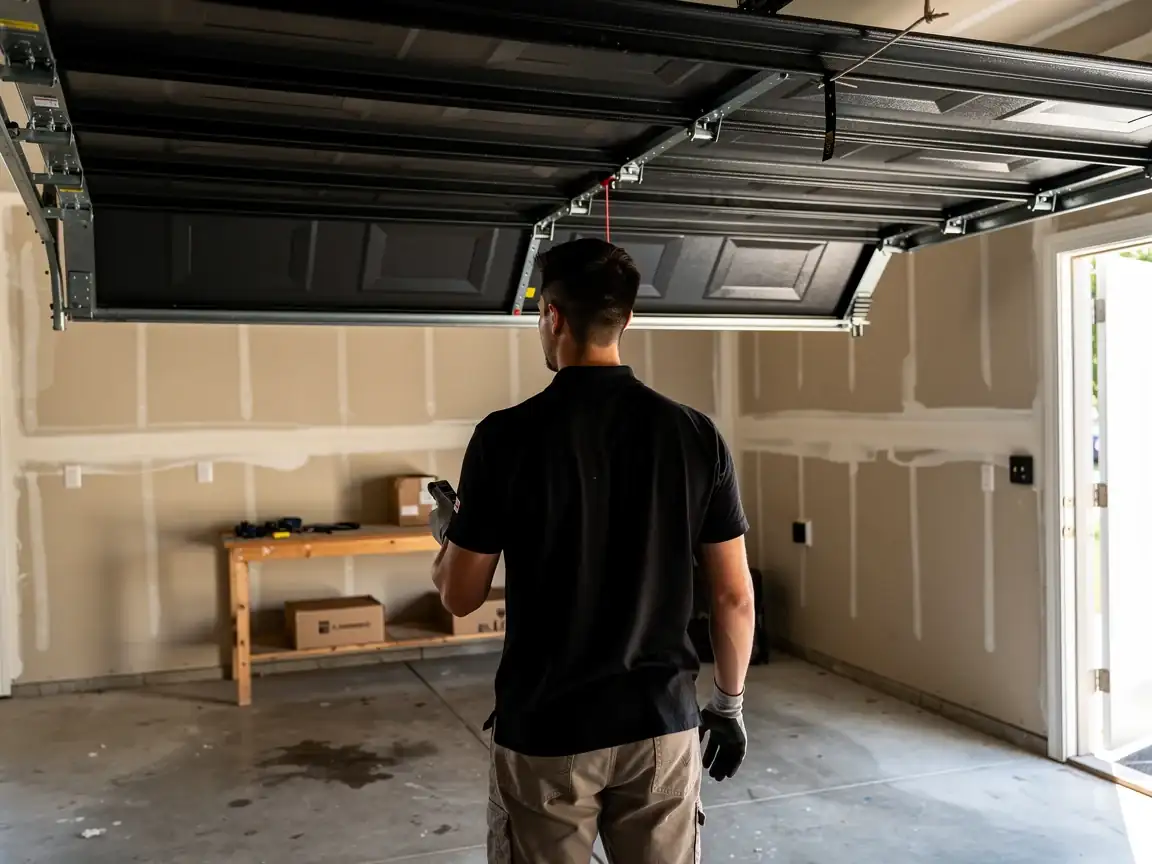
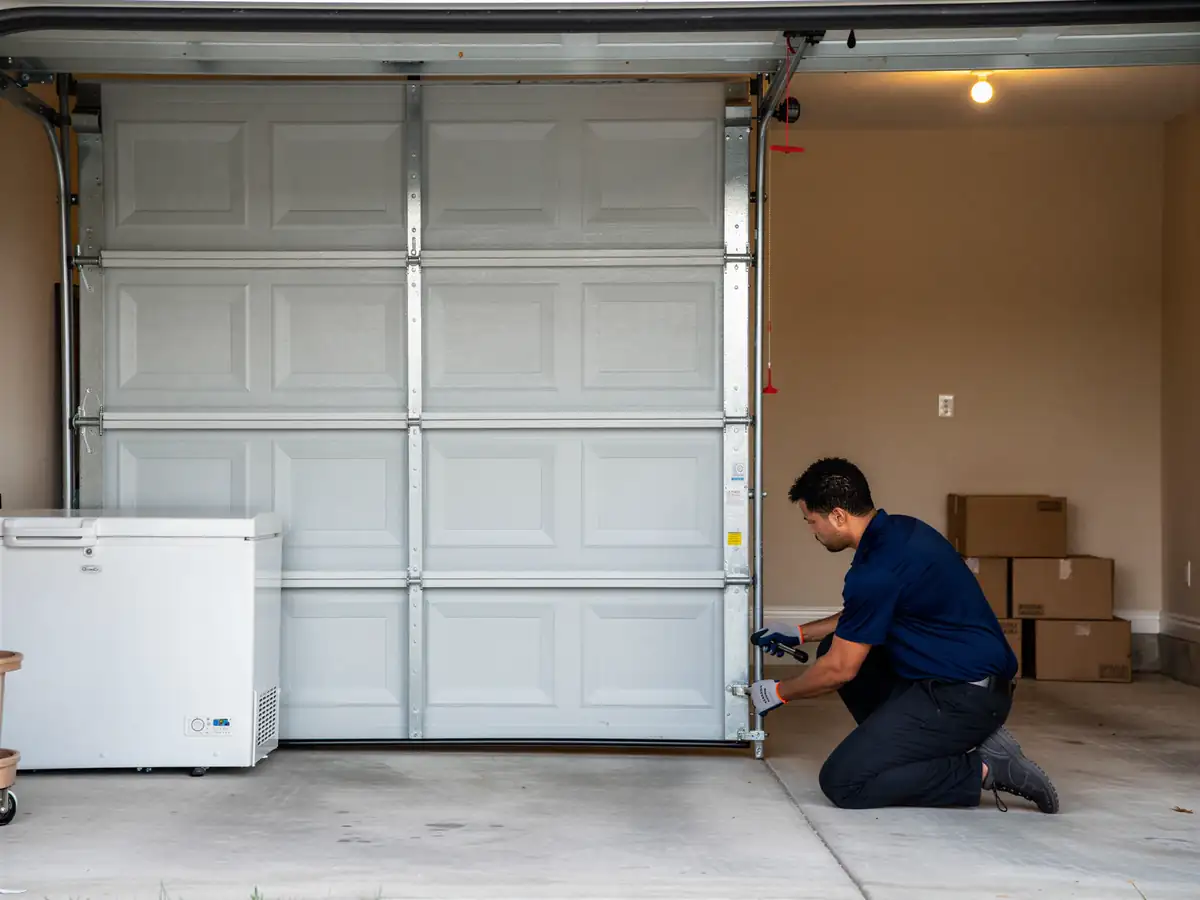
Sometimes what looks like one bad panel is actually two problems: a dented panel plus a track that's slightly out of plumb, which is what let the door get hit hard enough to dent in the first place. We check the track and roller condition on every panel call, not just the damaged section, because replacing the panel without fixing what caused the damage just sets up the next call.
How Long You Are Without the Door
We travel the 5 miles from Spring Valley to reach Rancho San Diego for this kind of job, so the door isn't sitting half-open while we're stuck in a shop somewhere far off. How long the door itself is out of service mostly comes down to whether we've got the matching panel on the truck or need to order it - steel sectional panels in standard widths are usually quick, but a specific embossing pattern or a faded color match can mean a short wait.
If the door is driveable in the meantime - meaning it still closes and locks even with the dent or crack - we'll tell you that and let you decide whether to wait for the exact match or go ahead with the closest available panel now. We won't leave a door that won't close until the right part shows up; that's not a wait we'd ask anyone to sit through.